Barely a few days have passed since that Thursday, 5 March 2026, yet the echo of what took place at the historic headquarters of the Royal Academy of Exact, Physical, and Natural Sciences (RAC) continues to resound with extraordinary force. The masterful lecture “Geology, key to the origin of life and its extraterrestrial search,” delivered by Dr Jesús Martínez Frías, compelled us to raise our gaze toward the firmament with the same reverence, wonder, and thirst for truth with which Don Santiago Ramón y Cajal peered through the eyepiece of his microscope. On this 9 March, we meditate on the profound implications of this gathering, which was not a simple exposition of planetary data but an authentic humanist and scientific liturgy.
Dr Jesús Martínez Frías—affiliation CSIC-IGEO / RAC-RADE, member of NASA Mars missions with the Curiosity and Perseverance rovers—embodies the indomitable will of the pure researcher. Invested in January of this very year as a “Distinguished Cajalian,” his figure represents the contemporary materialisation of the interdisciplinarity that our Nobel laureate always defended: the construction of an unbreakable bridge between geology, biology, and the profound responsibility of cosmic geoethics.
Scientific quixotism: from the butterflies of the soul to the Martian plains
Cajal felt a deep devotion to the figure of Cervantes, identifying himself as the “Don Quixote of the microscope.” He saw in quixotism the vital and indispensable attitude for the advancement of science: unbreakable perseverance in the face of the seemingly impossible. Today, this same spirit comes alive in visionary initiatives, such as the project developed in Almagro, which masterfully intertwines Cajal’s legacy, the literature of Cervantes, and the horizons of Martian exploration.
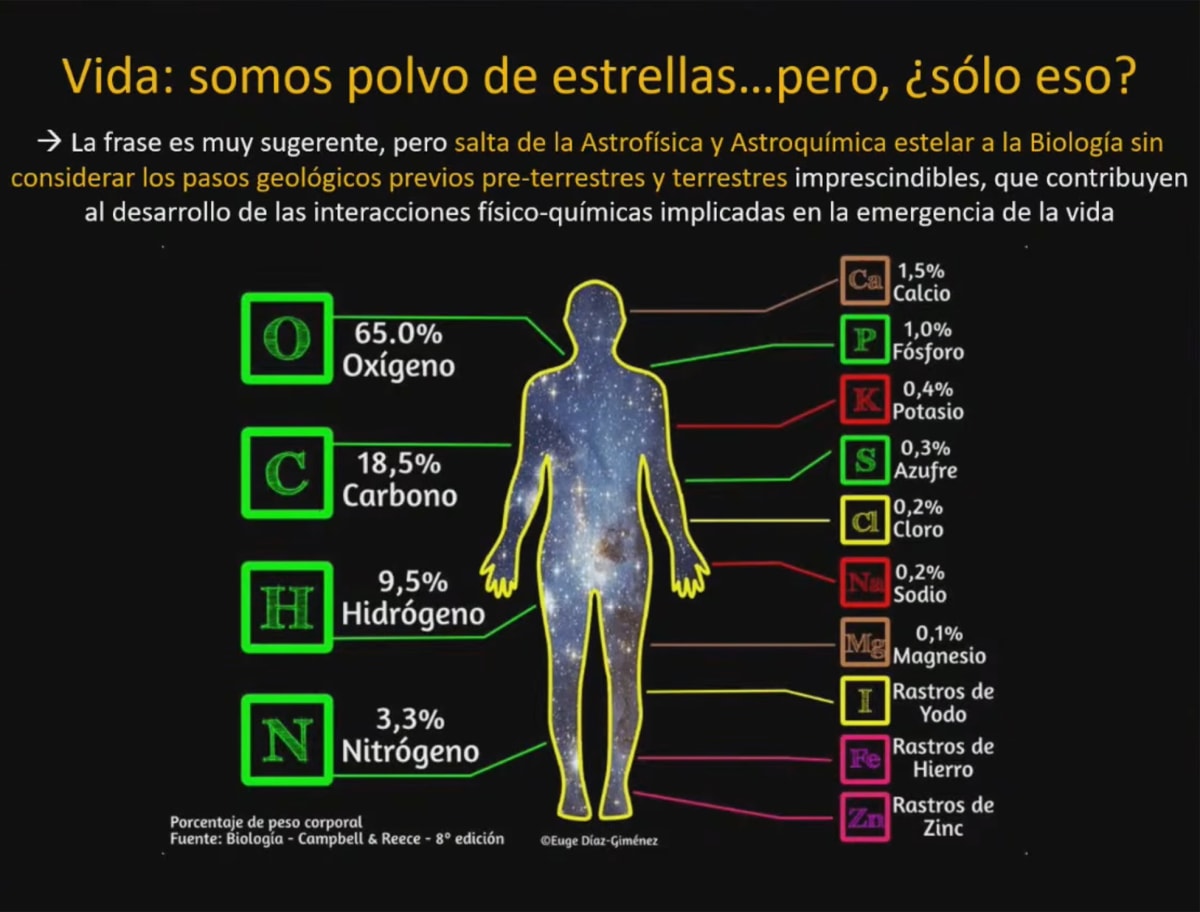
While the sage tirelessly pursued the mystery of neurons, those subtle “butterflies of the soul” (“mariposas del alma”), Dr Martínez Frías pursues the trace of life in the universe, reminding us of an unquestionable premise: geology is the matrix discipline that provides the “geomarkers” necessary to identify biological traces. Planetary “geological vitality”—manifested in plate tectonics and volcanism—is the active crucible where inorganic chemistry achieves the miraculous leap toward biology. After all, as the academic explained, the human body is composed for the most part of liquid water, which in strict terms is a mineral.
Pre-terrestrial geology and the building blocks of existence
One of the most awe-inspiring moments of the evening was the immersion in “deep time,” the realisation that geological history began aeons before the birth of the Earth. This astonishing “pre-terrestrial geology” is wonderfully fossilised in primitive meteorites, whose entrails harbour chondrules: small mineral spheres born of fire and violent collisions at the dawn of our solar system.
Far from being mere inert rock, carbonaceous chondrites act as authentic cosmic arks. Within them they guard primordial chemistry, transporting amino acids and the five nucleobases that form the exact letters of our DNA and RNA. This discovery underpins the bold theory of “molecular panspermia,” suggesting that the seeds of existence may have sailed through the dark, frozen ocean of space to fertilise our planet.
The swan song of Mars and the traces in the stone
If Earth is our biological cradle, Mars is our melancholic mirror. The Red Planet shared a geologically active and wet youth with Earth, until its magmatic heart stopped, robbing it of its magnetic shield and dissipating much of its atmosphere. Today, modern astrobiology seeks to read the testament of that lost world. To refine that reading, Dr Martínez Frías has worked on terrestrial analogues—such as the indomitable landscapes of the Lanzarote Geopark—training astronauts from the European Space Agency (ESA) to simulate the conditions of interplanetary exploration.
That scientific perseverance, heir to the finest quixotism and backed by his direct participation in NASA programmes, has begun to decipher Martian rocks. The Curiosity rover revealed sites such as “Garden City,” a geological necropolis crossed by veins of calcium sulphate betraying where ancient watercourses once flowed. Even more dazzling is the recent finding by the Perseverance rover at Jezero Crater: the rock “Cheyava Falls.” This fragment of history guards a possible biosignature in its enigmatic “leopard spots”—rings originated by redox chemical reactions containing crystals of vivianite (a phosphate) and greigite (an iron sulphide). In our world, this sophisticated mineral architecture is the unmistakable signature of bacterial metabolism.
The cognitive cosmos and the enchanted loom: the mirror of reality
For regular readers of our website, there is a profound beauty in confirming that the infinitely small and the overwhelmingly large converge. As we have explored in essays such as The Cognitive Cosmos and The Enchanted Loom, current astrophysics corroborates what the poetry of Emily Dickinson intuited: there is an astonishing symmetry between the network structure of galaxies and the neuronal forest of the human brain. And even more astonishingly, it has been demonstrated that the tiny crystals of biogenic magnetite hidden in the human brain are crystallographically identical to the enigmatic mineral traces of the Martian meteorite ALH84001.
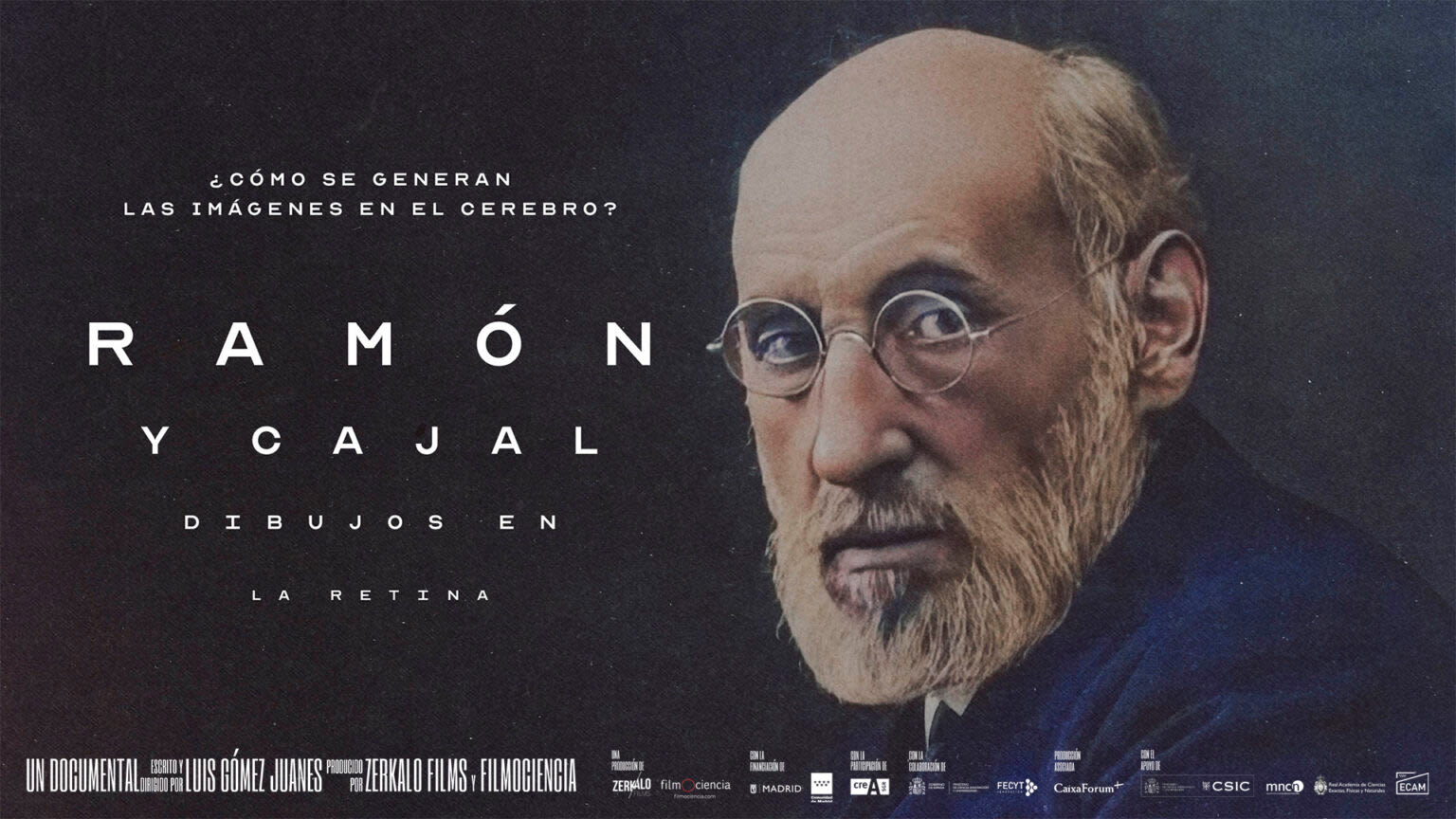
Just as Don Santiago illuminated in 1899 the “impenetrable forest” of the visual cortex, tearing down walls that today allow us to witness medical miracles such as the resurrection of light in the garden of neurology, space science challenges the apparent silence of the solar system by tracking geodynamic activity on the icy moons of Europa and Enceladus, or unravelling the unusual “cryomagmatism” of Pluto, where volcanoes spew ice toward the stars.
Science as the unbreakable triumph of the will
The gathering at the Royal Academy of Sciences concluded with a resounding humanist plea. Through his presidency of the International Commission on Geoethics (IAGETH), Dr Martínez Frías exhorts us to approach space exploration with supreme responsibility, protecting both our fragile terrestrial ecosystem and the virginity of the worlds we are about to discover.
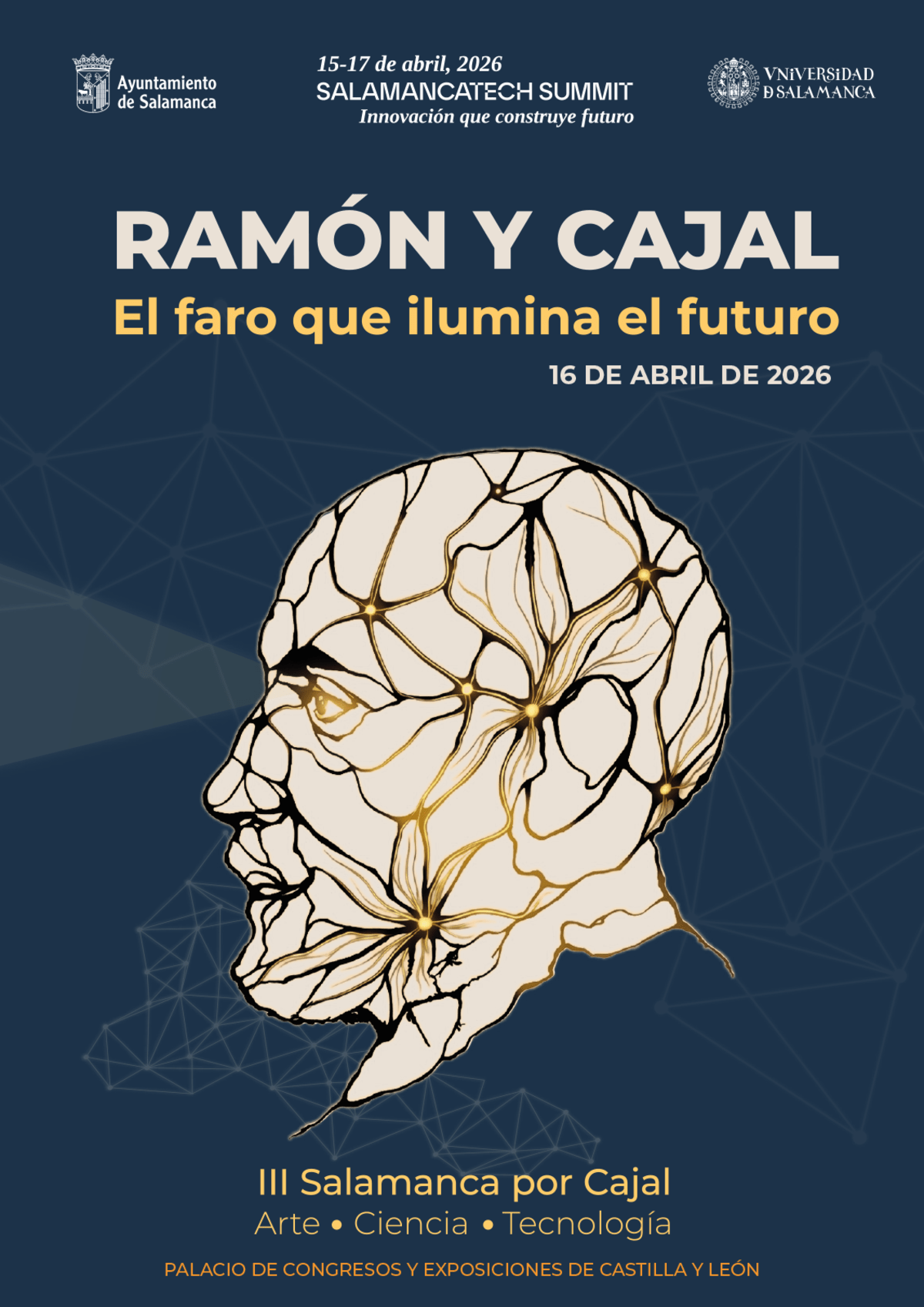
Cajal tirelessly maintained that “every man can be, if he sets his mind to it, the sculptor of his own brain” (“todo hombre puede ser, si se lo propone, escultor de su propio cerebro”). Today we understand that this same will, indomitable and transformative, is what drives us to sculpt our destiny among the stars. The spirit of Don Santiago remains so vivid and contemporary that, in an act of superlative poetic justice, his name will leave Earth’s orbit to travel to the Moon aboard the Orion spacecraft on the Artemis II mission this very 2026.
Because, ultimately, whether mapping the secret code of a neuronal synapse or tracking the fossilised heartbeat of an extraterrestrial rock thanks to the efforts of institutions such as the CSIC, IGEO, RAC, and RADE, the scientific endeavour is one and the same: the eternal triumph of light and quixotism against the abyss of the unknown.