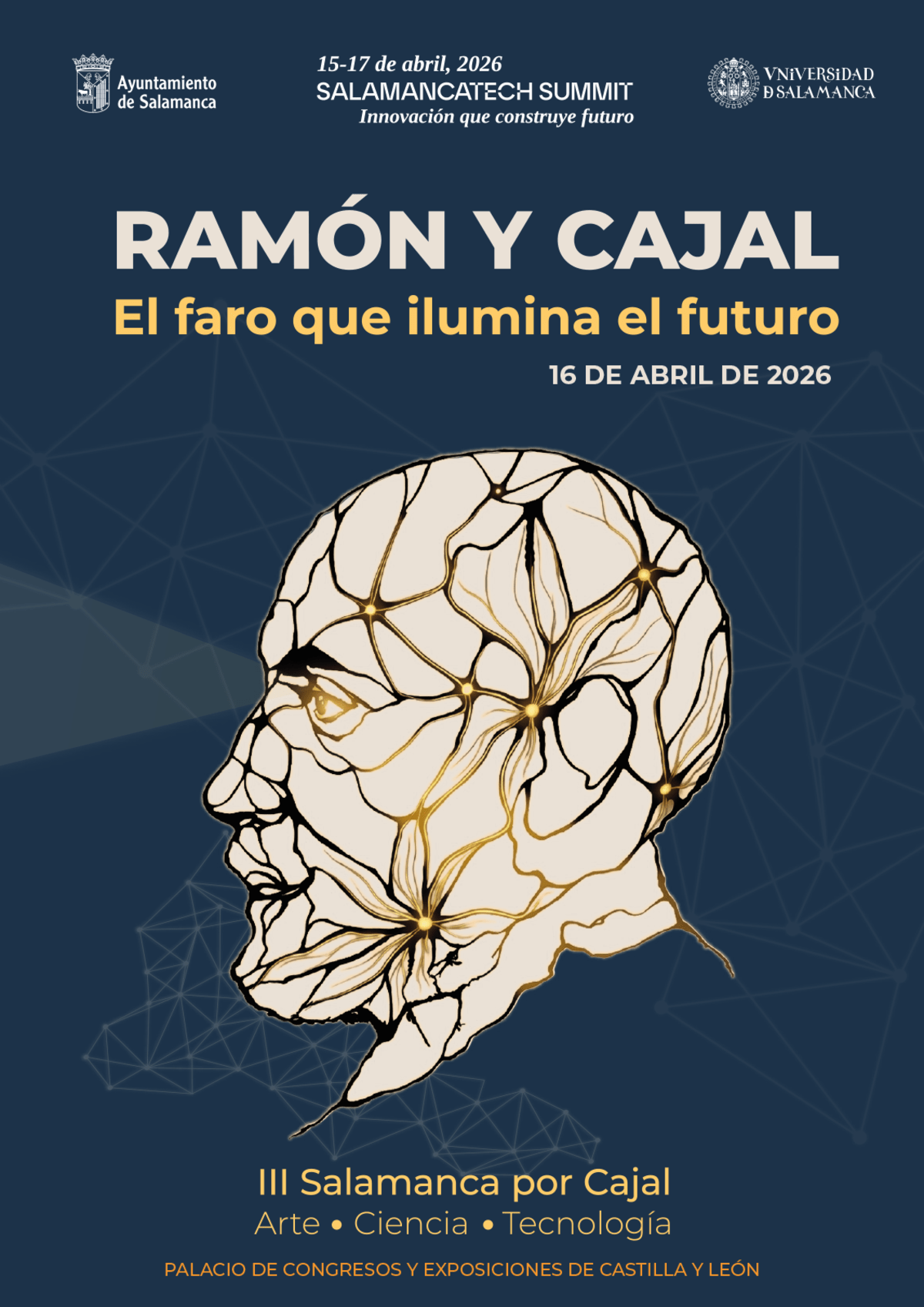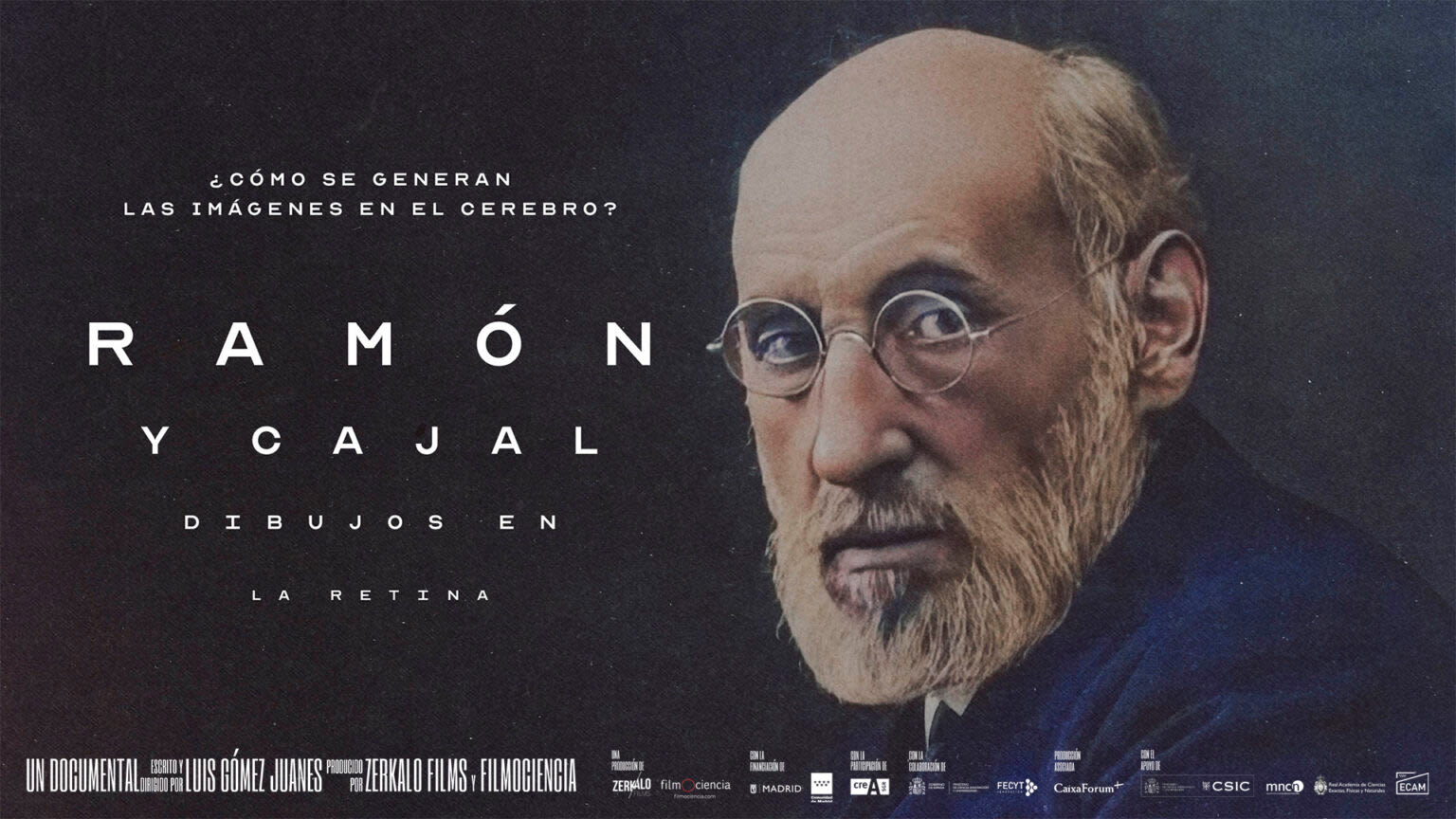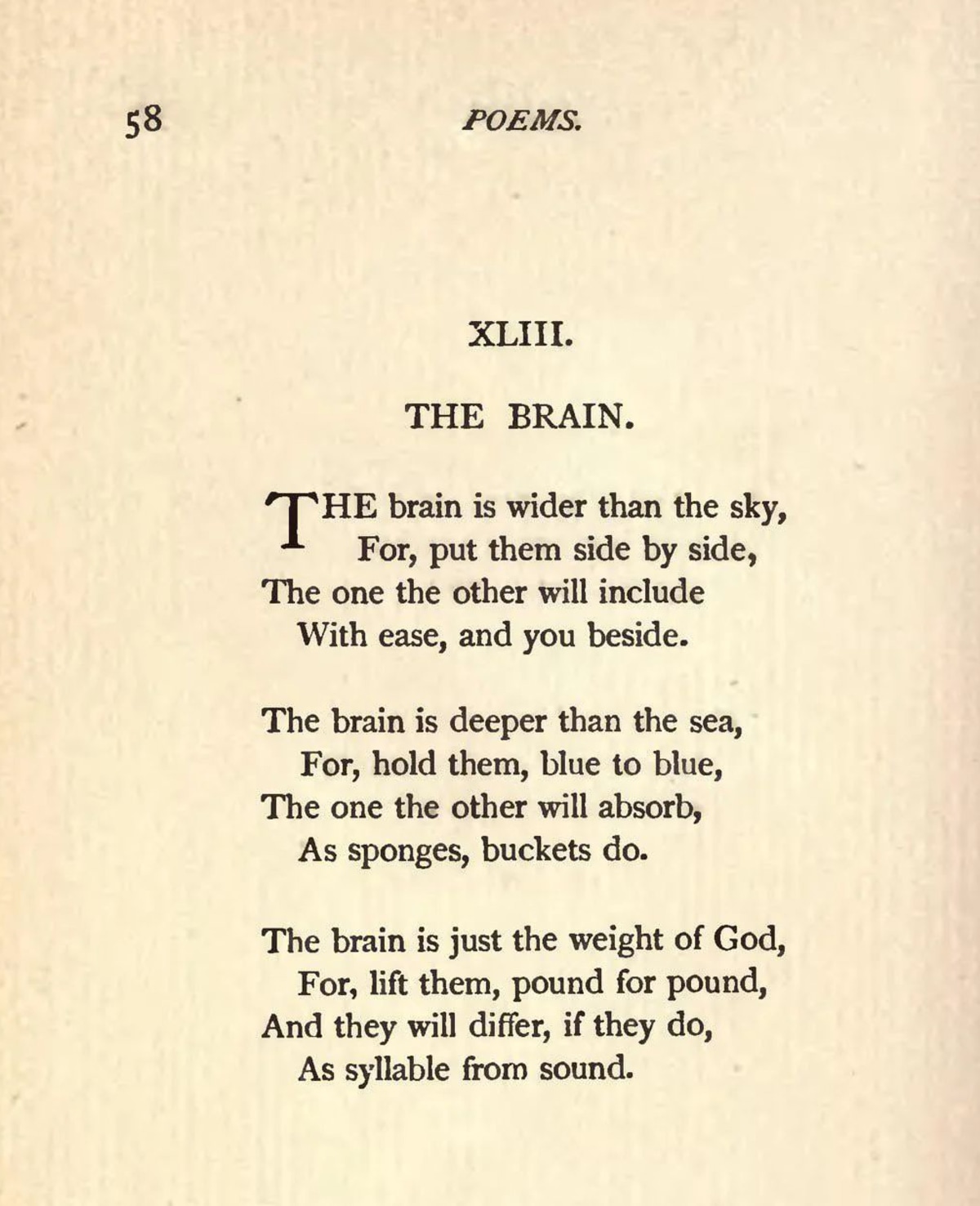
Dedicated to Angel M. Judel Pereira.
1. INTRODUCTION: THE PRECEDENCE OF POETIC INTUITION
The history of human knowledge often advances in spirals: artistic intuition glimpses truths that science, centuries later, manages to codify in laws. There is a strange and beautiful symmetry between the poet’s pen and the scientist’s microscope; both are optical instruments designed to focus on the invisible.
In 1862, while Santiago Ramón y Cajal was barely a ten-year-old boy dreaming of landscapes and colours in the hills of Aragon, the poet Emily Dickinson, confined to her room in Amherst, was writing a prophecy that would take us a century and a half to fully comprehend. In her verses, she dared to proclaim that the Brain is not only equal to the Universe but contains it.
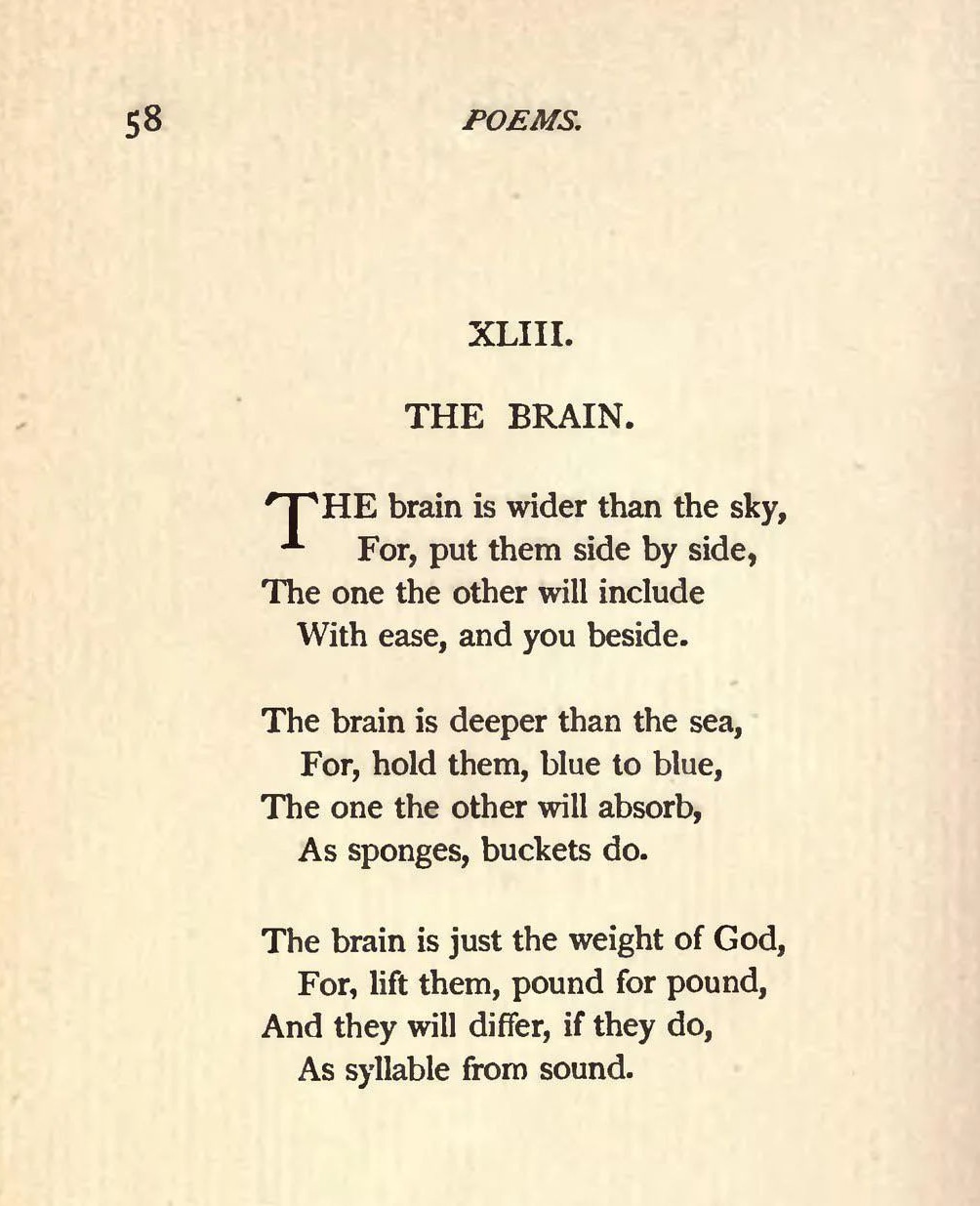
“The Brain — is wider than the Sky”
This assertion was not a mere lyrical licence but an anticipatory cognitive map. Dickinson intuited that the res cogitans (the mind) and the res extensa (the cosmos) are not separate entities but specular reflections of a single fundamental architecture. Today, the most cutting-edge science — from computational astrophysics to cerebral mineralogy — confirms that her intuition was, in reality, a physical fact. And at the centre of this vast diagram, like the cartographer who first drew the routes of this inner universe, stands the figure of Santiago Ramón y Cajal.
2. THE ARCHITECTURE OF THE INFINITE: DICKINSON’S COGNITIVE CARTOGRAPHY
Dickinson’s celebrated poem operates as a rigorous syllogism. She does not say the brain is “like” the sky; she asserts a quantitative dominance: it is “wider”.
“The Brain — is wider than the Sky — For — put them side by side — The one the other will include With ease — and You — beside —”
For Cajal, who described neurons as “the mysterious butterflies of the soul” (“las misteriosas mariposas del alma”), this stanza resonates with the force of law. The brain does not physically envelop the sky; it encodes it. The neuronal network possesses the plastic capacity to model the infinite. When Cajal looked through his Zeiss microscope, he did not simply see cells; he saw, in his own words, “the garden of neurology” (“el jardin de la neurologia”), an impenetrable forest whose growth laws replicated the forms of the external nature.
Dickinson continues her comparative metre, descending to the depths:
“The Brain is deeper than the sea — For — hold them — Blue to Blue —
The one the other will absorb As Sponges — Buckets — do —”
The parallelism “Blue to Blue” is today of startling relevance. Modern visualisations of the Cosmic Web and the Human Connectome are routinely rendered in the same dark and electric tones. Dickinson anticipated this shared morphology: the abyssal depth of the mind has the same texture as the depth of space.
3. THE QUANTITATIVE ISOMORPHISM: NEURONS AND GALAXIES
For decades, the visual similarity between a neuronal network and a galaxy simulation was considered an aesthetic curiosity. However, in 2020, the astrophysicist Franco Vazza and the neurosurgeon Alberto Feletti elevated this comparison to the category of mathematical fact in their fundamental study: “The Quantitative Comparison Between the Neuronal Network and the Cosmic Web”.
To understand the magnitude of this finding, we must visualise the scale of the giants that confront each other:
-
MICROCOSM: The neuronal network of the cerebellum and cortex (~ 8.6 x 10^10 neurons).
-
MACROCOSM: The cosmic web of the observable universe (~ 10^11 galaxies).
Despite being separated by 27 orders of magnitude, the structure is identical. Using the technique of Power Spectral Density (PSD), the researchers discovered that the distribution of matter fluctuations in both systems follows nearly twin curves: P(k) ~ k^-n.
Even more unsettling is the composition: in both systems, approximately 75% of the mass/energy is passive material (water in the brain, dark energy in the universe), while only 25% constitutes the active structure (cells or galaxies). This suggests a Universal Law of Complexity: when matter awakens and organises itself to process information, it inevitably adopts the form that Cajal drew more than a century ago.
4. THE MINERALOGICAL COMPASS: BIOGENIC MAGNETITE IN THE HUMAN BRAIN
If structure unites us to the cosmos by form, mineralogy unites us by matter. In another poem, “I Felt a Funeral, in my Brain”, Dickinson describes how “Space began to toll / As all the Heavens were a Bell”.
Can the brain “hear” space? In 1992, Joseph Kirschvink (Caltech) broke a biological dogma by demonstrating that the human brain is not diamagnetic. On the contrary, it is seeded with crystals of magnetite (Fe3O4).
Recent reviews, such as that published in the European Journal of Mineralogy (Servetto et al., 2025), confirm that these nanoparticles are not external contamination; they are synthesised by our own cells. They are euhedral (geometrically perfect) crystals, organised in chains, acting as microscopic compass needles. We carry in our neurons the same mineral that orients migratory birds and that is found in the oldest meteorites of the solar system. We are, literally, antennae tuned to the planet’s magnetic field.
5. THE MARTIAN MIRROR: ALH84001 AND THE FINGERPRINT OF LIFE
The connection between the brain and space ceases to be theoretical and materialises in a tangible object: the meteorite ALH84001. This Martian rock, recovered in Antarctica, contains magnetite crystals identical to those produced by terrestrial bacteria and, crucially, to those found in the human brain.
It is here that the figure of the Spanish geologist [Jesus Martinez Frias](/en/buscar/?q=Jesús Martínez Frías) becomes essential. As an expert in meteorites and planetary geology, Martinez-Frias has woven the narrative thread that unites these disparate worlds. In his scientific work and in his trilogy of novels (El Mensaje de Darwin [Darwin’s Message], La Clave Birmingham [The Birmingham Key], and La Dimension Intangible [The Intangible Dimension]), he reminds us that the search for life on Mars (seeking magnetite) and the study of human consciousness (supported by magnetite) are two sides of the same coin.
The very same mineral “fingerprint” that we seek on other planets to confirm life is already installed in the structure of our own mind. The dust of Mars and the dust of memory are made of the same magnetic vibration.
6. THE CURIOUS TRAVELLER: CAJAL IN LANZAROTE
If Don Santiago were to awaken today, his insatiable curiosity would not be confined to the laboratory. We know he was a lover of photography, landscape, and speculative literature. Therefore, there is no doubt he would answer the call of the volcanoes.
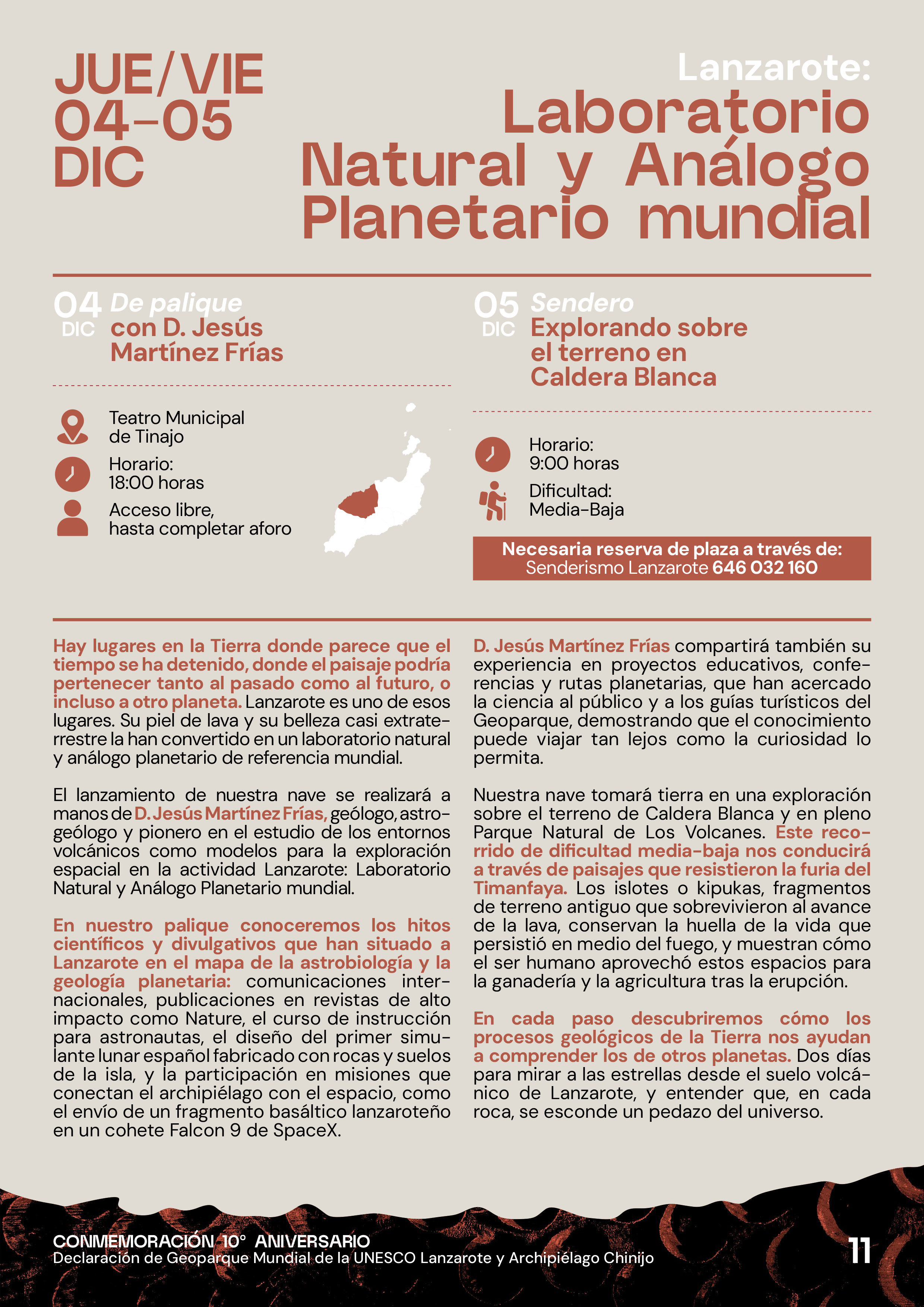
This December, Lanzarote becomes the epicentre of this connection with the conference “Lanzarote: Natural Laboratory and World Planetary Analogue”, directed by Jesus Martinez-Frias.
-
The event: A scientific gathering to debate how the island’s rocks teach us to search for life in the cosmos.
-
The place: A trail through Caldera Blanca, walking on a landscape that is the geological mirror of Mars.
Cajal would walk through those lava tubes. He, who understood that to comprehend the human brain one had to first study the retina of birds, would perfectly understand that to comprehend Mars one must first study Lanzarote. Analogy was always his most potent tool. He would see in the cracks of the basalt the same “economy of nature” he saw in dendritic spines.
7. THE FINAL APOTHEOSIS: A TICKET TO THE MOON
And yet, the Earth is too small for one who carries a universe inside his head. The narrative of this “Cognitive Cosmos” reaches its climax with a gesture of poetic justice.
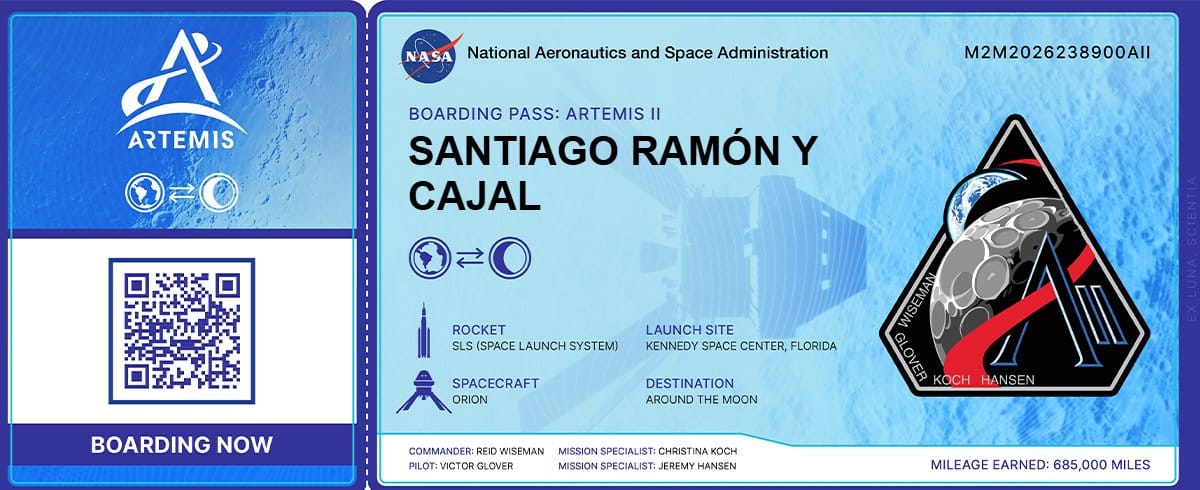
Thanks to the initiative of Jesus Martinez-Frias, Santiago Ramón y Cajal has been officially inscribed in NASA’s Artemis II mission.
-
The Passenger: Santiago Ramón y Cajal.
-
The Vessel: Orion (Launch planned from the Kennedy Space Center, 2026).
-
The Destination: Lunar Orbit (Around the Moon).
Cajal will travel in the memory of the vessel, accompanying astronauts Reid Wiseman, Victor Glover, Christina Koch, and Jeremy Hansen. But this journey is also a homecoming. In the Mare Tranquillitatis of the Moon there exists a small geographic feature 9 kilometres in diameter: the Cajal Crater. When the Orion vessel orbits our satellite, the spirit of the Spanish scientist will fly over his own name written in the lunar dust. It is the definitive apotheosis. The man who looked inward with such intensity that he ended up discovering the infinite now travels outward to meet it.
8. SYNTHESIS: THE HOLOGRAPHIC MIND AND THE WEIGHT OF GOD
We return, finally, to Dickinson’s concluding stanza, which we can now read under the light of Cajal’s legacy:
“The Brain is just the weight of God — For — Heft them — Pound for Pound — And they will differ — if they do — As Syllable from Sound —”
Dickinson teaches us that the difference between the Divine (the Universe, the Sound) and the Brain (the Syllable) is not one of size but of meaning. Sound is the background noise of the cosmos, the raw vibration of energy, the chaos of stars being born and dying. But the Syllable… the Syllable is that sound articulated, endowed with meaning, structure, and consciousness.
We live in a holographic universe where the part contains the whole. Each of Cajal’s neurons contains the complexity of the cosmic web; each magnetite crystal contains the geological history of the planets. Santiago Ramón y Cajal was the great grammarian of biology; he taught us to read the syllables of life. By sending his name to the stars aboard the Artemis II mission, and by studying the geology of other worlds in Lanzarote, humanity is doing the only thing it was designed for: converting the raw sound of the cosmos into the intelligible syllable of science.
Don Santiago, bon voyage. The sky, at last, fits in your luggage.
APPENDIX: THE POETIC PROPHECY
XLIII. THE BRAIN (Emily Dickinson, c. 1862)
THE Brain — is wider than the Sky — For — put them side by side — The one the other will include With ease — and You — beside —
The Brain is deeper than the sea — For — hold them — Blue to Blue — The one the other will absorb — As Sponges — Buckets — do —
The Brain is just the weight of God — For — Heft them — Pound for Pound — And they will differ — if they do — As Syllable from Sound —
Spanish Translation
XLIII. EL CEREBRO (Emily Dickinson, c. 1862)
El Cerebro — es mas ancho que el Cielo — Pues — ponlos lado a lado — El uno al otro incluira Con facilidad — y a Ti — al lado —
El Cerebro es mas profundo que la mar — Pues — tenlos — Azul contra Azul — El uno al otro absorbera — Como Esponjas — a los Cubos — hacen —
El Cerebro es solo el peso de Dios — Pues — sopesandolos — Libra por Libra — Y diferiran — si acaso lo hacen — Como la Silaba del Sonido —
APPENDIX B: THE FUNERAL OF THE MIND
I FELT A FUNERAL, IN MY BRAIN (Emily Dickinson, c. 1861)
I felt a Funeral, in my Brain, And Mourners to and fro Kept treading — treading — till it seemed That Sense was breaking through —
And when they all were seated, A Service, like a Drum — Kept beating — beating — till I thought My Mind was going numb —
And then I heard them lift a Box And creak across my Soul With those same Boots of Lead, again, Then Space — began to toll,
As all the Heavens were a Bell, And Being, but an Ear, And I, and Silence, some strange Race Wrecked, solitary, here —
And then a Plank in Reason, broke, And I dropped down, and down — And hit a World, at every plunge, And Finished knowing — then —
Spanish Translation
SENTI UN FUNERAL, EN MI CEREBRO (Emily Dickinson, c. 1861)
Senti un funeral en mi cerebro, los deudos iban y venian arrastrandose — arrastrandose — hasta que parecio que el sentido se quebraba totalmente —
y cuando todos estuvieron sentados, una liturgia, como un tambor — comenzo a batir — a batir — hasta que pense que mi mente se volvia muda —
y luego los oi levantar el cajon y crujio a traves de mi alma con los mismos botines de plomo, de nuevo, luego el espacio — comenzo a repicar,
como si todos los cielos fueran campanas y el Ser, tan solo una oreja, y yo, y el silencio, alguna extrana raza naufraga, solitaria, aqui —
y luego un vacio en la razon, se quebro, y cai, y cai — y di con un mundo, en cada zambullida, y termine sabiendo — entonces —
APPENDIX C: UNESCO Global Geopark Declaration. 10th Anniversary Commemoration
To experience first-hand this connection between the geology of the Earth and the mysteries of the cosmos, and to walk the landscapes that inspire the science of the future, we invite our readers to participate in the commemorative events of the 10th Anniversary of the Lanzarote and Chinijo Archipelago UNESCO Global Geopark.
Do not miss the “Journeys of magma, wind, and water” (“Jornadas de magma, viento y agua”) and the special session with D. Jesus Martinez-Frias on Lanzarote as a natural laboratory and planetary analogue.
Discover the full programme and join the celebration here:
UNESCO Global Geopark Declaration. 10th Anniversary Commemoration — Docs.Santiagoramonycajal