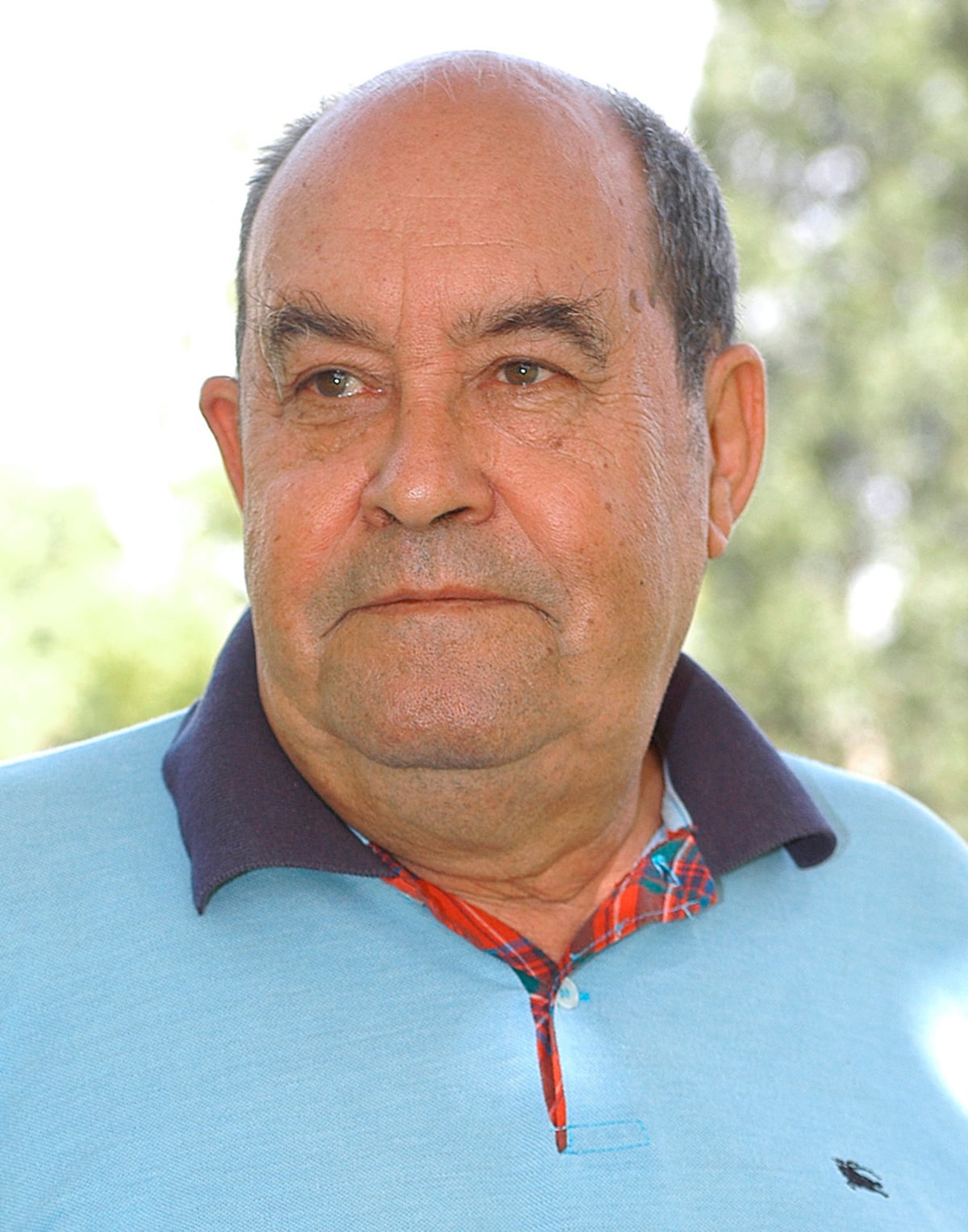
The Third Pillar: García-Bellido’s Place in Spanish Science
In the pantheon of modern Spanish science, the figure of Antonio García-Bellido y García de Diego occupies a sacred and singular space, forming a conceptual triad alongside the two colossi of the 20th century, Santiago Ramón y Cajal and Severo Ochoa. If Cajal, the father of neuroscience, deciphered with his patient gaze and his ink the structure of life (the neuron doctrine, the hardware of biology), and Ochoa deciphered the code (RNA synthesis, the molecular software), García-Bellido dedicated his life to understanding the logic: the “operating system” or “grammar” that executes that code to build the structure. His work tackled, with an almost heretical originality, the central mystery of morphogenesis: how a single zygote, a solitary cell, transforms into the inconceivably complex architecture of a functional organism.
The Lineage of the Fly: The Forging of an Adventurous Mind
Born in Madrid on 30 April 1936, Antonio García-Bellido grew up in an environment of exceptional erudition. His formative decade (1959-1969) of international postdoctoral training forged his intellectual arsenal across three traditions: physiology with Wigglesworth in Cambridge, experimental embryology with Hadorn in Zurich, and classical genetics with Sturtevant and Lewis at Caltech.
The Discovery of “Invisible Borders”: Compartments
In 1973, a seminal publication in Nature New Biology, co-authored with students Ginés Morata and Pedro Ripoll, marked the birth of his “school.” Using elegant clonal analysis techniques, they demonstrated that the wing disc was subdivided by “invisible borders” — compartments — that cells never crossed.
The Logic of Morphogenesis: Towards a Genetic Grammar
In 1975, he postulated an elegant hierarchy of genetic control: Selector Genes (binary switches conferring identity) and Realizator Genes (the “worker genes” executing cellular operations). The final refinement came in 1984 with his address to the Royal Academy: “Towards a Genetic Grammar” (“Hacia una gramática genética”). The genome is not a “blueprint” of the final form; it is an algorithm or a book of rules (a grammar) that, when executed locally in each cell, generates the complex form of the organism.
Cell Competition: Survival of the Fittest at the Cellular Level
Simultaneously, the laboratory discovered cell competition — a tissue quality-control mechanism where “winning” cells identify their “losing” neighbours and induce them to enter apoptosis. Today, cell competition is recognised as a fundamental homeostatic mechanism and a potent tumour suppression mechanism.
The Institutional Legacy: The CBM and the “School of Madrid”
García-Bellido was a co-founder of the Centro de Biología Molecular (CBM) Severo Ochoa and directed its Laboratory of Developmental Genetics for 34 years. His group of disciples was baptised the “Spanish School of Developmental Genetics” — a term coined by none other than Francis Crick. His disciple Ginés Morata became a Fellow of the Royal Society in 2017, the same honour received by his mentor.
Global Recognition and the “Terrible Genius”
García-Bellido achieved the “triple” of being elected Foreign Member by the Royal Society of London (1986), the US National Academy of Sciences (1987), and the Académie des Sciences of France (1995). Despite multiple Nobel nominations, when asked if his character had cost him the prize, he replied with characteristic directness: “If they haven’t given me the Nobel Prize, it’s obviously because I didn’t deserve it — it’s that simple — or because others deserved it more.”
The Archive of a Life: The Donation to the University of Málaga
In his final years, García-Bellido donated the totality of his scientific archive — 75 boxes containing 3,473 inventoried objects and more than 90,000 individual pieces — to the University of Málaga.
Conclusion: The “Apogenetic” Vision of Life
Antonio García-Bellido deserves his place in the triad of Spanish biology. While Cajal and Ochoa described the fundamental parts of life (the cell and the molecule), García-Bellido provided the logical instruction manual. He was the architect who taught us to read the grammar with which life, cell by cell, constructs form.


