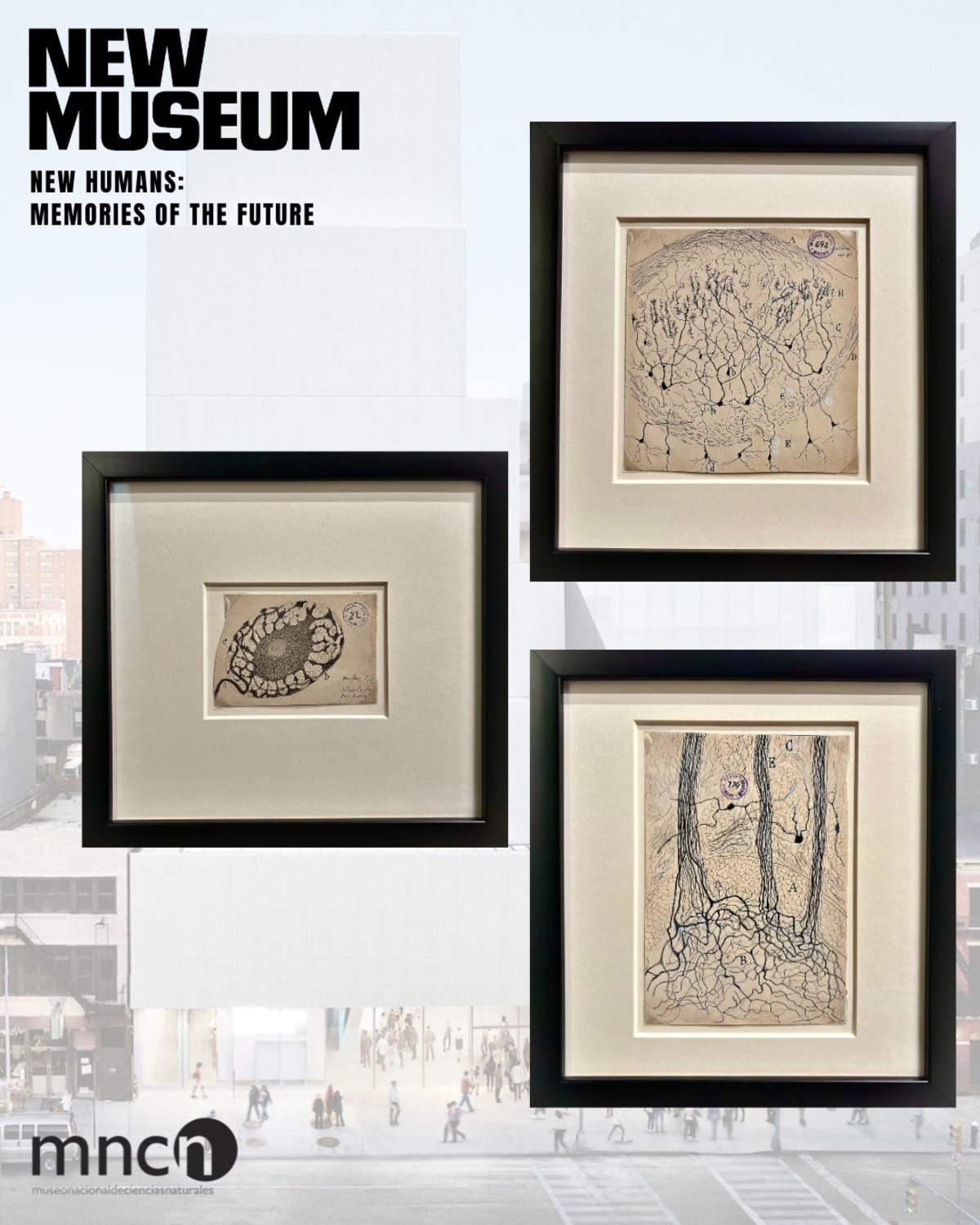
On 21 March 2026, in the heart of New York’s Bowery, twelve original drawings by Santiago Ramón y Cajal took their place in one of the world’s most influential contemporary art institutions. The New Museum of New York inaugurated that day its exhibition New Humans: Memories of the Future, and among its more than 700 works from 50 countries, the pieces from the Cajal Legacy — custodied by the National Museum of Natural Sciences of the CSIC — occupy a place the master from Petilla de Aragón could scarcely have imagined for his histological preparations.
Cajal drew neurons to understand life. The New Museum exhibits them to understand what it means to be human in the twenty-first century. The distance between the two intentions is, in reality, none at all.
An Exceptional Selection from the Cajal Legacy
The selection sent to New York includes pieces of exceptional heritage value: brain sections illustrating the architecture of the cortex in all its complexity, and haematological studies in which Cajal captured the phases of leukocyte migration with an almost cinematic narrative. These are works belonging to an archive declared Memory of the World by UNESCO since 2017 that rarely travel outside Spain.
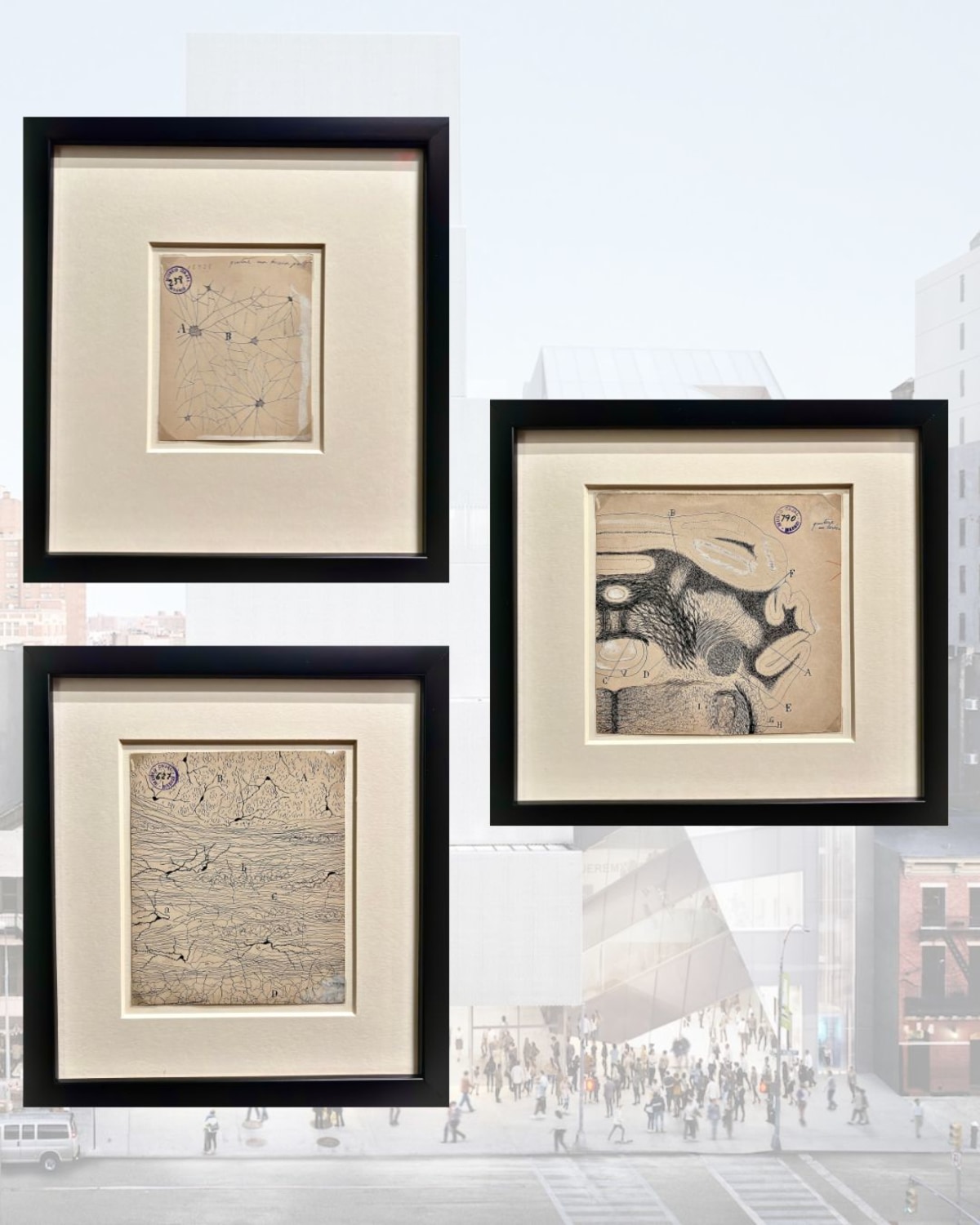
The New Museum itself has underlined the significance of their presence, describing Cajal as an “essential example of the union between scientific advance and artistic creation” and highlighting that his images “transformed the way of understanding the human body, influencing both science and art.” This is no minor praise: the New Museum is the institution that launched Jean-Michel Basquiat and Cindy Sherman to international stardom.
New Humans: Memories of the Future: A Curatorial Thesis
Under the artistic direction of Massimiliano Gioni, the exhibition proposes a “diagonal history” of the last century centred on how technological change has generated new conceptions of the human. It brings together more than 200 artists, scientists and filmmakers to reflect on the collective fears and aspirations facing total automation.
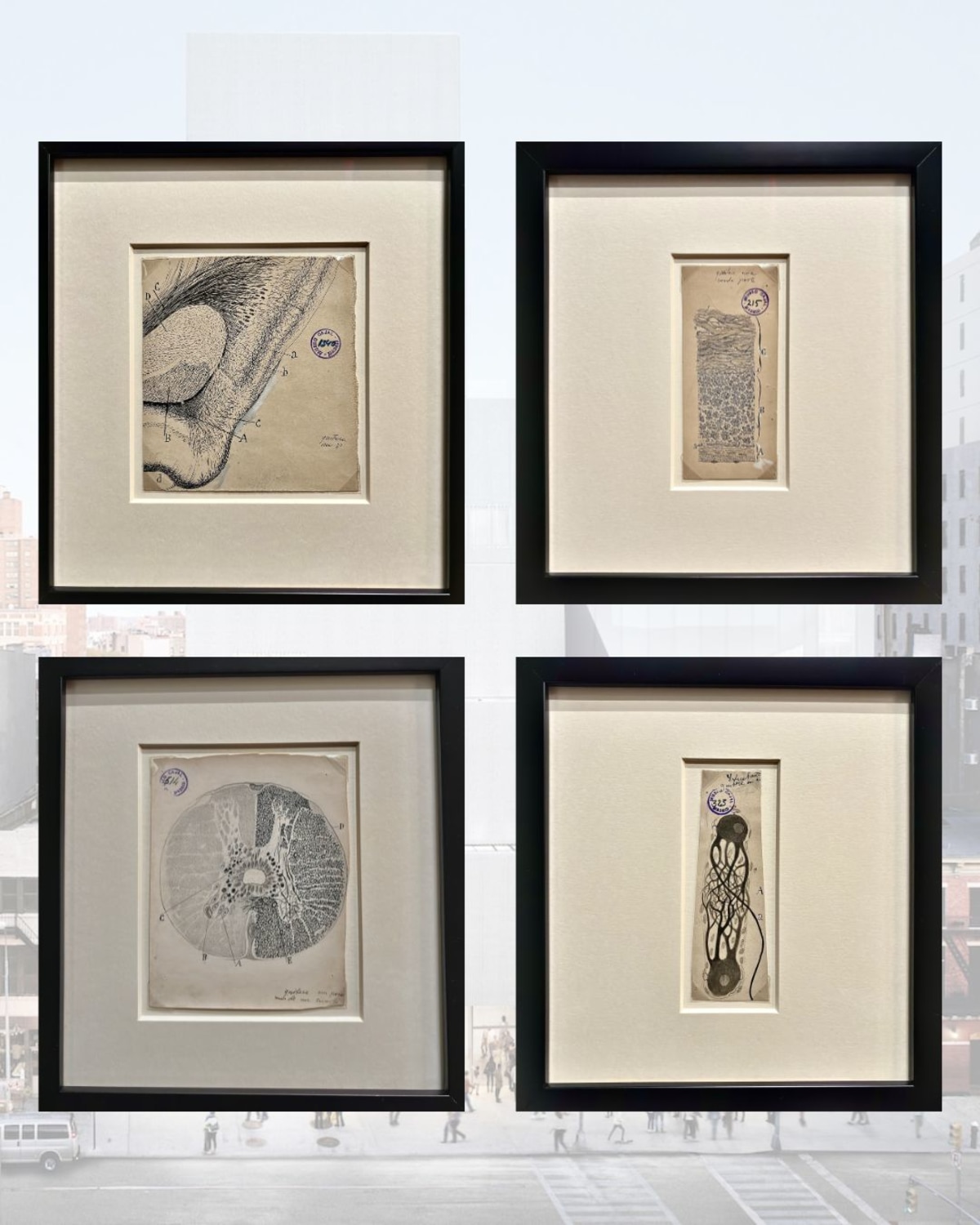
The curation establishes boldly transhistorical correspondences: Cajal’s diagrams are presented alongside Lennart Nilsson’s embryo microphotographs and Wilder Graves Penfield’s sensory homunculus. The twentieth-century avant-gardes — Dalí, Duchamp, Man Ray — precede the bioengineered bodies of contemporary artists such as Lee Bul and Anicka Yi. The thread connecting everything is the question Cajal made his own before anyone else: what is the human being, ultimately?
The Building as Argument
The exhibition is framed by the New Museum’s reopening following an $82 million expansion designed by OMA (Rem Koolhaas and Shohei Shigematsu). The new building — the Toby Devan Lewis Building — doubles the exhibition space of SANAA’s iconic 2007 design through a laminated glass and metal mesh facade that introduces unprecedented transparency toward the Bowery.
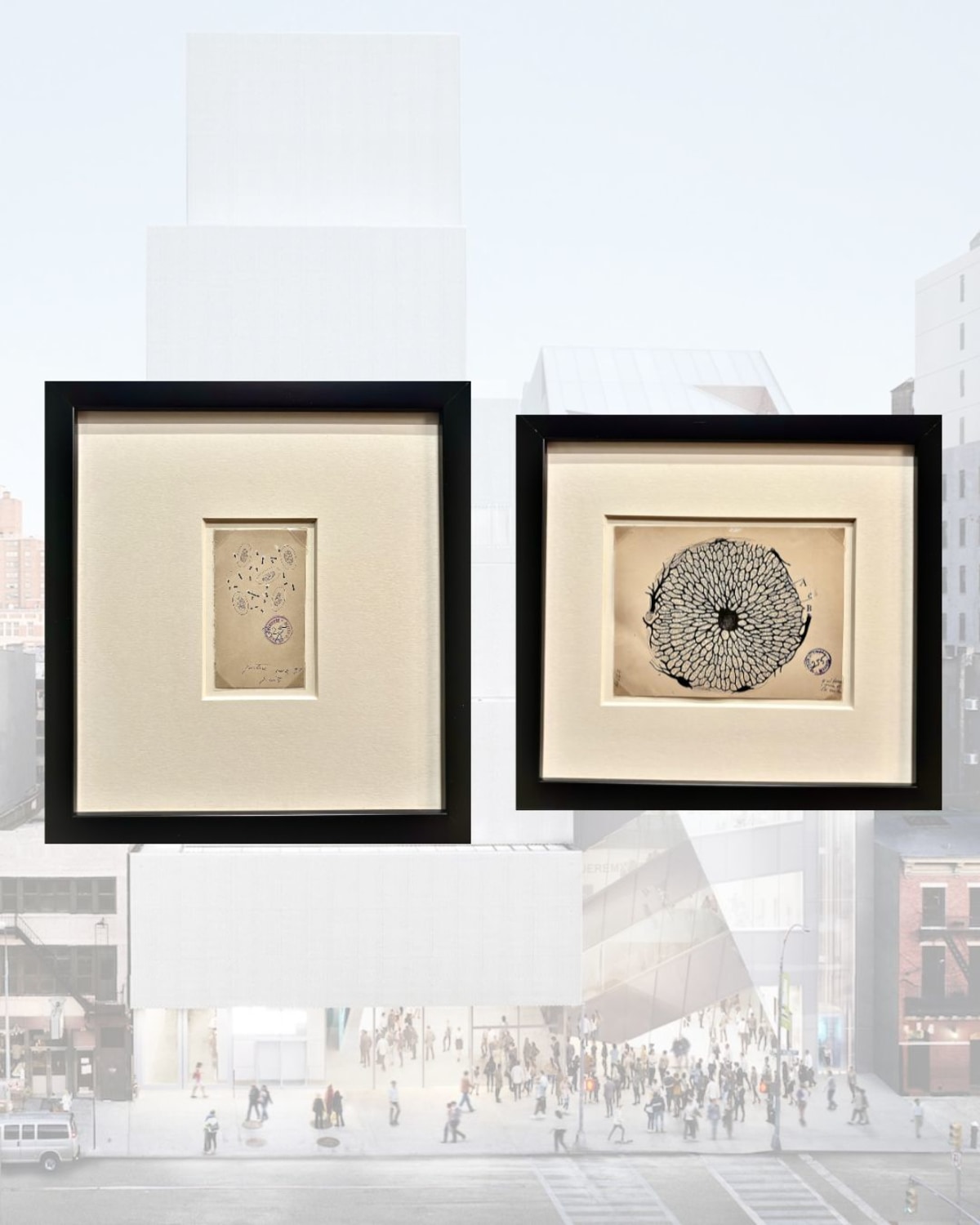
The three upper levels house what the institution calls its “brain”: artist studios, offices and the NEW INC and Rhizome technology incubators. In that space, Cajal’s nineteenth-century drawings coexist in the same visual plane as twenty-first-century biomechanical installations. The architecture is itself an argument about the continuity between scientific observation and artistic creation.
A Recognition That Consolidates a Legacy
The presence of Cajal’s works at the New Museum represents, as the MNCN-CSIC notes, “an important international recognition not only of Cajal’s scientific figure, but also of the extraordinary visual and artistic value of his drawings, confirming the relevance of images that continue to generate dialogue between neuroscience, visual history and contemporary art.”
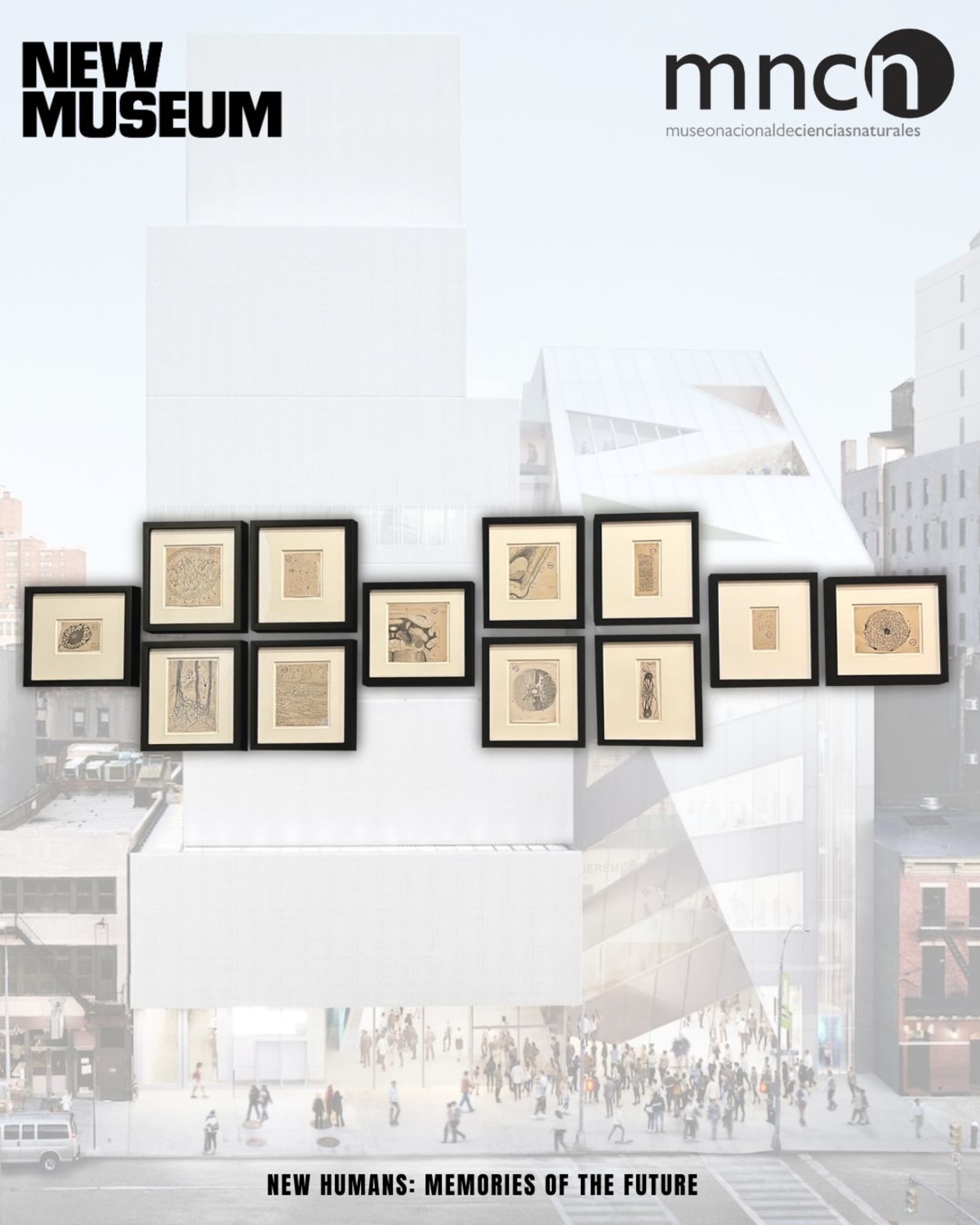
The stay of these twelve works in New York also occurs while Spain awaits the definitive opening of the National Cajal Museum in Madrid. It is a coincidence that carries the logic of history: the drawings that nobody in Spain wanted to publish at the end of the nineteenth century now travel alone, as ambassadors, to the most avant-garde museum in New York.
Sources
- MNCN-CSIC — Official Instagram (@mncn_csic)
- New Museum — New Humans: Memories of the Future
- Cajal Legacy — MNCN-CSIC
- UNESCO Memory of the World — Santiago Ramón y Cajal Archive (2017)
- OMA / Shohei Shigematsu — Toby Devan Lewis Building, New Museum expansion (2026)