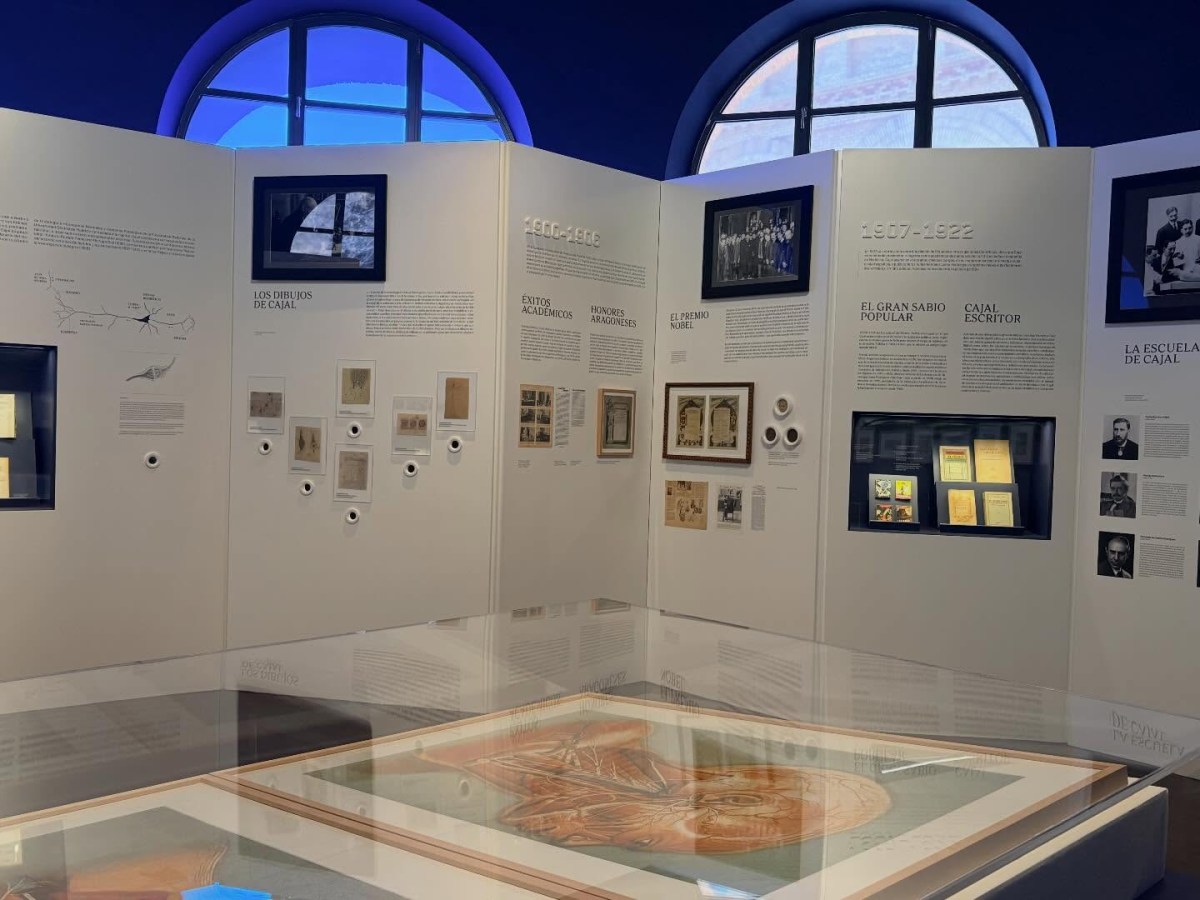
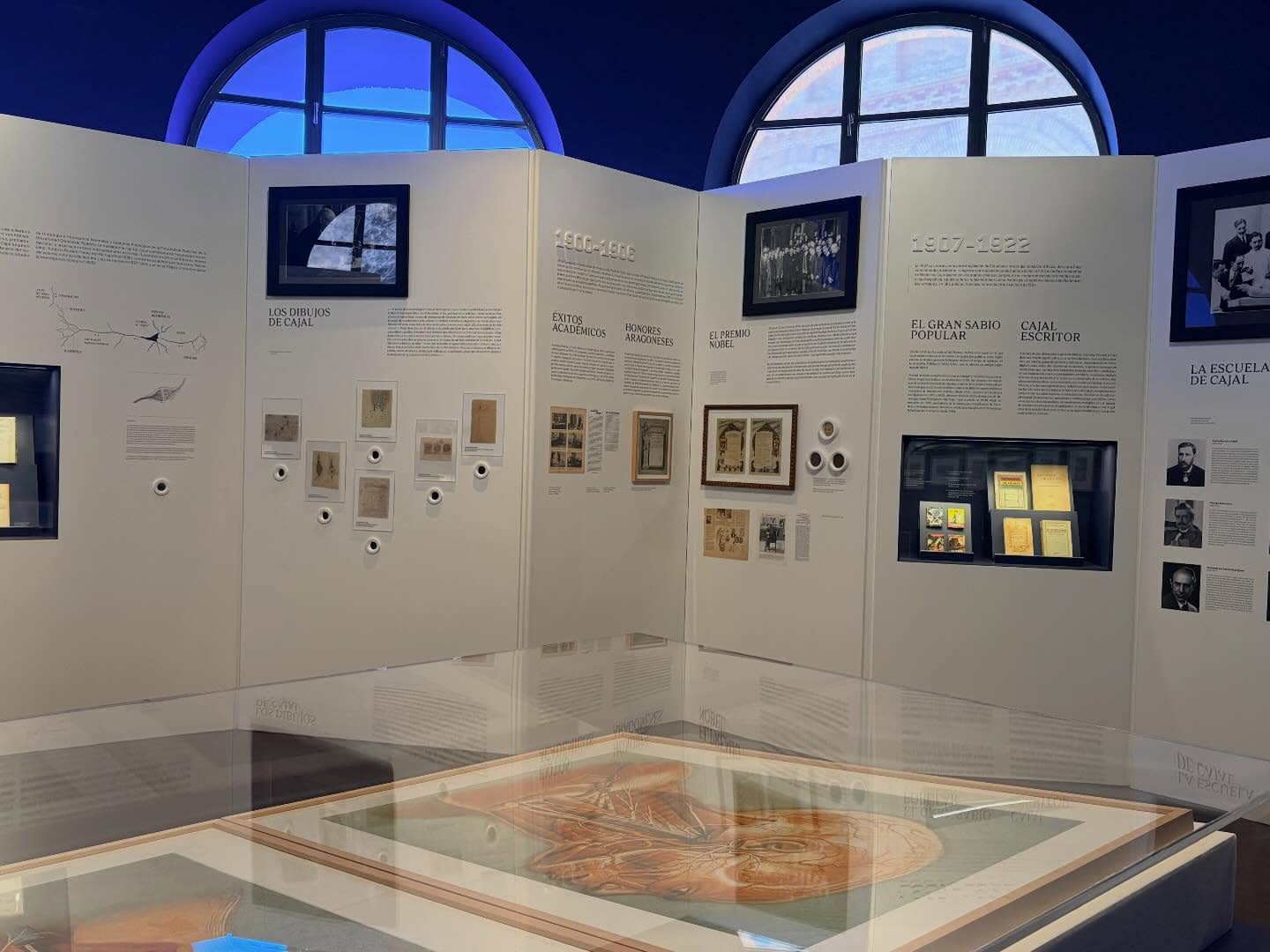
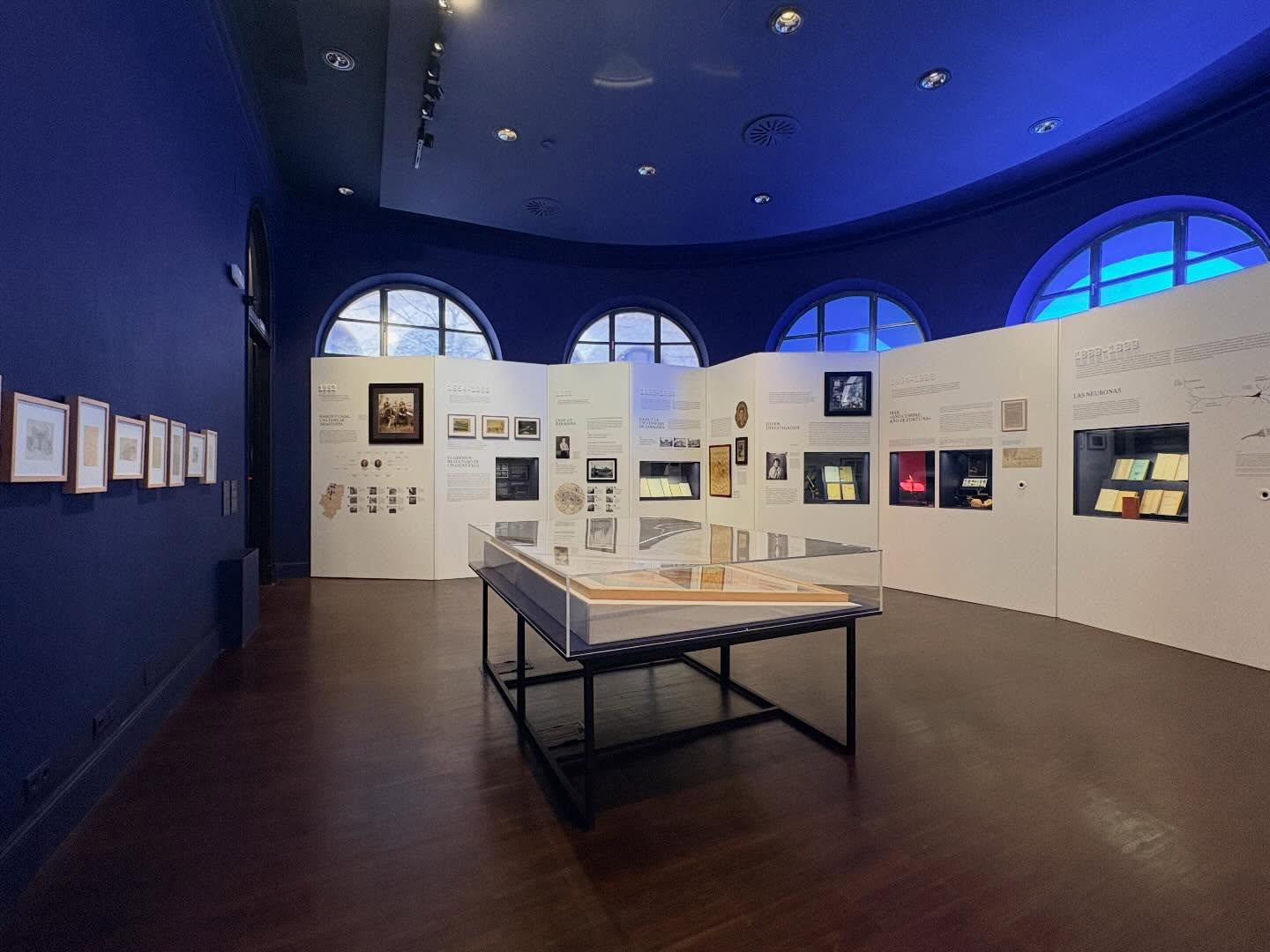
In the spring of 2026, the University of Zaragoza has reached a figure that transcends administrative record-keeping to become a fact of profound cultural relevance: more than 40,000 people have now visited the Espacio Cajal, located in the emblematic Sala Joaquín Costa of the Paraninfo Building. This volume of attendance, achieved after nearly two and a half years since its opening on 25 October 2023, confirms that the figure of Santiago Ramón y Cajal is not merely a reference from the past, but a vertebral axis of contemporary scientific identity and civic pride.
The success of this permanent exhibition lies in its ability to place the “Father of Neuroscience” in his most human and telluric context: Zaragoza, the city that he himself defined as his “revered alma mater.” Here, the visitor does not simply contemplate objects but is immersed in the intellectual process that enabled a young provincial student to revolutionise the universal understanding of human thought.
Zaragoza: root of a universal vocation
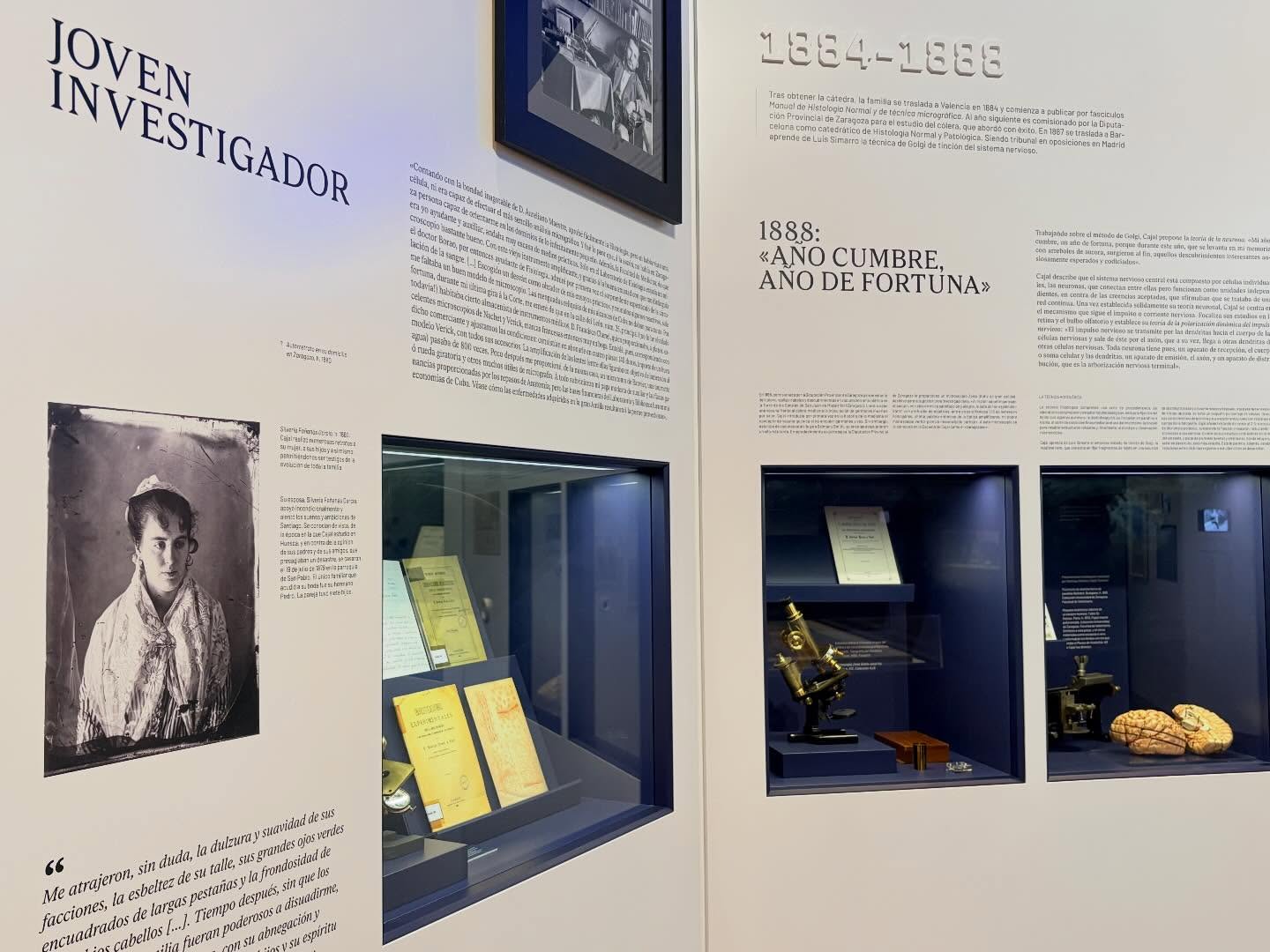
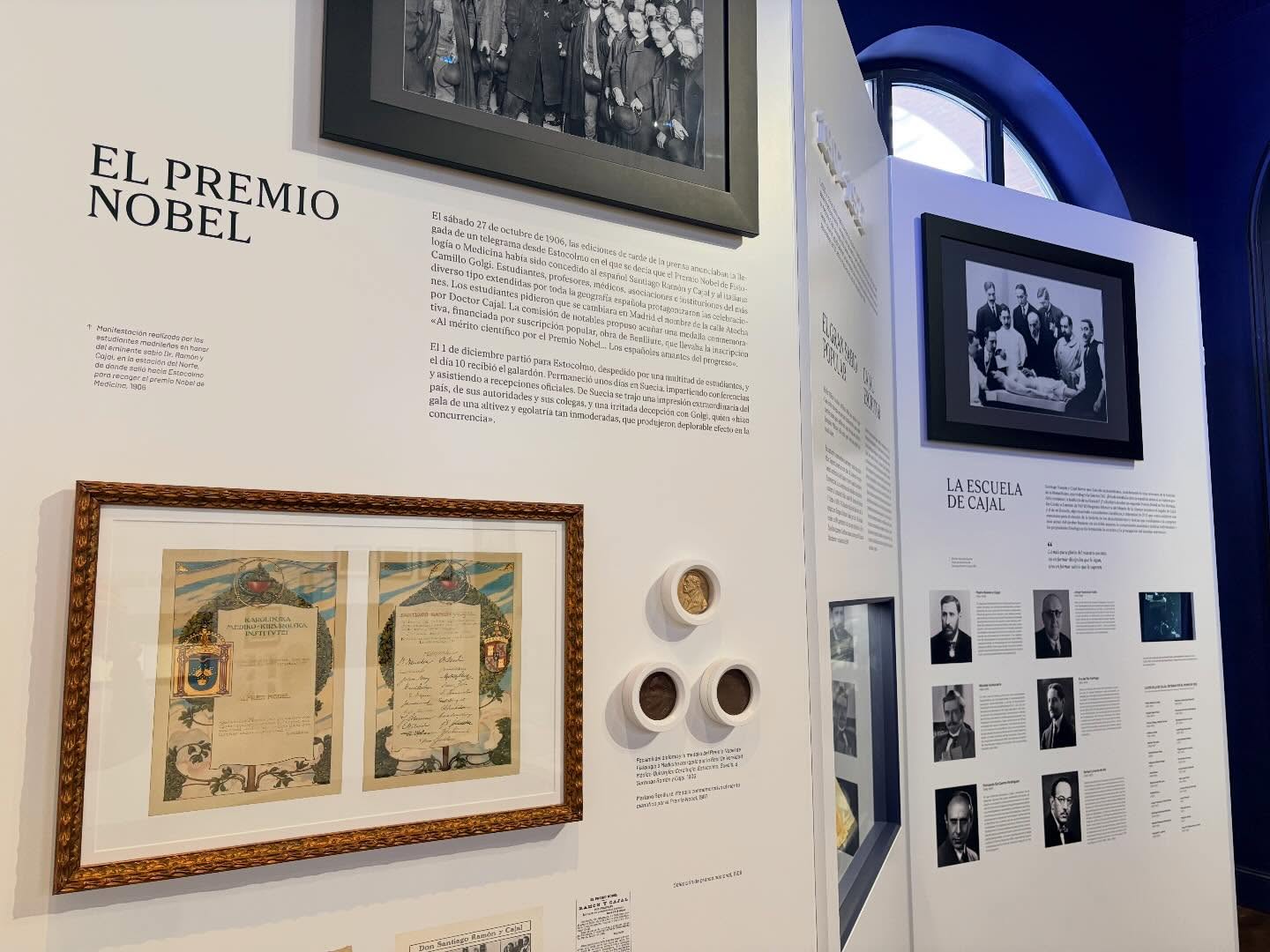
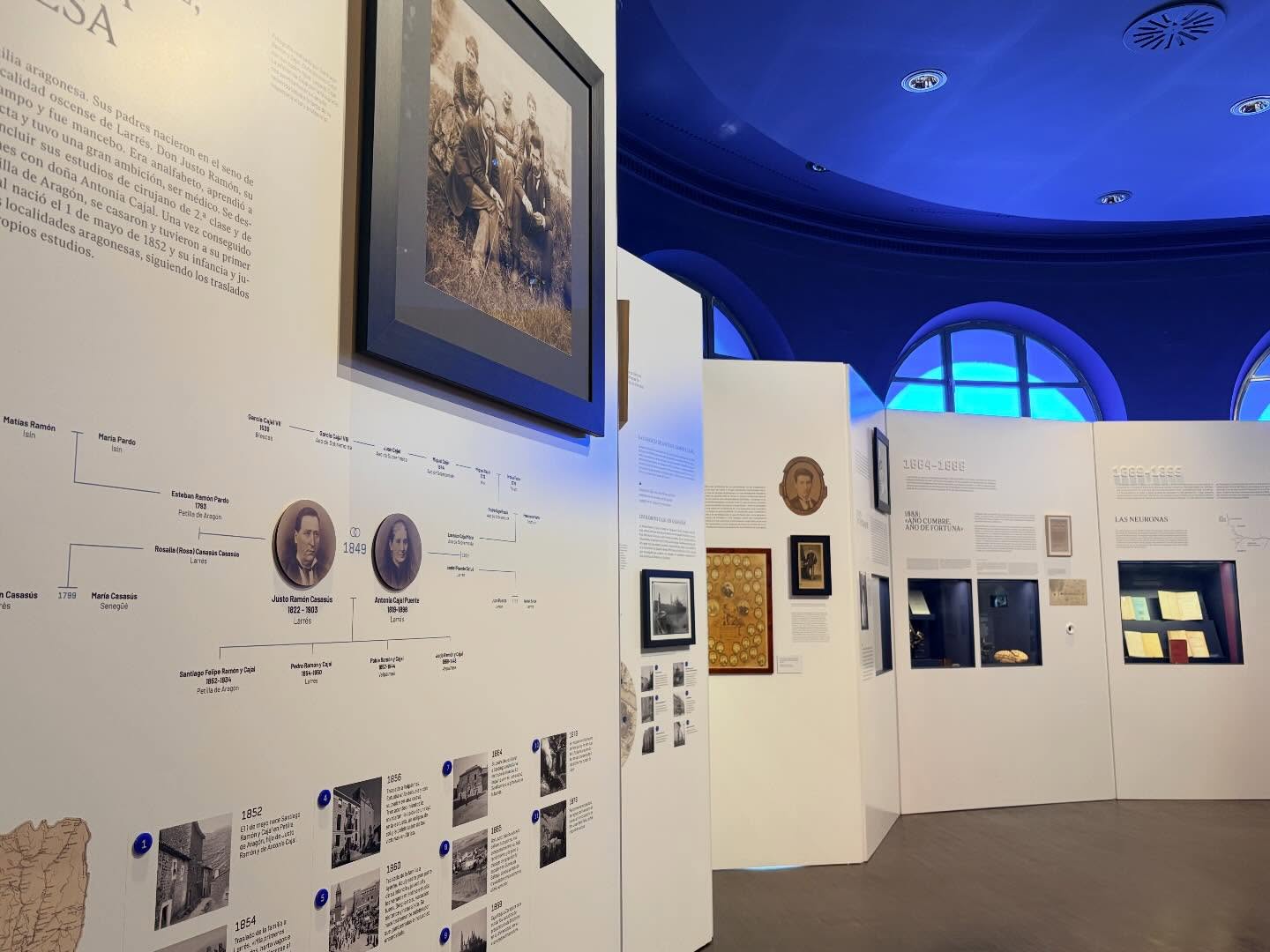
Cajal’s bond with Zaragoza is the guiding thread that lends authenticity to this space. It was in these streets where he married Silveria Fañanás in 1879, at the church of San Pablo, and where he forged his character against adversities of health and scarcity of means. The Paraninfo, designed by Ricardo Magdalena and inaugurated in 1893, serves as the perfect vessel for this legacy. This construction, a listed Cultural Heritage site, was the seat of the Faculties of Medicine and Sciences, the very walls where the Aragonese genius began his teaching career and where today his memory is preserved with institutional rigour.
Timeline of the Espacio Cajal at the Paraninfo
| Year | Historic milestone |
|---|---|
| 1893 | Inauguration of the building as a centre for Medicine and Sciences |
| 1973 | Relocation of the Faculty; the building remains as a historic landmark |
| 2008 | Major renovation of the Paraninfo (Budget > €18M) |
| 2023 | Inauguration of the permanent Espacio Cajal (25 October) |
| 2026 | Surpassing 40,000 visitors: social validation of the legacy |
Silveria Fañanás García: the invisible pillar of neuroscience
One of the most celebrated achievements of the Espacio Cajal is the vindication of Silveria Fañanás, whose figure emerges from the historical shadow to stand as a fundamental pillar in the Nobel laureate’s work. As the official portal highlights: “Silveria is everywhere; she is in each and every one of Cajal’s works” (“Silveria está en todas partes, está en cada una de las obras de Cajal”).
Her role was not merely that of companion; she was a financial manager of heroic efficiency and a technical collaborator in the laboratory. When the Ministry and the University refused to fund Cajal’s trip to the Congress of Berlin in 1889, it was Silveria who, with her personal savings, financed the journey that would secure the international acceptance of the neuron doctrine. Moreover, her work alongside Cajal in the manufacture of gelatin-bromide photographic plates and her support during the nights of vigil at the microscope demonstrate that the advance of Spanish science was, to a great extent, a shared project of will and sacrifice.
The legacy of Silveria Fañanás
| Contribution | Impact on Cajal’s career |
|---|---|
| Funding the 1889 Berlin trip | Worldwide recognition of neuronal individuality |
| Managing household savings | Acquisition of essential technical instruments (Zeiss, Verick) |
| Laboratory technique | Collaboration in developing and fixing microphotographs |
| Charitable will (1927) | Endowment of 25,000 pesetas for talented orphans |
The aesthetics of truth: drawing as a scientific tool
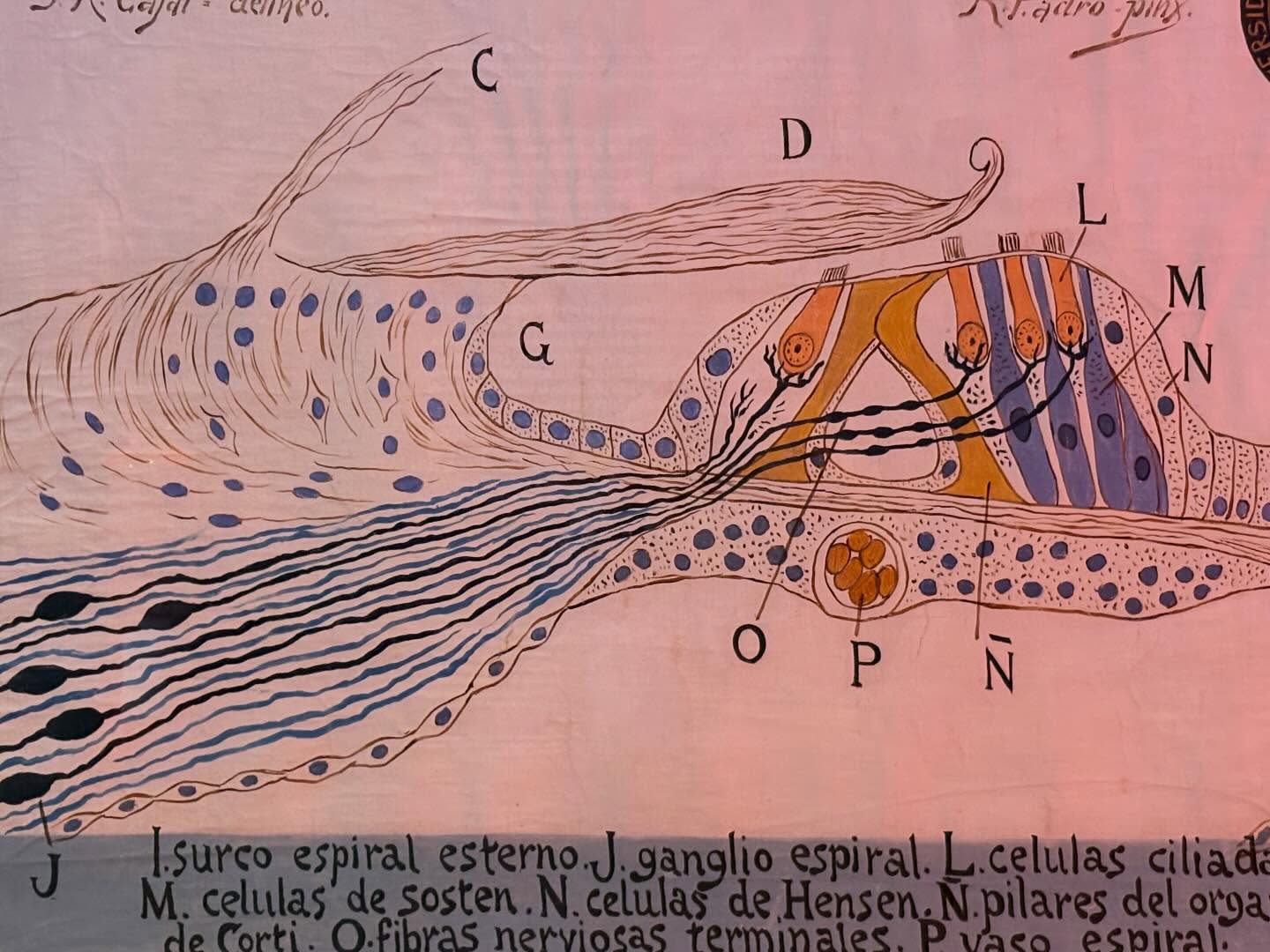
In the Sala Joaquín Costa, the visitor encounters the multifaceted side of the sage: the draughtsman, the photographer, and the writer. Cajal possessed a masterful ability to capture on paper what he saw through the lens, transforming histological observation into a work of art worthy of contemplation. His drawings were not mere copies but analytical interpretations that isolated the fundamental structure of the nervous system, eliminating the incidental to reveal the essence.
Original pieces such as the Verick and Zeiss microscopes, together with histological preparations made by his own hand, allow one to comprehend the precariousness of means with which excellence was achieved. It was with these instruments, using the silver staining method (AgNO₃) and potassium chromate (K₂Cr₂O₇), that Cajal formulated the law of dynamic polarisation, demonstrating that the nerve impulse flows unidirectionally through the neuron.
A living legacy: from the neuron to neurorights
The Espacio Cajal is not an endpoint but a constant dialogue with the future. The official portal underscores that Cajal’s thought is more necessary today than ever in the face of advances in artificial intelligence and the exploration of the connectome.
Under this premise, the sage’s legacy underpins the defence of neurorights, protecting mental privacy and the sovereignty of thought against technological manipulation. His maxim—“Every man can be, if he sets his mind to it, the sculptor of his own brain” (“Todo hombre puede ser, si se lo propone, escultor de su propio cerebro”)—resonates today not only as pedagogical advice but as an ethical declaration about the human capacity for self-transformation and improvement.
Current challenges of the Cajalian legacy
| Challenge | Relation to the sage’s work |
|---|---|
| The human connectome | The culmination of the neuronal map begun in 1888 |
| Artificial intelligence | Digital architecture inspired by Cajal’s neural network |
| Neurorights | Defence of mental integrity, the “sanctuary” of the individual |
| Space missions | Studies on neuronal plasticity in zero gravity |
| National Cajal Museum | Advocacy for an international reference space |
Toward excellence: the meaning of the milestone at the Paraninfo
Surpassing 40,000 visitors is the definitive argument for the creation of the National Museum of Santiago Ramón y Cajal and the Neurosciences. The public’s response in Zaragoza demonstrates that there is a social demand for quality science communication that combines historical rigour with the excitement of discovery.
The Espacio Cajal at the University of Zaragoza, with its free-access hours and guided tours, has established itself as a reference centre where science becomes human. It is, in short, a tribute to the unbreakable will of a man who, from a modest provincial laboratory, made the name of Spain shine with its own light in the firmament of universal science.
Cajal continues to teach us, from the display cases of the Sala Joaquín Costa, that research is the best investment a society can make and that the nation’s future resides in the curiosity and effort of its young people. Upon completing this journey, the visitor takes away not only facts but a renewed inspiration: the certainty that, in the intricate forests of our minds, Santiago Ramón y Cajal remains the beacon that guides our understanding of the world.
More information: Actividades Culturales Universidad Zaragoza.