The history of science is not written solely in great treatises but also in the whisper of private correspondence, where genius recognises mastery. The letter sent on 14 January 1959 from Washington University in Saint Louis by Rita Levi-Montalcini to Dr Fernando de Castro is much more than an archival document: it is the testimony of how the wake of Santiago Ramón y Cajal continued to guide the navigation of world neuroscience decades after his passing. In this missive converge the birth of the molecular era, the mystique of micrographic technique, and the eternal relevance of comparative anatomy as the oracle of knowledge.
This document represents a missing link connecting the histological tradition of the nineteenth century with the biological milestones that would define the twentieth.
Two lives shaped by resistance and rigour
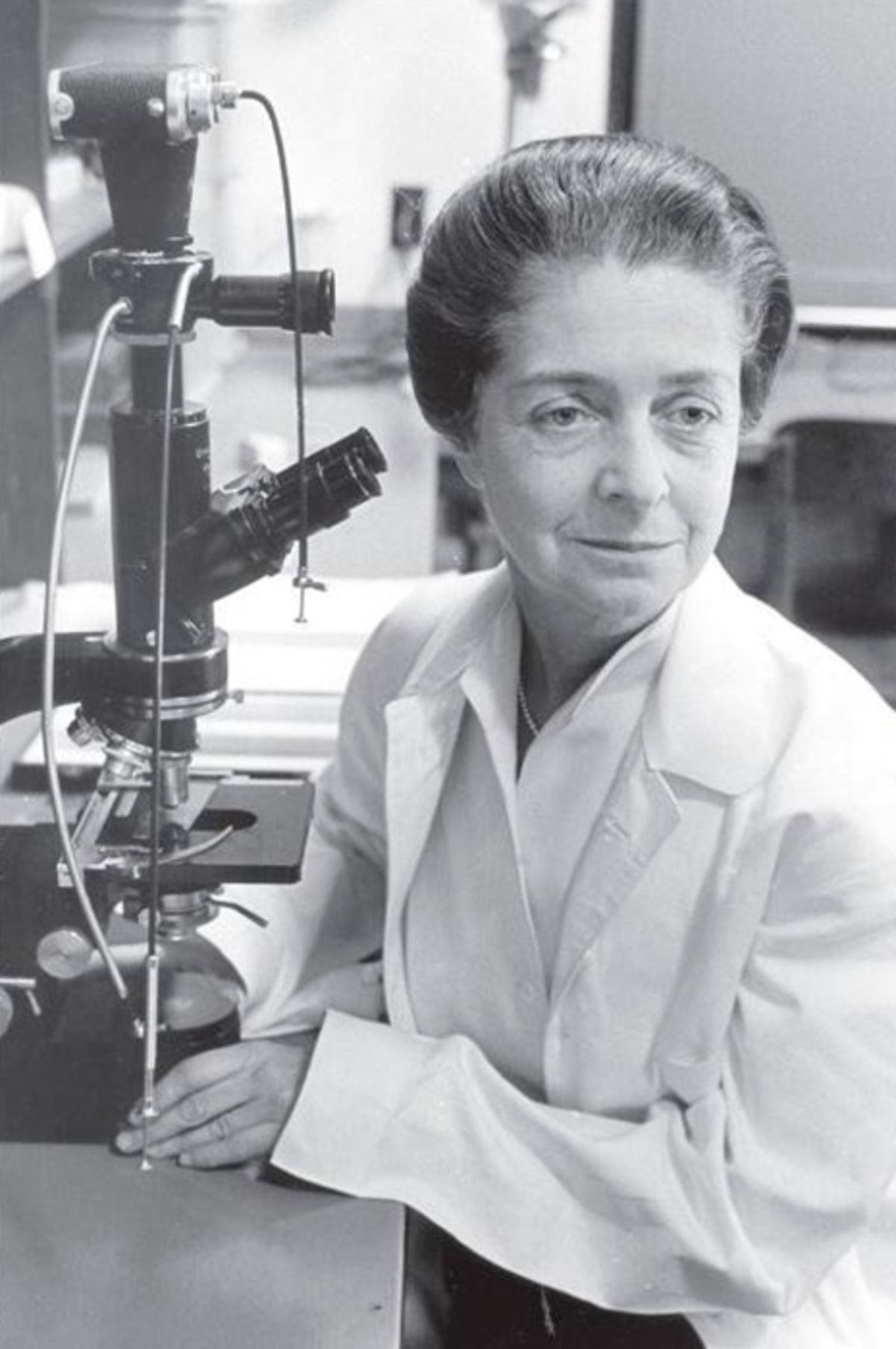
To understand the vibration of this exchange, we must contemplate the trajectories of its protagonists, tempered in the crucible of adversity. Rita Levi-Montalcini, trained under the legendary rigour of Giuseppe Levi in Turin, was forced to practise “trench science” when the racial laws of fascism closed the lecture halls to her. In her bedroom, converted into a clandestine laboratory, she used sewing needles to dissect the fate of neurons, discovering that cellular life is a constant dialogue with its environment. It is revealing that her links with the Cajal School were not new in 1959; already in her formative years, Rita had been exposed to the technical and conceptual influence of the Spanish school, recognising Madrid as the epicentre of neurohistological knowledge.
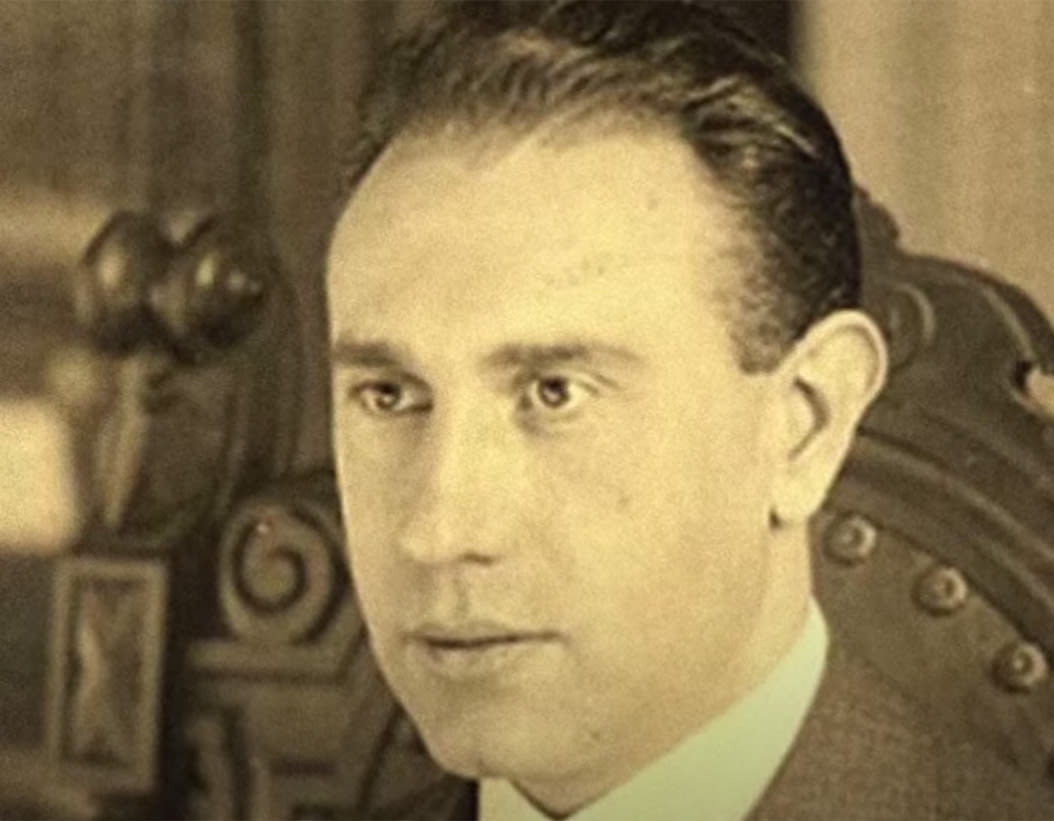
On the other side of the Atlantic, Fernando de Castro (1896–1967) guarded the very essence of the Cajalian legacy. An outstanding disciple and custodian of the technique, De Castro had demonstrated a “stoic efficacy” in defending the Instituto Cajal from the bombardments and looting during the Spanish Civil War alongside Dr Jorge Francisco Tello. Although politics and fate deprived him of international recognition that he brushed against with his studies on arterial chemoreceptors—a finding that Heymans would capitalise on for his own Nobel Prize—his authority in the art of silver was absolute. The future Nobel laureate was not writing to just any colleague; she was writing to the depositary of the Spanish “alchemy.”
The documentary evidence: the 1959 letter
Below is the full content of the missive, a paper bridge between Saint Louis and Madrid that humanises the pursuit of knowledge and highlights international collaboration.
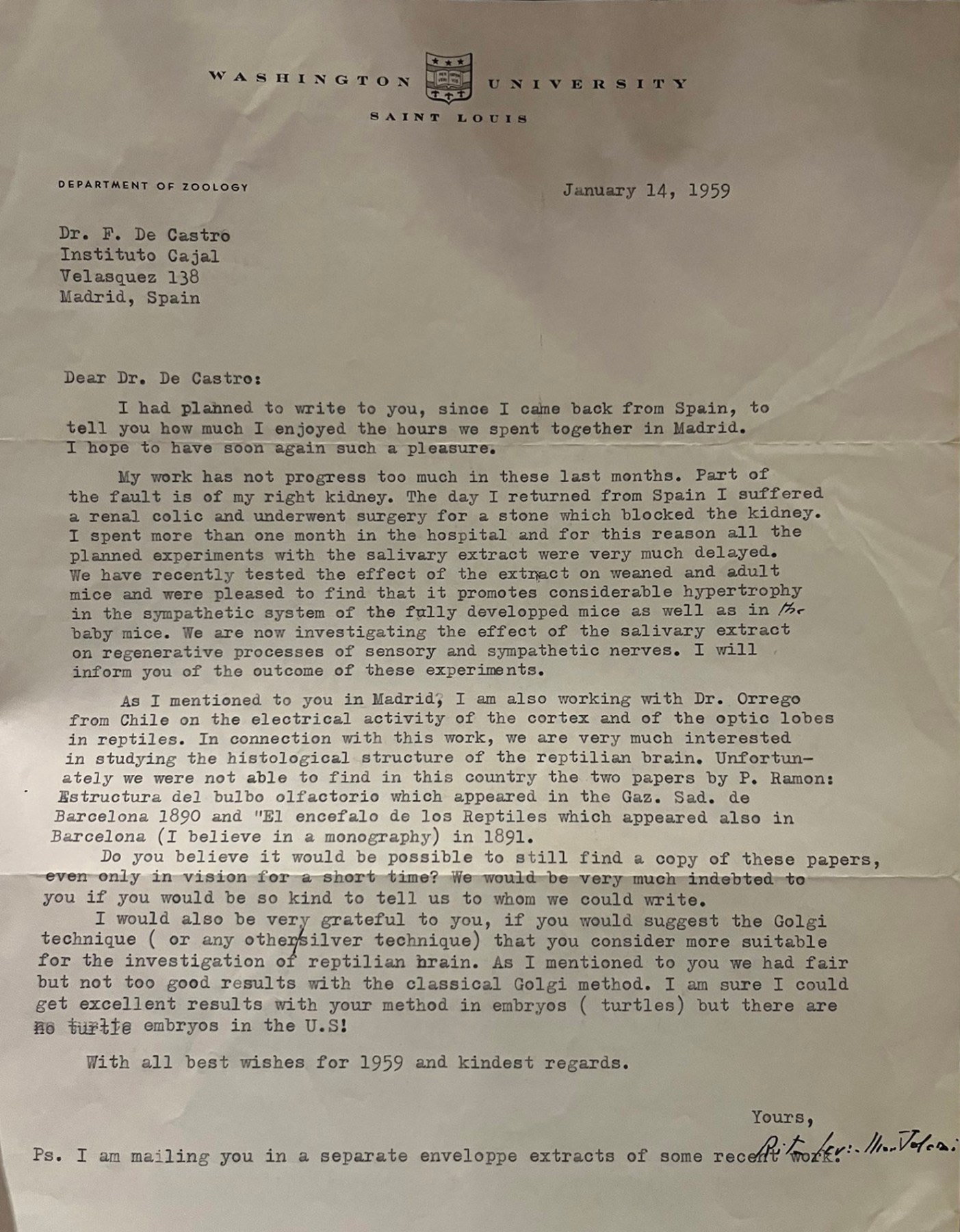
Original in English
WASHINGTON UNIVERSITY
SAINT LOUIS
DEPARTMENT OF ZOOLOGY
January 14, 1959
Dr. F. De Castro Instituto Cajal Velasquez 138 Madrid, Spain
Dear Dr. De Castro:
I had planned to write to you, since I came back from Spain, to tell you how much I enjoyed the hours we spent together in Madrid. I hope to have soon again such a pleasure.
My work has not progress too much in these last months. Part of the fault is of my right kidney. The day I returned from Spain I suffered a renal colic and underwent surgery for a stone which blocked the kidney. I spent more than one month in the hospital and for this reason all the planned experiments with the salivary extract were very much delayed. We have recently tested the effect of the extract on weaned and adult mice and were pleased to find that it promotes considerable hypertrophy in the sympathetic system of the fully developped mice as well as in the baby mice. We are now investigating the effect of the salivary extract on regenerative processes of sensory and sympathetic nerves. I will inform you of the outcome of these experiments.
As I mentioned to you in Madrid, I am also working with Dr. Orrego from Chile on the electrical activity of the cortex and of the optic lobes in reptiles. In connection with this work, we are very interested in studying the histological structure of the reptilian brain. Unfortunately we were not able to find in this country the two papers by P. Ramon: “Estructura del bulbo olfatorio” which appeared in the Gaz. Sad. de Barcelona 1890 and “El encefalo de los Reptiles” which appeared also in Barcelona (I believe in a monography) in 1891.
Do you believe it would be possible to still find a copy of these papers, even only in vision for a short time? We would be very much indebted to you if you would be so kind to tell us to whom we could write.
I would also be very grateful to you, if you would suggest the Golgi technique (or any other silver technique) that you consider more suitable for the investigation of reptilian brain. As I mentioned to you we had fair but not too good results with the classical Golgi method. I am sure I could get excellent results with your method in embryos (turtles) but there are no turtle embryos in the U.S!
With all best wishes for 1959 and kindest regards.
Yours,
Rita Levi-Montalcini
Ps. I am mailing you in a separate enveloppe extracts of some recent work.
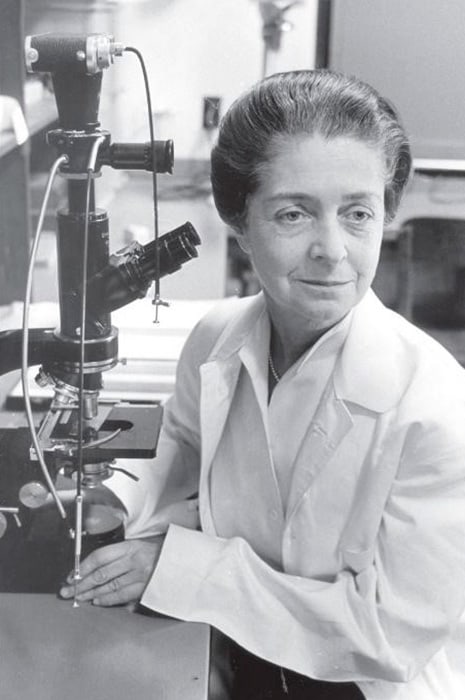
The salivary extract: the birth of a revolutionary concept
The mention of the “salivary extract” places this document at the epicentre of the greatest revolution in developmental neurobiology. Initially, the factor that Levi-Montalcini had detected came from mouse tumours (Sarcoma 180). The transition to salivary glands was the product of a biochemical serendipity: Stanley Cohen used snake venom to purify the extract and discovered that the venom was thousands of times more potent than the tumour. Since venomous glands are modified salivary glands, the team found in the submandibular gland of the male mouse the richest spring of what we now know as Nerve Growth Factor (NGF).
A crucial finding that Rita communicates is that this effect also occurs in “adult mice.” This redefined NGF not only as a developmental factor but as a molecule of maintenance and regeneration throughout life, opening doors to regenerative medicine and future treatments for neurodegenerative diseases such as Alzheimer’s.
Comparative anatomy and the shadow of Pedro Ramón y Cajal
Of fascinating conceptual depth is Levi-Montalcini’s interest in the work of Pedro Ramón y Cajal. Pedro, the brother who scrutinised with infinite patience the brains of “lower” beings to find the universal laws of morphology, becomes in 1959 the necessary interlocutor for cutting-edge science.
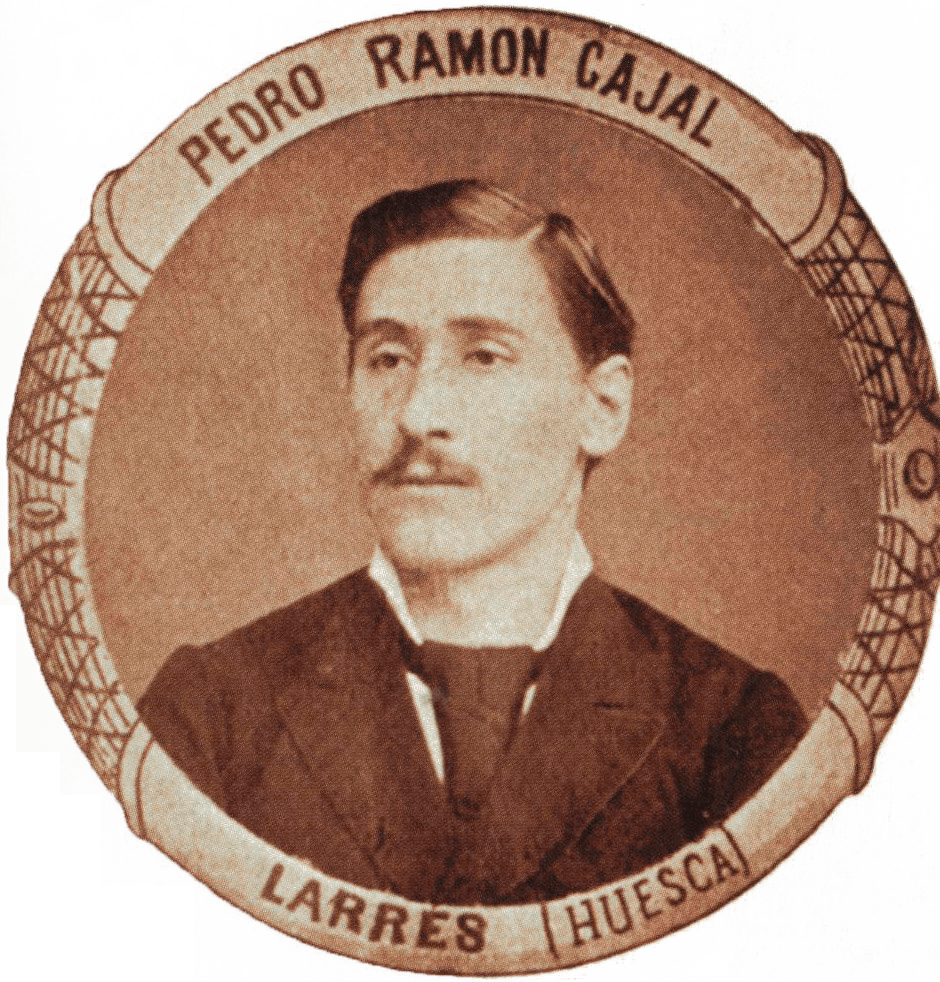 Dr. Pedro Ramón y Cajal
The monographs requested by Rita and Dr Orrego—“Estructura del bulbo olfatorio” (Structure of the Olfactory Bulb, 1890) and “El encéfalo de los reptiles” (The Brain of Reptiles, 1891)—contained pioneering descriptions of the termination of optic fibres and olfactory glomeruli. The researcher needed these structural maps to interpret the electrical activity recorded in the cortex and optic lobes of reptiles. This letter demonstrates that the edifice built by the Ramón y Cajal brothers was not a museum of static truths but a living organism essential to modern neurophysiology.
The De Castro method: technique as the supreme art
The letter reveals a historical truth: technique is not merely a procedure but an art inseparable from interpretation. Levi-Montalcini confesses her difficulties with the “classical Golgi method,” often capricious and unpredictable. The Golgi method, although revolutionary for visualising complete neurons, frequently failed in the face of myelination or irregular fixation.
She therefore requests the secret of De Castro’s silver impregnation variants, specifically designed for embryos and synaptic terminals, which allowed for astonishing stability and clarity. It is the paradox of progress: the advanced biochemistry of Saint Louis needed the artisanal wisdom of Madrid to “see” cellular reality. Without the precision of the “eye of the Spanish School,” Rita’s molecular findings would have lacked their necessary morphological validation.
A legacy protected for the future
This letter is today one of the treasures of the Fernando de Castro Scientific Archive, included by UNESCO in the World Heritage register as part of the “Archives of Santiago Ramón y Cajal and the Spanish School of Histology.”
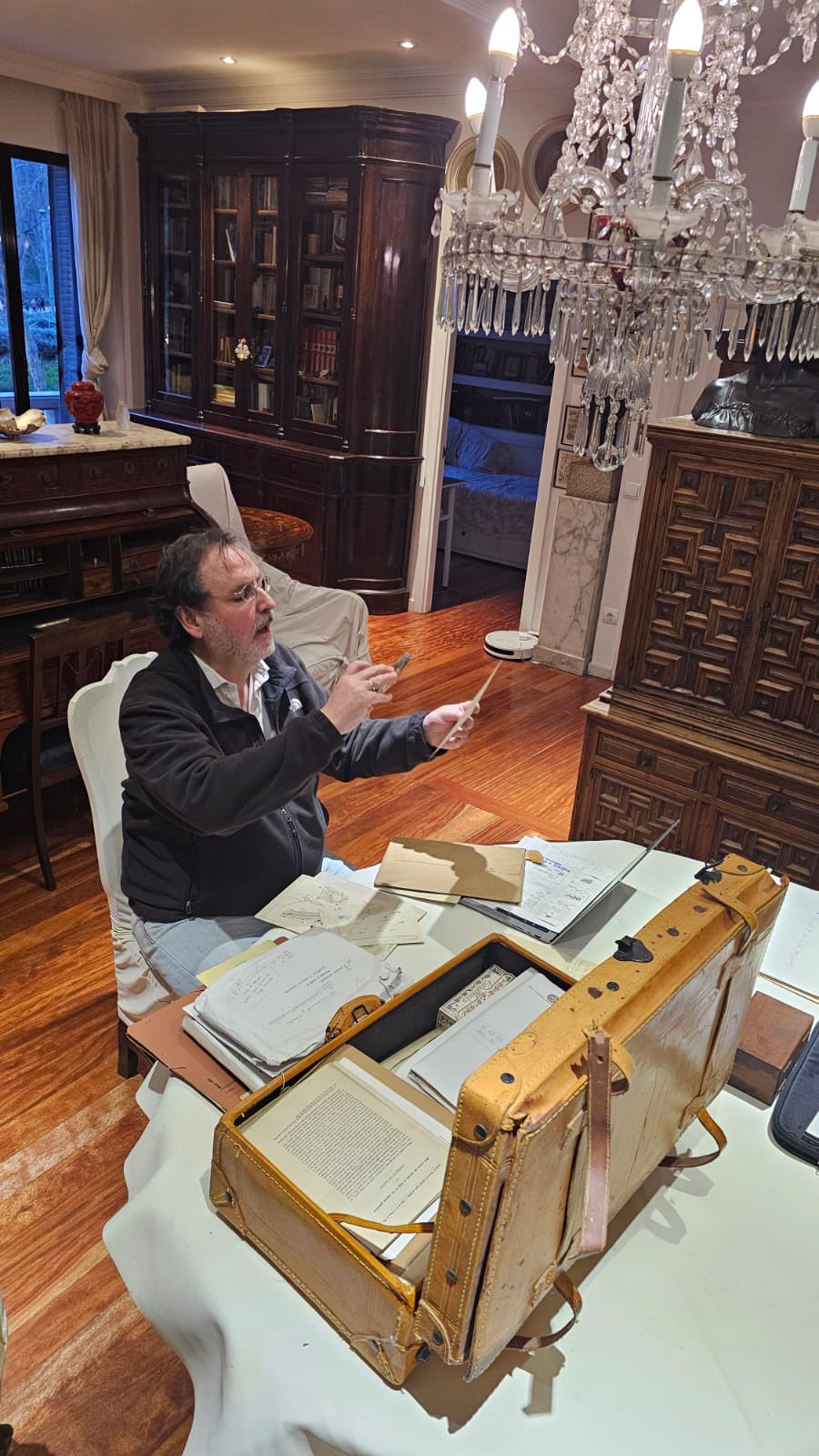
We wish to express our deepest gratitude to Dr Fernando de Castro Soubriet, grandson of Dr Fernando de Castro, for his selfless work in the custody, cataloguing, and dissemination of this legacy. His generosity in allowing us to reproduce this letter and his unbreakable commitment to the preservation of the family’s scientific patrimony guarantee that the dialogue between the past and the future of science remains open for the next generations of researchers.
Conclusion: an eternal legacy
This correspondence is the definitive proof of the universality of our School. It reminds us that science is a continuous dialogue that transcends borders and decades. Rita Levi-Montalcini, who would receive the Nobel Prize in 1986, recognised in 1959 that the substrate upon which her new neurobiology flourished was the fertile ground fertilised by the sage and his disciples.
In every word from Rita to Fernando, the master’s maxim resounds: “Ideas do not last long; one must do something with them” (“Las ideas no duran mucho; hay que hacer algo con ellas”). And they, heirs to that flame, made neurobiology a monument to life, forever uniting the gaze of the nineteenth century with the hope of the twenty-first.
Anales de la Sociedad Española de Historia Natural - Serie II - Tomo II — Docs.Santiagoramonycajal