On the broadcast of the programme “A hombros de gigantes” (On the Shoulders of Giants) on RNE (Spanish National Radio), a fascinating collision occurred between two ways of understanding the future. Under the title “The Genome of Matter,” the airwaves of public radio served as the stage for a dialogue that transcended mere technical outreach to enter the philosophy of human survival.
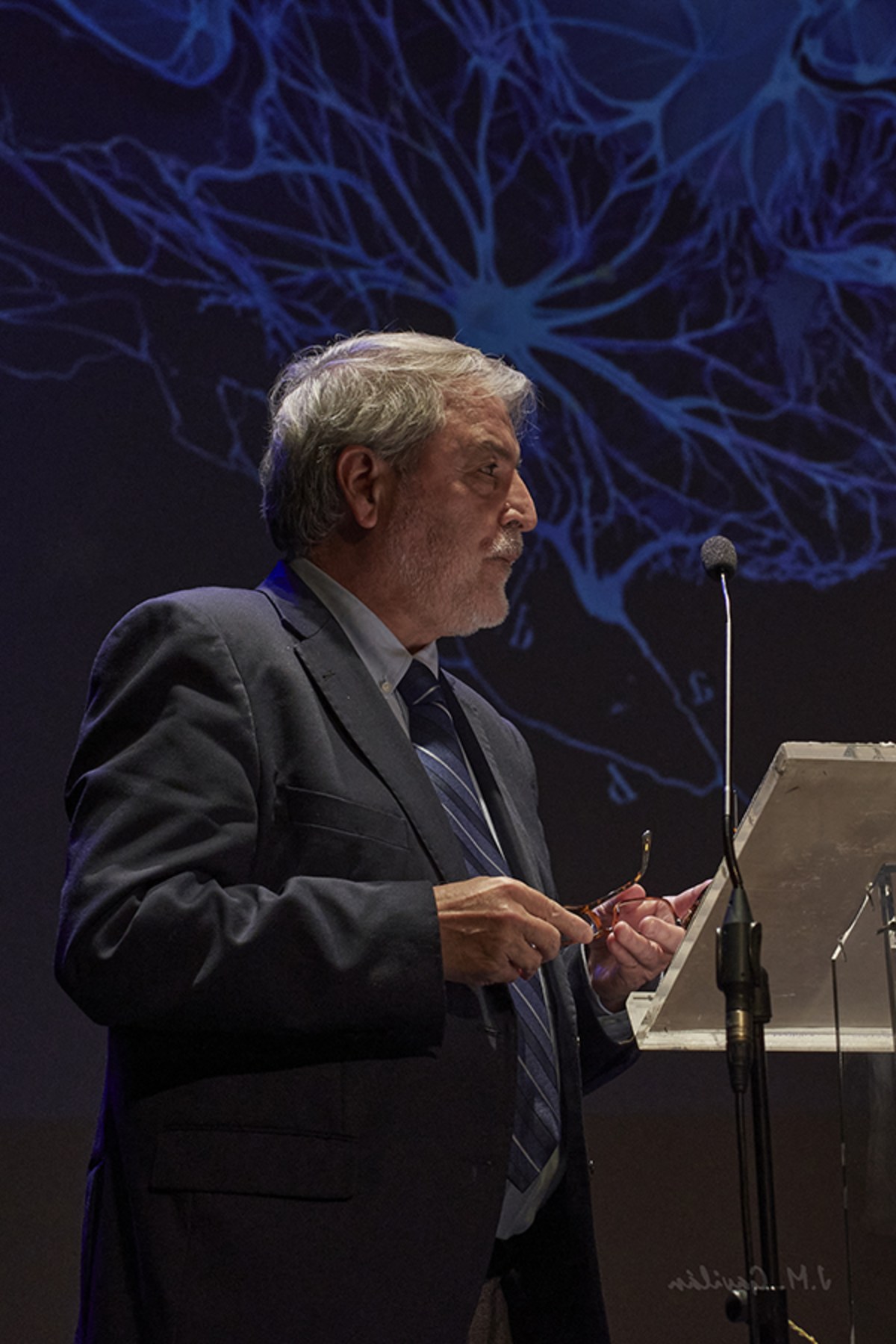
In this context, the figure of Dr Jesús Martínez Frías, Distinguished Cajalian and researcher at the IGEO (CSIC-UCM) and president of the Spanish Network of Planetology and Astrobiology (REDESPA), emerged as the necessary link between materials engineering and the imminent reality of lunar exploration. But to understand the depth of his intervention in 2026, it is necessary to read it through the prism of his literary work, a trilogy that anticipated the ethical dilemmas we face today.
1. The Science: the Materials Genome and the Call of the Moon
The programme, directed by Manuel Seara Valero, addressed the revolutionary “Materials Project,” an initiative explained by Professor Paula Alvaredo that seeks to decode the properties of matter through supercomputing before physically synthesising it.
However, Martínez Frías provided the necessary counterpoint: raw materials. While algorithms predict new materials, humanity needs tangible resources to build them. His intervention recalled that, on the eve of the launch of the Artemis II mission—scheduled for the spring of 2026—the Moon ceases to be an object of contemplation to become a strategic source of isotopes and critical minerals.
The silent passenger of Artemis II
Martínez Frías highlights a detail of immense symbolic weight: on that Orion spacecraft, alongside astronauts Wiseman, Glover, Koch, and Hansen, travels the name of Santiago Ramón y Cajal engraved on an SD card.
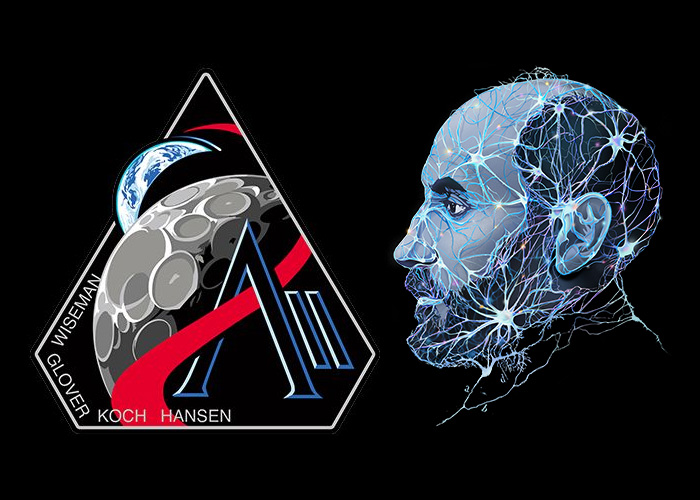 Cajal will travel to the Moon with Artemis
It is not a trivial gesture. By carrying Cajal to lunar orbit, Martínez Frías—the driving force behind this initiative—closes a circle. Cajal explored the “universe of neurons” with his microscope; now, his name oversees the exploration of the physical universe. It is the perfect fusion between neuroscience (the software of the mind) and planetary geology (the hardware of the cosmos).
To learn and enjoy:
“RNE — A hombros de Gigantes — Jesús Martínez Frías.”
2. The Fiction: the Magnetite Trilogy
If on radio Martínez Frías speaks of lunar resources, in his books he explores what those resources do to us. His trilogy of “plausible fiction” poses a disquieting hypothesis: what if matter is not inert? What if geology has a message?
The work is structured in three acts evolving from discovery to transmutation:
-
I. The Darwin Message (2018) The start of the saga. Through 62 unfinished micro-stories, Martínez Frías introduces the disruptive element: crystals of magnetite (a real mineral we possess in our brains) containing an encrypted code.
-
II. The Birmingham Key (2021) The plot thickens by intertwining real history with fiction. The author connects the mystery of the magnetites with the Lunar Society of Birmingham of the eighteenth century.
-
III. The Intangible Dimension (2025) The denouement, presented at the Madrid Planetarium, takes us to the year 2100. In a world where humanity is already an interplanetary species, the protagonists confront the final consequence of the “Darwin Message.”
Conclusion: the convergence
When listening to Jesús Martínez Frías on RNE today speak about the “Genome of Matter,” we hear not merely a geologist describing lunar rocks. We hear the author who has been warning us for years: mastering matter (science) without understanding our own nature (consciousness) leads us to dystopia.
The Artemis II mission carries Cajal’s name to the Moon, but Martínez Frías’s work reminds us that the true journey is inward. Whether through the study of cerebral biomagnetites or the extraction of resources from the lunar regolith, the message is singular: we are the stardust trying to understand itself before scattering across the cosmos.