In memory of Dionisio Martín Zanca.
“Ideas do not last long. One must do something with them.” (“Las ideas no duran mucho. Hay que hacer algo con ellas.”) This dictum from Don Santiago Ramón y Cajal was not merely advice but a generational mandate. A century later, if there exists a figure in the international scientific landscape who embodies that transition from thought to transformative action, it is Dr Mariano Barbacid.
At a moment when Spanish science debates between the excellence of its researchers and the precariousness of its resources, Barbacid stands not only as a titan of molecular oncology but as the critical and moral conscience that—like Cajal in his time—reminds us that talent without sustenance is a lost opportunity for the homeland.
The scientific feat: a masterstroke against pancreatic cancer
Recently, the global scientific community has turned its eyes toward Dr Barbacid’s laboratory at the CNIO. The publication of his latest study in Proceedings of the National Academy of Sciences (PNAS) marks a milestone that borders, in experimental terms, on the definition of miracle: the complete and permanent regression of pancreatic ductal adenocarcinoma in murine models.
Pancreatic cancer, known for its lethality and capacity to develop resistance, has found for the first time an insurmountable wall. The strategy designed by Barbacid’s team is not a simple containment; it is a perfect tactical siege. Through a triple combination therapy, they have managed to simultaneously block the tumour’s escape routes:
- Daraxonrasib (RMC-6236): Inhibiting the central engine, KRAS.
- Afatinib: Cutting EGFR signalling.
- SD36: A selective degrader that eliminates the STAT3 pathway.
The result is the disappearance of the tumour with no trace of resistance for more than 200 days. This finding is not merely a technical advance; it is the culmination of a vision that Barbacid has been perfecting since 1982, when he isolated the first human oncogene.
The Cajalian ecosystem: independence and challenge to dogma
To understand the magnitude of Mariano Barbacid, one must read him in a Cajalian key. Don Santiago taught us to “shake off foreign intellectual tutelage” and challenge established dogmas. Barbacid has made this intellectual rebellion his modus operandi:
- When the world believed cancer was a viral or environmental mystery, he demonstrated it was genetic (HRAS, 1982).
- When medicine was shooting blind, he identified the TRK gene (1986), finding the master key for current precision therapies.
- When cell biology dictated immutable laws about the cell cycle, he proved that the enzyme CDK2 was not indispensable (2003), forcing textbooks to be rewritten.
- When it was thought that elite science could not be done in Spain at the level of the NCI or Bristol-Myers Squibb, he returned to found the CNIO, turning it into a beacon of global excellence.
The voice of conscience: “Lack of funding, lack of funding, and lack of funding”
But Barbacid shares with Cajal not only academic success; he also shares the pain over the management of science in Spain. With the same surgical clarity he applies in the laboratory, he diagnosed the endemic ills of our science: “Lack of funding, lack of funding, and lack of funding” (“Falta de financiación, falta de financiación y falta de financiación”), he declared, adding to the equation a “growing and buoyant bureaucracy” that suffocates creativity.
Ask the scientists abroad whether they would return with the same conditions they have there. The answer would be a resounding yes. (“Pregunten a los científicos en el extranjero si volverían con las mismas condiciones que tienen allí. La respuesta sería un sí rotundo.”)
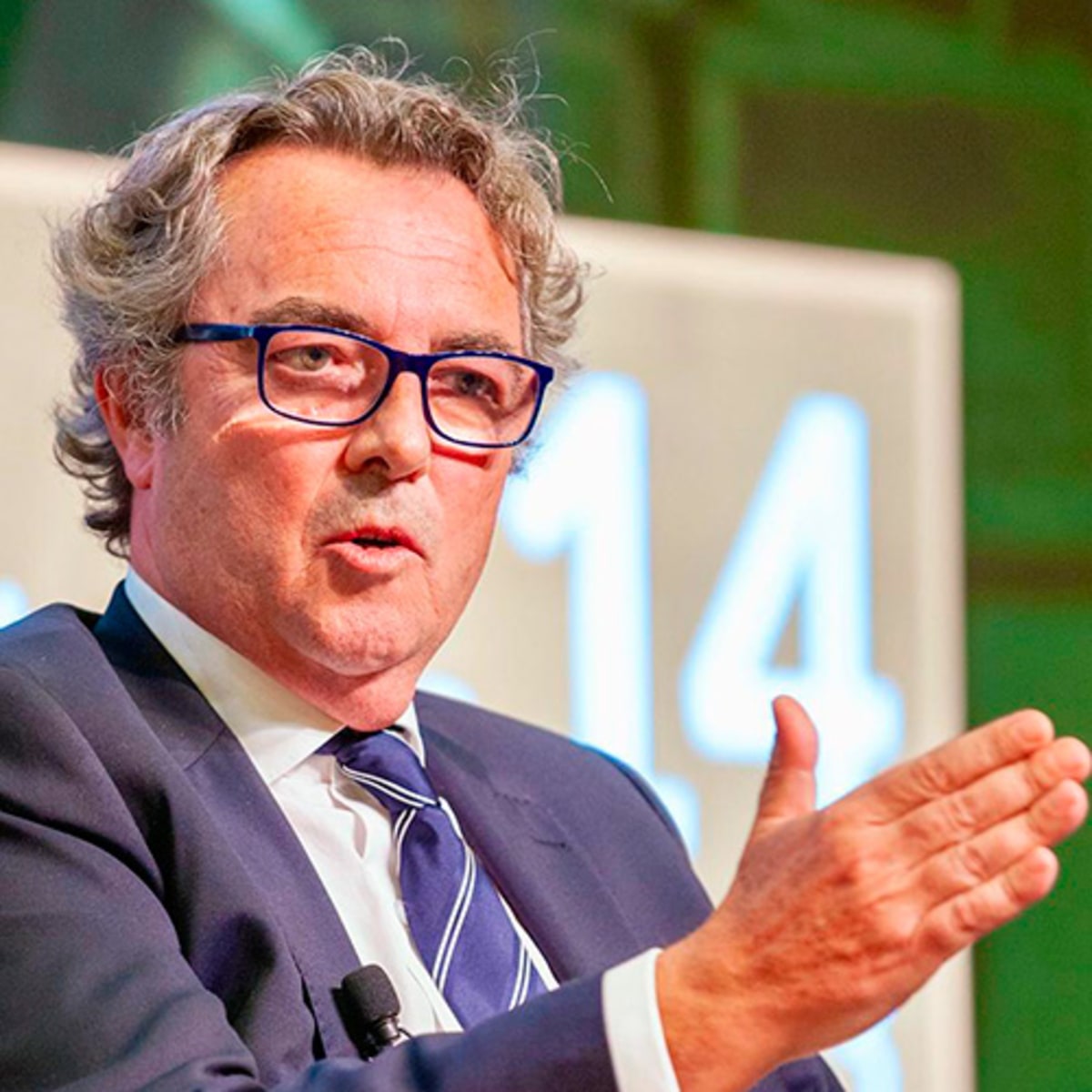
Mariano Barbacid
A living legacy
Mariano Barbacid is, today, the “small homeland, great soul” of the twenty-first century. He represents that Spain which rises early, which researches, and which does not settle.
On this website, sanctuary of Cajal’s memory, we do not merely celebrate the past; we celebrate the enduring relevance of his values. Mariano Barbacid deserves the Nobel Prize, without doubt. But beyond awards, he deserves something that Cajal valued even more: the recognition of his people and the certainty that his struggle has served to “expand the moral and intellectual geography” of Spain.
May this article serve not only to report an unprecedented medical finding but to honour a man who, like our sage, has decided to dedicate his life to the redemption of human suffering through science.
Let us help the researchers. For justice, for science, and for our health.