Article dedicated to the Professor of Toxicology at the University of Leon, David Ordonez Escudero, for his enormous generosity.
Introduction: A Shared Vocation for Truth
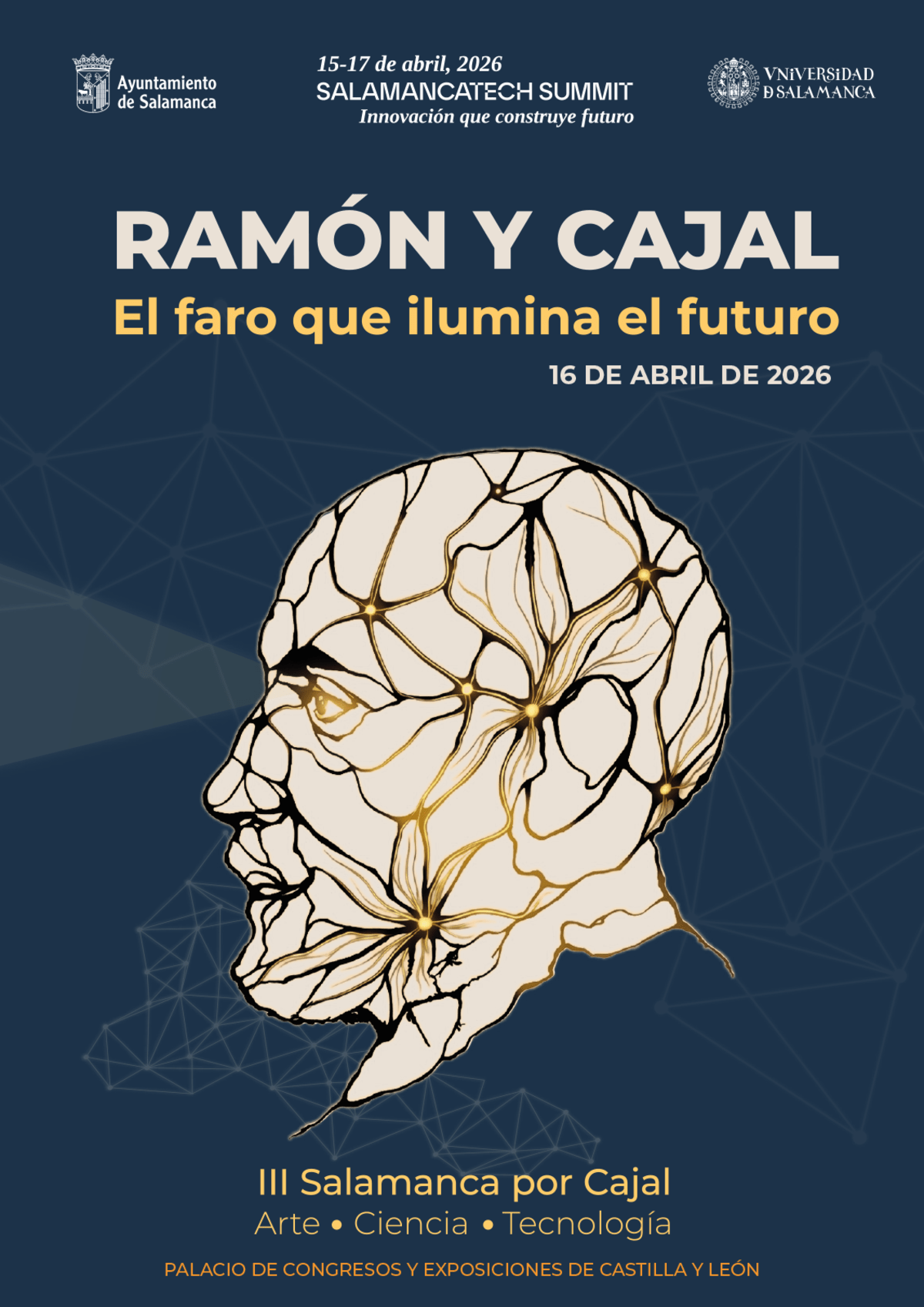
In the annals of Spain’s intellectual history, two peaks rise with singular grandeur, separated by more than three centuries but united by the same aspiration to universality: the School of Salamanca of the Golden Age and the School of Cajal of the Silver Age. This article explores the thesis of “shared universality,” articulated by Professor Idoya Zorroza, which identifies in both phenomena two culminating moments when “Spanish science achieved its maximum internationalisation.” Both schools were not fruits of chance but audacious and necessary responses to profound paradigm shifts. The School of Salamanca rose to forge a moral, juridical, and economic scaffolding in the face of a world suddenly globalised by the discovery of America and fractured by the Protestant Reformation. The School of Cajal, for its part, was born of national introspection after the crisis of 1898 and immersed itself in the global revolution of cell biology to chart a hitherto unknown interior universe: the mysterious architecture of the nervous system. Both, therefore, assumed the transcendental function of being “cartographers of new worlds”: one, of geography and morality; the other, of anatomy and consciousness.
Part I: The School of Salamanca: Moral Cartographers of a New World (16th-17th Centuries)
The Crossroads of an Empire: Context and Origin
The emergence of the School of Salamanca in the 16th and 17th centuries was an intellectual response to the convulsions that defined the dawn of the Modern Age. Figures of the stature of Francisco de Vitoria fused classical philosophy, Christian thought, and the urgencies of an age of discovery to address problems of unprecedented magnitude and complexity.
The Architecture of a Global Order: Ius Gentium and Human Rights
The most enduring and revolutionary contribution of the School of Salamanca was the formulation of a juridical order of universal scope. Francisco de Vitoria is considered the founder of modern international law by radically transforming the classical concept of ius gentium (law of nations). For Vitoria, this was not a mere pact among men but a law with true binding force, emanating from the authority of the “entire world” (totus orbis), which he conceived, for the first time, as a single universal republic (una respublica). They affirmed that all men are subjects of the same inalienable natural rights to life, liberty, and property, concluding that the indigenous peoples were the legitimate owners of their lands.
The Genesis of Economic Science
In the economic field, the School demonstrated a surprising modernity. They were undisputed pioneers in monetary theory. Martin de Azpilcueta formulated a value-scarcity theory, a direct precursor to the quantitative theory of money. Thinkers such as Luis de Molina developed a subjective theory of value, positioning them as direct forerunners of modern economic science and, in particular, of the Austrian School.
The Sovereignty of the People and the Limits of Power
In the political sphere, the School laid the foundations of modern democratic theory. Theologians such as Francisco Suarez argued that sovereignty resides originally in the people as a whole. From this logically derives the right to resistance: a people may disobey and even depose a ruler who has become tyrannical.
Precursors of Modern Physics: The Theory of Falling Bodies
Domingo de Soto was a pioneer in the study of motion, anticipating Galileo Galilei in the formulation of the law of falling bodies. Soto described the motion of falling bodies (“graves”) as “uniformly difform,” which we understand today as uniformly accelerated motion.
Part II: The School of Cajal: Anatomical Cartographers of the Inner Universe (Late 19th - Early 20th Century)
The Dawn of the Silver Age: Science and Regeneration
The School of Cajal flourished during the so-called Silver Age of Spanish culture (approximately 1898-1936). The institutional engine of this regeneration was the Board for the Extension of Studies and Biological Research (JAE), created in 1907 and presided over by Santiago Ramon y Cajal himself.
The Neuron Doctrine: A Perceptual Revolution
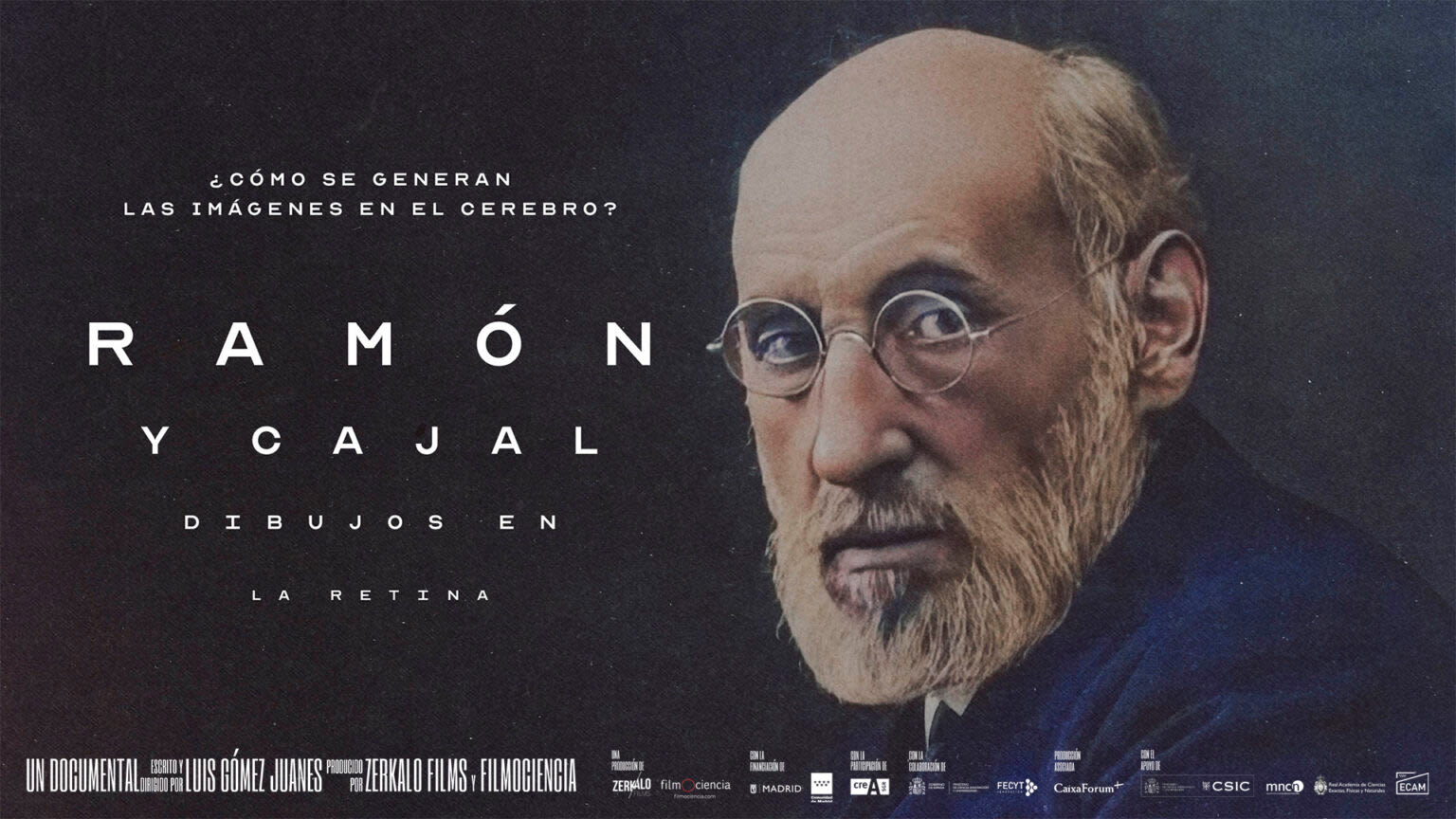
Cajal’s central achievement was the formulation of the Neuron Doctrine. The awarding of the Nobel Prize in Physiology or Medicine in 1906, shared ironically between Cajal and Golgi, staged this revolution.
A Constellation of Talents: The Creation of a Scientific School
The genius of Cajal lay not solely in his capacity for observation but also in his ability to create and direct an elite research school, the Spanish Neurological School, perhaps the most successful in the history of biomedicine. The UNESCO recognised the archive of the entire school as a World Heritage Site, a unique distinction for a scientific school.
Part III: Synthesis: Two Schools, One Universal Legacy
Parallels at the Peak of Global Impact
The “shared universality” of both schools is manifested in their perennial relevance. Cajal remains “the most cited biomedical classic” in international scientific journals. His name graces 1,173 streets, squares, hospitals, and institutes throughout Spain, making him the second most present personality in the country’s street names, surpassed only by Miguel de Cervantes.
Vitoria and Cajal: Two Men, One Universal Mission
Both men were revolutionaries who demolished established dogmas to erect new paradigms that endure to this day. Both were “cartographers of new worlds”: Vitoria charted the moral and juridical order of a planet revealed to be global, while Cajal charted the inner universe of the brain.
From Casuistry to the Microscope: A Shared Methodology
Despite the radical difference in their objects of study, a deeper analysis reveals a shared methodological ethos. Both schools rejected inherited dogmas when the evidence — whether rational or visual — contradicted them.
Conclusion: The Persistence of an Intellectual Tradition
The School of Salamanca and the School of Cajal are not, therefore, two isolated historical phenomena. They are two manifestations of the same extraordinary capacity of Spanish thought to produce, in moments of profound historical and scientific transformation, intellectual syntheses of universal scope. As Cajal himself affirmed, “If there is anything in us that is truly divine, it is the will” (“Si hay algo en nosotros verdaderamente divino, es la voluntad”). That will to know, that passion for truth, is the golden thread uniting Vitoria and Cajal across the centuries.
Lecture: The Living Legacy of Vitoria
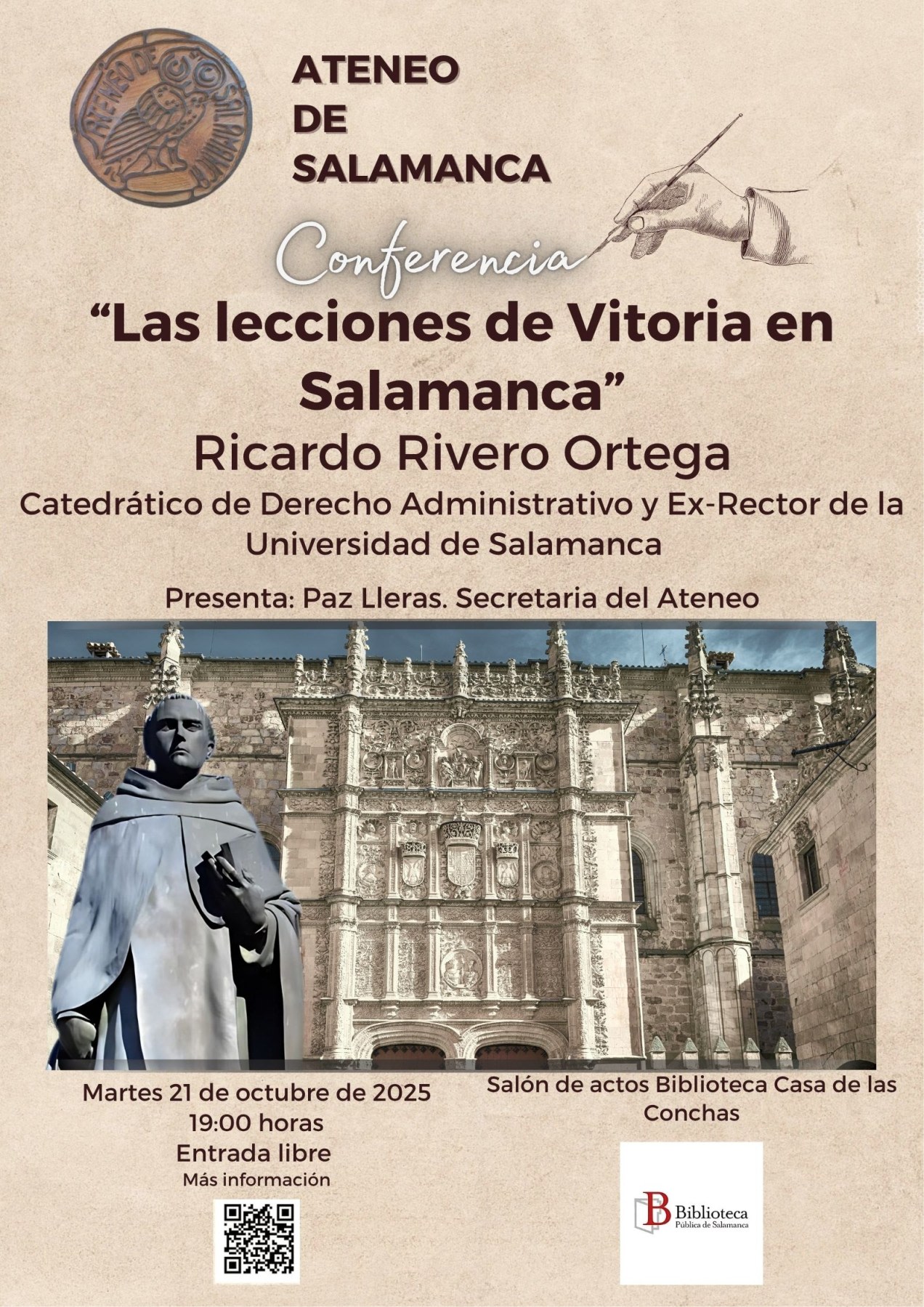
Event Details:
- Title: “The Lessons of Vitoria in Salamanca” (“Las lecciones de Vitoria en Salamanca”)
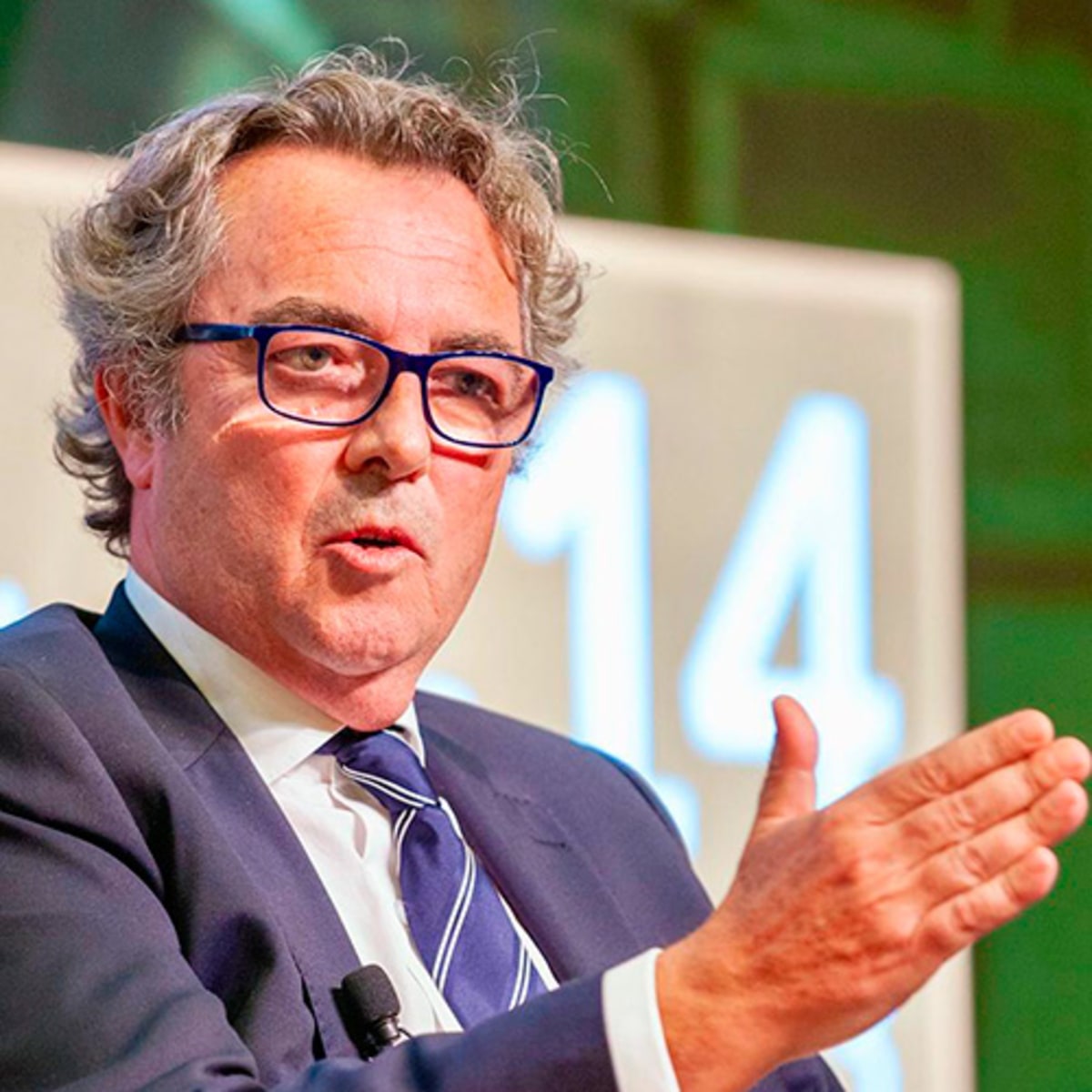
- Speaker: Ricardo Rivero Ortega (Professor of Administrative Law and Former Rector of the University of Salamanca)
- Organised by: Ateneo de Salamanca
- Presented by: Paz Lleras (Secretary of the Ateneo)
- Date: Tuesday, 21 October 2025
- Time: 19:00
- Venue: Auditorium, Casa de las Conchas Library, Salamanca
- Admission: Free
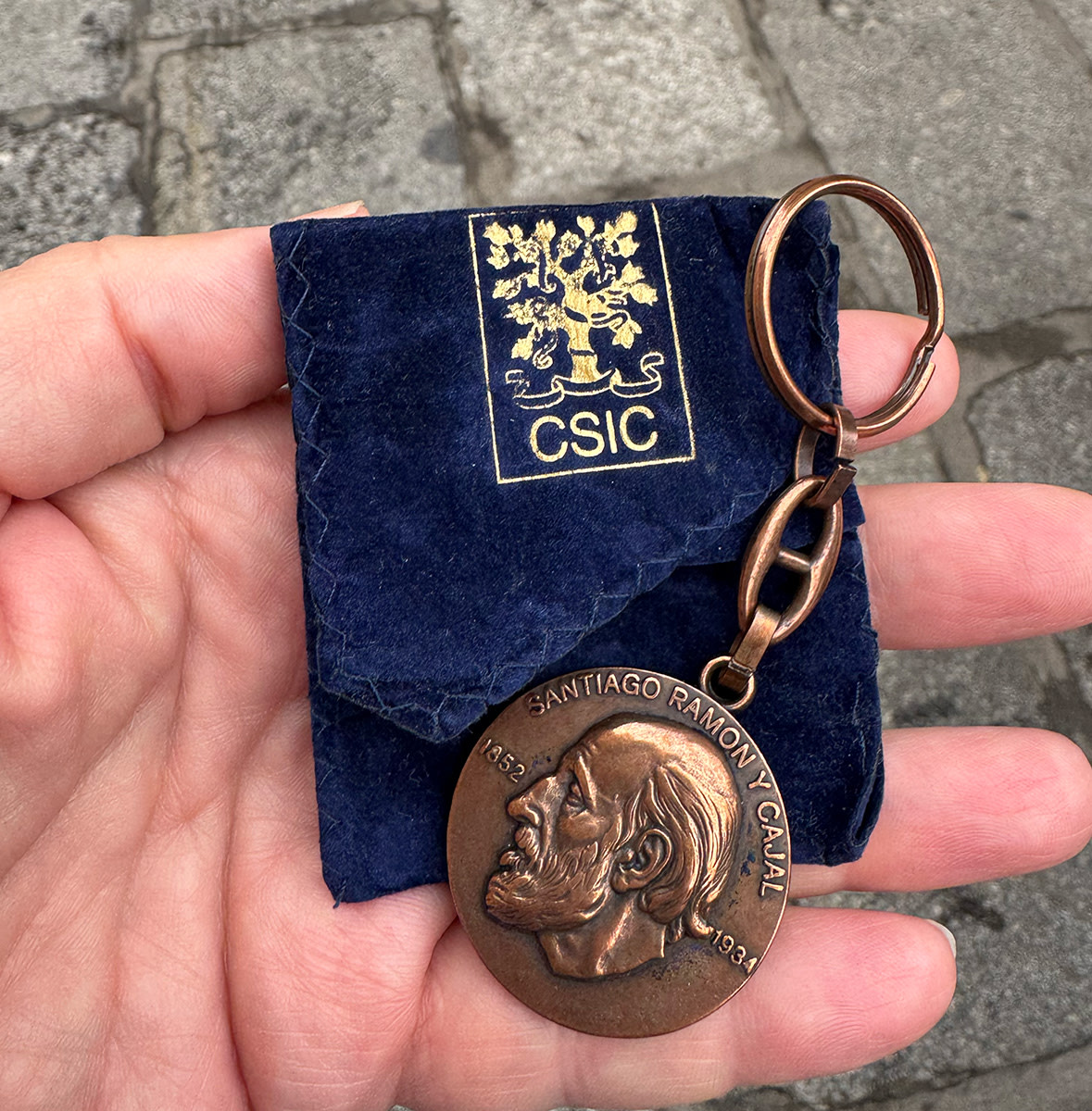
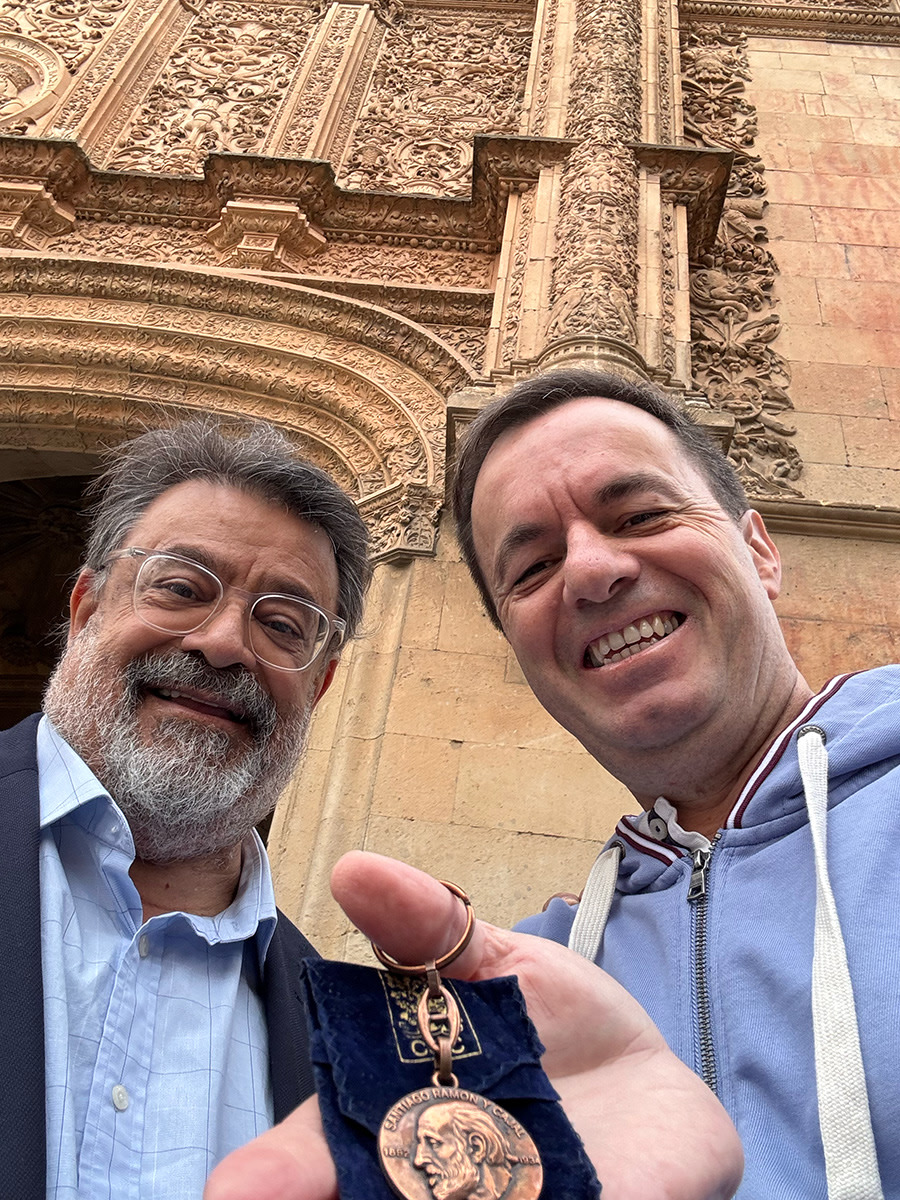
The photograph captures the moment of the presentation of the Santiago Ramon y Cajal keyring to Jose Adserias by the Full Member of RACEF, Prof. Dr. Enrique Lopez Gonzalez.
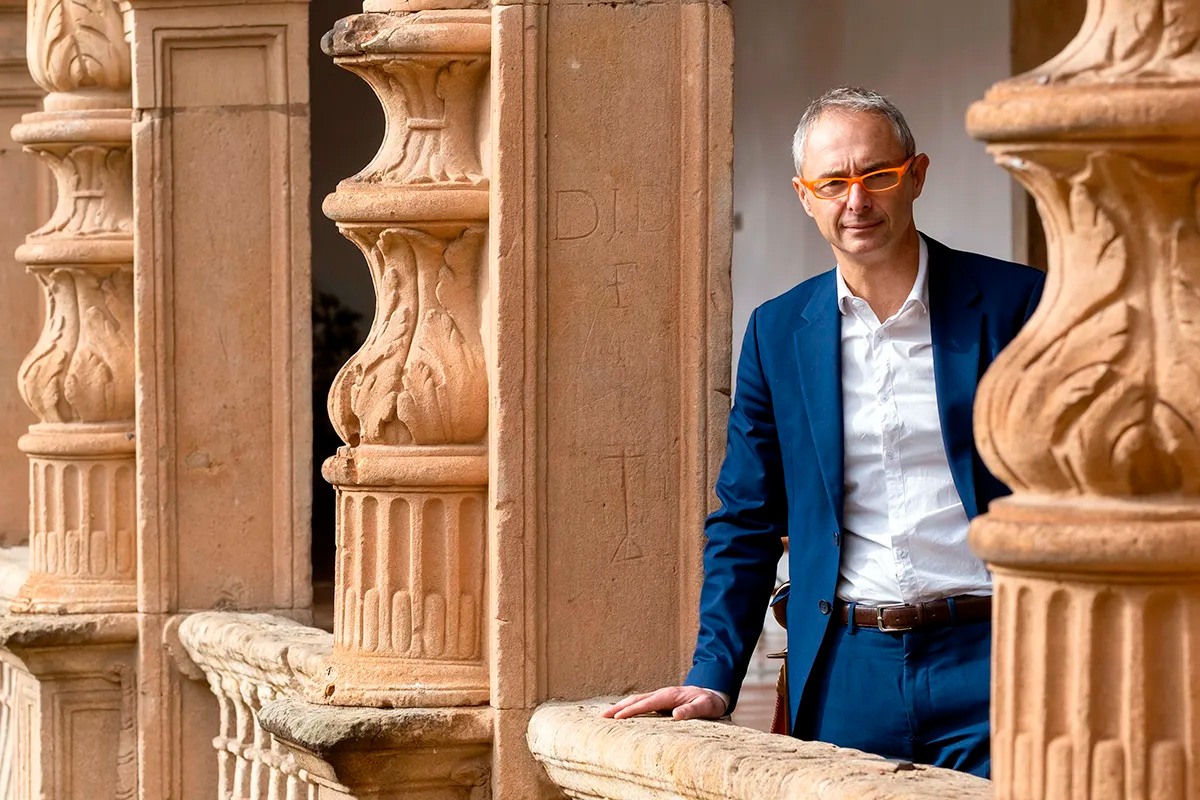
Cover photograph by Felix Corchado.