Introduction: Vindicating a Pillar of Spanish Science
The historical narrative of the Golden Age of Spanish science, a period dominated almost entirely by the figure of Santiago Ramón y Cajal, is fundamentally incomplete. This article proposes to restore to his rightful standing the figure of his brother, Pedro Ramón y Cajal (1854-1950), not as a secondary character or a mere assistant, but as a scientist and physician of the first magnitude. The historical evidence reveals a “unique scientific mind” whose contributions were, on the one hand, indispensable to his brother’s work and, on the other, pioneering and original in their own right.
The central argument of this analysis is founded upon a dual legacy that demands historical reassessment. First, his role as co-architect of the “Neuron Doctrine,” materialized through a scientific symbiosis and a strategic partnership that was crucial in establishing the universal validity of the theory. Second, his independent career as a pioneer of modern clinical practice in Spain, particularly in the fields of diagnostic pathology and gynecological oncology. This duality consecrates him as a quintessential example of the “physician-scientist,” an ideal that fuses the rigor of the laboratory with innovation in patient care.
Following a chronological and thematic structure, this report will detail the phases of his life, from his formative odyssey in South America to his establishment as a professor and researcher. The precise nature of his collaboration with Santiago will be analyzed, his clinical innovations will be documented, and the honors attesting to his national and international recognition will be catalogued. The ultimate objective is to vindicate Pedro Ramón y Cajal, placing him not in his brother’s shadow, but as the other pillar upon which an unparalleled scientific legacy in the history of Spain was built.
Part I: The Odyssey of the Rebel: Forging a Scientist (1854-1888)
The trajectory of Pedro Ramón y Cajal, from his origins in rural Aragon to his consolidation as a physician, was marked by a radical rupture that forged his character and defined his career in a manner distinct from and complementary to that of his celebrated brother.
Table 1: Essential Chronology of Pedro Ramón y Cajal
Date****EventOctober 23, 1854Born in Larres, Huesca.c. 1871Runs away from home and travels to South America.1871-1878Seven-year residence in Uruguay and Argentina.1878Returns to Spain and begins medical studies in Zaragoza.October 17, 1881Medical degree, University of Zaragoza.1881-1888Practice as a rural physician in La Almolda and Fuendejalon.February 11, 1888Marriage to Maria Vinos Redondo.December 17, 1890Doctorate in Medicine, Central University (Madrid).1894-1899Professor of Histology, University of Cadiz.1899Professor of Gynecology and Obstetrics, University of Zaragoza.1902Co-founder of the journal La Clinica Moderna.1917Acquisition of radium and beginning of radiotherapy practice.October 1924Retirement from his professorship.December 10, 1950Death in Zaragoza.
1.1 Family Origins and the Aragonese Crucible
Pedro Ramón y Cajal was born on October 23, 1854, in Larres, a small village in the province of Huesca. He was the second son of Justo Ramon Casasus and Antonia Cajal Puente, and the younger brother of Santiago by two years. The figure of the patriarch, Don Justo, was decisive in the formation of both sons. A man of humble origins who, through an iron will and formidable self-discipline, rose from shepherd and surgeon’s apprentice to become a physician and university instructor. His stern character and relentless ambition for his sons’ education created an environment of intense academic pressure, going so far as to give them lessons in a cave during holidays to maximize their training.
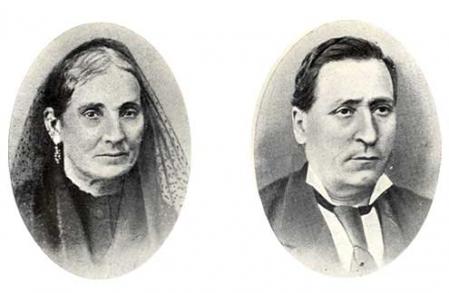
I cannot complain about my paternal biological inheritance. He bequeathed me moral qualities to which I owe so much: the religion of sovereign will, faith in work, conviction in effort, the noble ambition to be something, not sparing any sacrifice, not deviating from the path for secondary causes, and his honesty, natural in men of the mountains, for it is carried so deeply within that it stays with one for life. (“No puedo quejarme de la herencia biologica paterna. Me lego cualidades morales a las que tanto debo…”)
Santiago Ramon y Cajal
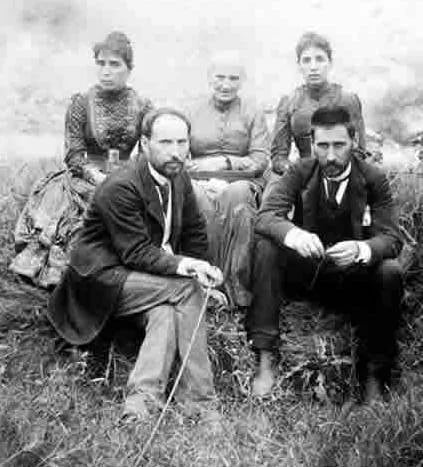
Unlike Santiago, whose childhood was marked by rebelliousness, Pedro was initially a model and disciplined student. The relationship between the brothers was one of deep camaraderie and close complicity, a bond that would endure throughout their lives and constitute the foundation of their future fruitful scientific collaboration.
1.2 The Transatlantic Flight: The Guerrilla-Scholar (1871-1878)
In 1871, at the age of 17, an event drastically altered the course of his life. After failing a subject and fearing his father’s predictable wrath, Pedro made a radical decision: he ran away from home. His journey took him to Bordeaux, where he stowed away on the sailing vessel
Queen bound for South America, beginning a self-imposed exile that would last seven years. This act was not a mere youthful prank, but a fundamental break with paternal authority that would define him forever.
He arrived in the Rio de la Plata region at a time of great political upheaval, in the midst of the “Revolution of the Lances” (“Revolucion de las Lanzas”) in Uruguay. There he enlisted in the revolutionary forces of General Timoteo Aparicio. His experience was that of a combatant: he participated in skirmishes, was wounded in the chest — a scar that would accompany him for the rest of his life — and, thanks to his literacy, an uncommon skill among the guerrillas, was appointed personal secretary to the general. His odyssey culminated dramatically when he was captured, tried for treason, and sentenced to death, being saved at the last moment through the intervention of the Italian and Spanish consuls.
This South American period cannot be seen as a mere biographical anecdote. It was the formative crucible that forged his independent identity. While Santiago, despite his rebellions, always remained within the paternal orbit, Pedro broke from it completely, achieving a psychological and existential emancipation. Surviving seven years on his own, facing war and death, conferred upon him a resilience, pragmatism, and self-confidence that cannot be acquired in a classroom. This tenacity and self-assurance, forged on the pampas, explain his later audacity, both in his capacity to develop original lines of research and in his surprising change of specialty from histology to gynecology, a decision that required immense confidence in his own abilities.
1.3 The Return and the Medical Vocation (1878-1881)
Pedro returned to Spain in 1878, at the age of 24. He was no longer the young fugitive, but a man transformed and tempered by experience. He enrolled in the Faculty of Medicine at the University of Zaragoza, where his performance was exceptional. In 1879 he won by competitive examination a position as an internal anatomy student, and in October 1881 he graduated with the highest honors. This academic success demonstrated that his intellect had not only remained intact but had been sharpened by the experiences of his exile.
1.4 The Rural Physician: Foundations of Clinical Practice (1881-1888)
After graduating, and for the following seven years, Pedro practiced as a rural physician in various Aragonese towns such as La Almolda and Fuendejalon. Far from being a period of stagnation, these years were crucial to his development as the “complete physician” he would become. Rural practice exposed him to a vast range of pathologies and forced him to develop considerable skill as a general clinician, serving as internist, surgeon, and obstetrician.
This direct experience with patients and their ailments laid the foundations for his future career. His work attending births under often precarious conditions provided him with an indispensable practical grounding for his later specialization in gynecology and obstetrics. This trajectory contrasts markedly with that of Santiago, who immersed himself almost immediately in the laboratory and academic life. Pedro’s deep connection with the clinical reality of the patient, acquired during these years, is key to understanding why he was later able to build such an effective bridge between basic science and therapeutic application, a facet that distinguishes and complements his brother.
Part II: A Scientific Symbiosis: Building the Neuron Doctrine (1888-1902)
The period following his years as a rural physician marks Pedro Ramón y Cajal’s entry into the vanguard of neuroscientific research. His collaboration with Santiago was not that of a subordinate, but that of a partner in one of the most important scientific enterprises in history.
2.1 A Distributed Research Program: Dismantling the “Assistant” Myth
The historical narrative has tended to simplify the relationship between the brothers, relegating Pedro to a secondary role. However, rigorous analysis reveals a scientific symbiosis that was far more complex and equitable. Pedro was not a mere “assistant,” but a “strategic partner” in a geographically distributed research program. His self-imposed mission consisted of systematically corroborating in lower vertebrates — birds, reptiles, fish, and amphibians — the discoveries that Santiago made in mammals.
This collaboration was cemented by a deep personal bond and materialized through an intense and assiduous epistolary exchange. In their letters, both discussed findings, exchanged preparations, and stimulated each other as colleagues. Although a large part of this correspondence has been lost, the surviving testimony confirms a dynamic between peers, configuring a research network with Santiago as the theoretical center and Pedro as an indispensable experimental node.
2.2 Comparative Evidence: From Reptiles to Birds
Pedro’s work was fundamental in establishing the universality of the Neuron Doctrine. Without his research, the theory that the nervous system is composed of individual cells (neurons) might have been dismissed as a “mere curiosity of the mammalian cortex” rather than being recognized as a “fundamental principle of biology.” The comparative evidence he provided, demonstrating that neuronal structure was conserved throughout the phylogenetic scale, was the definitive argument that shielded the theory against its critics, the defenders of the reticular theory.
His role went beyond simple confirmation. He acted as a rigorous validator and a universal expander of his brother’s ideas. In science, replication in different models is crucial; Pedro’s work in birds, reptiles, and amphibians provided this cross-taxonomic validation, endowing the doctrine with impregnable robustness.
Moreover, his research was a source of original discoveries that enabled key theoretical advances. A paradigmatic example is his contribution to the formulation of the “Law of Dynamic Polarization.” His study of the optic tectum of birds allowed him to observe certain structures, the “terminal plexuses,” that Santiago had not visualized in mammals. Pedro made these preparations available to his brother, and they served as the direct empirical basis for Santiago’s postulation that the nerve impulse flows in a constant direction, from the dendrites toward the axon. This fact demonstrates a causal and direct influence on one of the pillars of his brother’s work, revealing an interaction between equals.
2.3 The Brain of the Chameleon: International Consecration (1896)
During his professorship in Cadiz, Pedro developed his own lines of research that culminated in the publication of his celebrated monograph Structure of the Brain of the Chameleon (Estructura del encefalo del camaleon, 1896) in the Revista Trimestral Micrografica. This work, in and of itself, brought him international fame and prestige. It was praised by the foremost authorities in European neuroanatomy, such as Albert von Kolliker, Wilhelm von Waldeyer-Hartz, and Wilhelm His, who recognized the extraordinary quality of his work.
This monograph is, in many respects, a declaration of scientific independence. First, the choice of subject — a reptile — placed him firmly within his domain of comparative neuroanatomy, differentiating him from Santiago’s principal focus. Second, the exceptional quality of the analyses and drawings, whose execution was “almost indistinguishable from that of his brother,” demonstrated that he needed no supervision to produce original science of the highest caliber. By publishing it in the prestigious journal founded by Santiago, he contributed to the common project of the Spanish School of Histology, while at the same time claiming his own space as a principal investigator within it.
2.4 Joint Recognition: The Martinez Molina Prize (1902)
The public acknowledgment of this scientific partnership materialized on several key occasions. In 1902, the brothers jointly received the prestigious Martinez Molina Prize for their work “On the Sensory Cerebral Centers in Man and Animals” (“Sobre los centros cerebrales sensoriales en el hombre y los animales”). This award was not merely an honor, but the formalization of their joint scientific enterprise, recognizing Pedro, in practice, as the “Head of Comparative Neuroanatomy” of the Cajal School.
An even more resonant testimony, though implicit, came years later. Although the Nobel Prize in Physiology or Medicine of 1906 was awarded solely to Santiago, his acceptance speech before the Swedish Academy stands as a powerful vindication of his brother’s role. During his Nobel lecture, Santiago explicitly cited “my brother” (“mi hermano”) on four distinct occasions, placing him on the same level as the greatest figures of world neuroanatomy, such as Kolliker, Retzius, and Van Gehuchten. He included him in the group of researchers who confirmed and developed his findings, and specifically highlighted his “very interesting observations” on the optic centers in birds, reptiles, and fish, which were crucial to the universality of the doctrine. This public recognition on the most important scientific stage in the world is irrefutable proof, offered by Santiago himself, of the symbiotic and indispensable nature of their collaboration.
Part III: The Complete Physician: Professorship, Clinic, and Innovation (1894-1924)
In parallel with his decisive neuroscientific work, Pedro Ramón y Cajal forged a clinical and academic career of extraordinary brilliance, demonstrating a unique capacity to transfer the rigor of the laboratory to medical practice and establishing himself as a pioneer of modern medicine in Spain.
3.1 The “Cajal Era” in Cadiz (1894-1899)
In 1894, Pedro obtained by competitive examination the Chair of Normal Histology, Histochemistry, and Pathological Anatomy at the University of Cadiz. His teaching and feverish research activity during the five years he spent there revolutionized the faculty. His impact was so profound that his colleagues and students remembered that period as the “Cajal era” (“epoca de Cajal”). It was in Cadiz that he consolidated his international prestige with the publication of his monograph on the brain of the chameleon. When he departed in 1899, his peers honored him with an album of signatures and a gold plaque, an eloquent testimony to his transformative work.
3.2 The Return to Zaragoza: A Strategic Shift to Gynecology (1899)
In 1899, Pedro won by merit competition the Chair of Clinical Obstetrics and Gynecology at the University of Zaragoza, his home city. This change of specialty, apparently drastic, was not an abandonment of science, but a strategic reorientation toward the clinical application of his research-oriented mindset. The primary motivation was practical: the desire to return to Zaragoza. However, the move was conceptually brilliant: he did not abandon his expertise, but transferred the methodological rigor of the histology laboratory directly to the gynecological clinic. His deep knowledge of pathological anatomy was a tool of incalculable value for the diagnosis and treatment of female tumoral pathologies. By combining his professorship with a successful private practice and continuous research, he created an integrated model that today would be termed “translational medicine,” closing the cycle from basic science to therapeutic innovation.
3.3 Pioneer of Clinical Oncology in Spain
In Zaragoza, Pedro established himself as a pioneering figure in clinical oncology, introducing practices and technologies that were at the forefront of European medicine.
3.3.1 Biopsy as a Systematic Diagnostic Tool
He was one of the first physicians in Spain to systematically perform preoperative and intraoperative biopsies. This practice was revolutionary, as it enabled a definitive diagnosis to differentiate malignant tumors from chronic inflammatory processes that, clinically, could be indistinguishable. This application of histopathology to immediate diagnosis in the operating room represented a qualitative leap in the safety and efficacy of oncological surgery.
3.3.2 Precursor of Radiotherapy
In 1917, Pedro acquired a quantity of radium, the first available in Aragon for therapeutic use. He thus became a “true precursor” and “pioneer” in the use of radiotherapy in Spain. He treated hundreds of patients with tumors, both benign (leiomyomas) and malignant, particularly in the gynecological field. His initiative placed him at the vanguard of this technology in the country, as the therapeutic use of radium, discovered in 1898, was still in its infancy and was often led by the gynecologists themselves.
Faithful to his nature as a scientist, Pedro did not merely apply the new therapy: he researched it. He conducted detailed histopathological studies on the effects of radium on cancer cells, documenting with his own drawings the cytological alterations induced by radiation. Even more remarkably, he was one of the first to observe and describe the phenomenon of radioresistance. He noted that certain highly aggressive tumors were not only refractory to treatment, but became more resistant in subsequent sessions, worsening their prognosis compared to untreated tumors. This observation anticipated by decades fundamental concepts in modern oncology, such as acquired resistance to therapy. His practice, which integrated gynecology, surgery, pathological anatomy, and radiotherapy, prefigured the approach of multidisciplinary tumor boards that are the standard of care in current oncology.
3.4 La Clinica Moderna and the Modernization of Aragonese Medicine (1902-1917)
In 1902, together with Doctors Lozano and Royo Villanova, Pedro co-founded and directed the journal La Clinica Moderna. In its pages he published more than 70 original articles on a wide variety of topics, from histology and brucellosis (Malta fever) to gynecological tuberculosis and his studies on the use of radium.
The creation of this journal was a deliberate act of medical modernization. It became the “voice of the faculty of the School of Medicine of Zaragoza” (“portavoz del claustro de la Facultad de Medicina de Zaragoza”) and served as a crucial bridge for bringing cutting-edge research to the medical community of Aragon, narrowing the gap between the laboratory and the practicing physician’s consulting room.
Table 2: Selected Scientific Publications of Pedro Ramón y Cajal
| Neurohistology and Comparative Anatomy | Clinical Medicine, Gynecology, and Oncology | 1890: |
|---|---|---|
| 1893: | Malta Fever in Aragon. (Inaugural address) | |
| 1890: | Comparative histological investigations on the optic centers of various vertebrates. (Doctoral thesis) | |
| 1902: | Some reflections on the doctrine of organic evolution of the pyramidal corpuscles of the brain. | |
| 1891: | The brain of reptiles. | |
| 1902-1917: | More than 70 articles in La Clinica Moderna on brucellosis, gynecological tuberculosis, ovarian cysts, and the use of radium. | |
| 1896: | Structure of the brain of the chameleon. | |
| 1924: | Brief notes regarding my scientific and teaching work. | |
| 1898: | Optic centers of birds. | |
| 1904: | Origin of the masticatory nerve in birds, reptiles, and amphibians. | |
| 1919: | New study of the brain of reptiles. |
Part IV: A Life of Consequence: Legacy, Honors, and Identity (1924-1950)
The final years of Pedro Ramón y Cajal’s life were marked by an active retirement, the public recognition of his vast body of work, and the consolidation of a legacy that transcended medicine to encompass humanism and civic commitment.
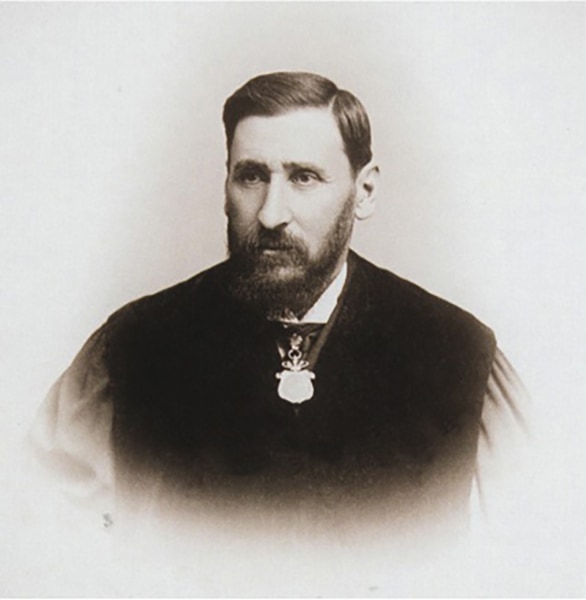
4.1 The Multifaceted Humanist
Like his brother Santiago, a polymath with interests in photography, writing, and philosophy, Pedro demonstrated an intellectual breadth that reflected a deep humanism and a commitment to social progress.
4.1.1 The Committed Esperantist
Pedro was an active and committed promoter of the international language Esperanto. In 1908, he was one of the founders in Zaragoza of the Esperantist society “Frateco” (Fraternity). This association was devoted not only to teaching the language, but also to promoting its ideal of universal brotherhood and communication without borders. “Frateco” had a remarkable history, going so far as to organize the reception of 326 Austrian children in need after the First World War and managing to survive the Spanish Civil War thanks to the protection of its members. Pedro’s participation in this idealistic movement reveals a commitment to progressive and humanitarian values that extended far beyond his profession.
4.1.2 The Engaged Citizen
His involvement with Aragonese society also manifested itself in public life. He served as a Councilman of the Zaragoza City Council and was a board member of the Caja de Ahorros y Monte de Piedad de Zaragoza, Aragon y Rioja (savings bank). These activities demonstrate his deep roots in and his willingness to contribute to the welfare of his community.
4.2 The Medical Dynasty: Pedro Ramon Vinos
The family legacy in medicine did not end with him. His son, Pedro Ramon Vinos (1891-1964), followed in the footsteps of his father and his uncle. He graduated in medicine in Zaragoza in 1913 and, in 1928, obtained the Chair of General Pathology at the same university. Like his father, he was a distinguished academic, becoming a member of the Royal Academies of Medicine and of Sciences of Zaragoza, thus ensuring the continuity of the Cajal lineage in the Spanish medical and scientific elite.
4.3 Honors and Recognition: An International Legacy
The scientific and human stature of Pedro Ramón y Cajal was widely recognized during his lifetime, both in Spain and abroad. The numerous prizes and appointments he received are irrefutable testimony that his fame was not merely a reflection of his brother’s, but the result of his own extraordinary merits.
Table 3: National and International Honors and Distinctions
National Honors****International HonorsFull Member, Royal Academy of Medicine of Zaragoza (1893)Martinez Molina Prize (joint with Santiago) (1902)President, Spanish Society of Natural History (1907)Meritorious Member, Academy of Sciences of Bologna (1907)President, College of Physicians of Zaragoza (1907-1911)Meritorious Member, Imperial Academy of Sciences of Moscow (1913)Corresponding Member, Royal Academy of Medicine of Madrid (1914)Honorary Member, Imperial Society of Friends of the Natural Sciences, Anthropology, and Ethnography of Saint Petersburg (1914)Provincial Medal of Honor of Zaragoza (1950)Medal of Honor of the City of Zaragoza (1950)Honorary President, Royal Academy of Medicine of Zaragoza (1950)
4.4 Final Years and Death (1924-1950)
Pedro Ramón y Cajal retired from his professorship in October 1924 upon reaching the age of 70, but this did not mark the end of his activity. He continued working at his successful private clinic in Zaragoza until dates very close to his death, demonstrating an unbreakable vitality and vocation.
He passed away in Zaragoza on December 10, 1950, at the advanced age of 96. Although some sources erroneously cite 1951, the date of 1950 is the most consistent and well-documented. The obituaries of the time reflected the enormous esteem in which he was held. He was remembered as an “illustrious doctor” (“insigne doctor”), “one of the most distinguished professors” (“catedrático de los más destacados”), “a researcher devoted to scientific progress” (“investigador enamorado del avance científico”), and “a physician of extraordinary experience” (“médico de experiencia extraordinaria”) — a final tribute from his community to a life of service and excellence.
Conclusion: A Star with Its Own Light in the Firmament of Science
The life and work of Pedro Ramón y Cajal, analyzed in depth, demand a conclusive reassessment of his place in history. Far from being a secondary figure in his brother’s shadow, he emerges as “a star with its own light” (“un astro con luz propia”), a scientist, physician, and humanist whose trajectory was as singular as it was monumental. An adventurer in his youth, a rural physician in his early career, a masterful educator, an original researcher, an innovative clinician, and, above all, an indispensable collaborator.
This article has documented his dual and extraordinary legacy. On the one hand, he was a co-architect of neuroscience. His role in the validation and universalization of the Neuron Doctrine was not secondary, but fundamental. He acted as a strategic partner whose work in comparative anatomy provided the robustness and generality that transformed a brilliant hypothesis into a pillar of biology. His collaboration with Santiago was a symbiosis between peers, a model of networked research that amplified the genius of both.
On the other hand, and in a wholly independent manner, he forged a career of immense value as a pioneer of modern clinical practice in Spain. His teaching in Cadiz and Zaragoza left an indelible mark, but it was his innovations in oncology that reveal his clinical genius. By introducing practices such as systematic biopsy and serving as a precursor of radiotherapy, he not only applied science but advanced it on the battlefield of daily practice, researching its effects and anticipating concepts such as radioresistance. He embodied the ideal of the physician-scientist, fusing the laboratory and the clinic decades before the term “translational medicine” was coined.
A full understanding of the Golden Age of Spanish science and of the neuroscientific revolution itself therefore requires recognizing Pedro Ramón y Cajal as the “complete genius that he was” (“el genio completo que fue”). He is the “other pillar” upon which one of the most important scientific legacies in history was built. His life, a perfect synthesis of fundamental science and clinical innovation, represents a model of excellence and vocation of enduring relevance. History must, at last, be told in his own light.
References
-
De Carlos Segovia, J. A., & Ramón y Cajal Agüeras, S. (2002). Pedro Ramón y Cajal: Médico, histólogo y docente. Revista Española de Patología, 35(4), 465-474.
-
Universidad Complutense de Madrid. (n.d.). Ramón y Cajal, Pedro. Médicos Históricos.
-
WikiTree. (n.d.). Pedro Ramón y Cajal (1854-1950).
-
Callabed, J. (2024). El hermano del Premio Nobel fue ante todo un médico clínico, que atendió a los enfermos durante 55 años. La Vanguardia.
-
de Carlos, J. A., & Ramón y Cajal Agüeras, S. (2020). Pedro Ramón y Cajal: The Legacy of a Neurohistologist, a Medical Doctor, and a Pathologist. Anatomical Record, 303(5), 1189-1202.
-
Universidad Complutense de Madrid. (n.d.). Ramón y Cajal, Pedro. Médicos Históricos.
-
Real Academia de la Historia. (n.d.). Pedro Ramón y Cajal. Diccionario Biográfico electrónico.
-
Biomedes. (n.d.). Ramón y Cajal, Pedro. Diccionario biográfico de médicos españoles.
-
Fortoul van der Goes, T. I. (2023). El otro Ramón y Cajal. Revista de la Facultad de Medicina de la UNAM, 66(5), 52-55.
-
Historia y Sanidad. (2021). Santiago Ramón y Cajal: El padre de la neurociencia. YouTube.
-
Varios Autores. (2013). Semblanza de Don Santiago Ramón y Cajal en el 160 aniversario de su nacimiento. Revista Cubana de Neurología y Neurocirugía, 3(Supl. 1), S15-S23.
-
Liébana Collado, P. (2023). Epistolario de Santiago Ramón y Cajal. Entreletras.
-
Rodríguez Quiroga, A. (2002). De la neurohistología a la neurofisiología: la obra de Rafael Lorente de Nó. Dynamis. Acta Hisp. Med. Sci. Hist. Illus., 22, 411-435.
-
De Castro, F. (2021). El Arte que alumbró la moderna Neurociencia: El dibujo científico de Cajal y sus discípulos. Arbor, 197(801), a603.
-
Sociedad Española de Oncología Médica (SEOM). (n.d.). Historia de la Oncología.
-
Sociedad Española de Radioterapia Oncológica (SEOR). (n.d.). Una Mirada al Pasado: Tratamiento con Radium de los tumores malignos en Ginecología.
-
santiagoramonycajal.org. (n.d.). Legado de Santiago Ramón y Cajal. Legado Cajal.
-
Museo de la Historia de la Automoción de Salamanca (MAHS). (n.d.). Santiago Ramón y Cajal: la historia de un polímata.
-
Portal de Archivos Españoles (PARES). (n.d.). Pedro Ramón y Cajal.
-
Noguero, L. (n.d.). Asociación Frateco. Frateco Esperanto-Asocio en Aragono.
-
Noguero, L. (n.d.). Asociación Frateco. Frateco Esperanto-Asocio en Aragono.
-
Stria, C. (2019). El esperanto en los medios periodísticos: una aproximación a la historia esperantista de España. Kataluna Esperantisto, 369, 28-42.
-
Biomedes. (n.d.). Ramón Vinós, Pedro. Diccionario biográfico de médicos españoles.
-
Varios Autores. (1983). Historia de la Universidad de Zaragoza.
(c) Cover photo: Pedro Ramón y Cajal. Spanish Medical Image Bank.