Introduction: The Faithful Disciple and the Complete Legacy
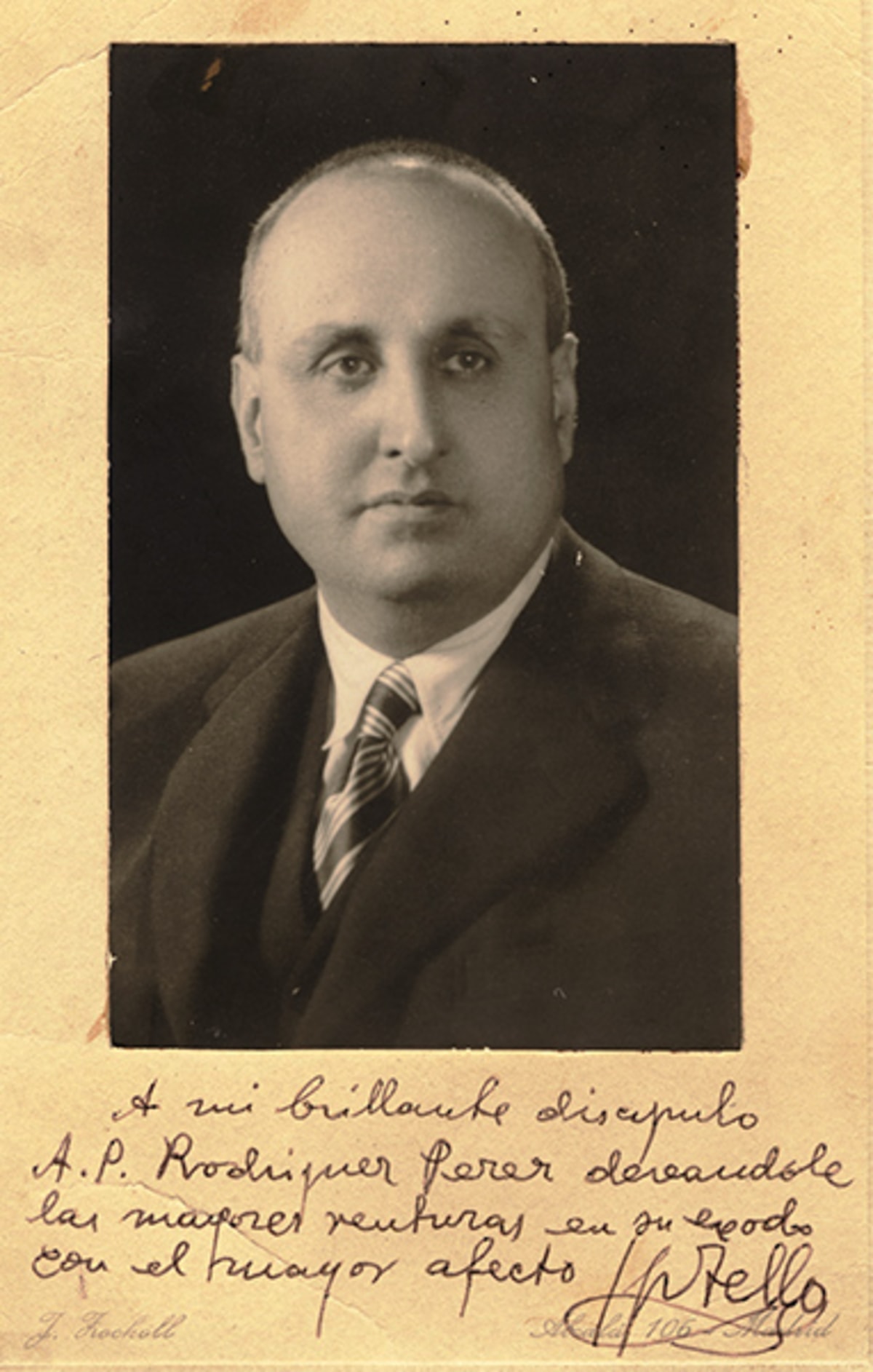
The history of Spanish science in the twentieth century is inextricably linked to the monumental figure of Santiago Ramón y Cajal, whose genius not only revolutionized world neuroscience but also catalyzed an ephemeral yet brilliant scientific “Silver Age” (Edad de Plata) in Spain. Within the constellation of talents that made up the School of Cajal, no figure embodies the peaks and abysses of that era as completely and tragically as Jorge Francisco Tello y Muñoz. Designated by the master himself as “the best of my disciples and the most capable and eloquent of Spanish bacteriologists” (el mejor de mis discípulos y el más capacitado y diserto de los bacteriólogos españoles), Tello was not merely a follower but the predestined heir — a first-rate scientist whose career was destined to continue and expand the Cajalian legacy.
His biography is the story of unwavering loyalty, a multifaceted scientific capacity, and formidable institutional leadership built upon four pillars: academic science, public health administration, pedagogy, and — a crucial and hitherto underestimated facet — his role as a pioneer and leader in the Spanish pharmaceutical industry. Yet Tello’s trajectory is also a chronicle of the fragility of scientific progress in the face of political upheaval. His career, which spanned from fundamental neurohistology to public health and pathological anatomy, was brutally “cut short by the shadows of the Civil War” (truncada por las sombras de la Guerra Civil). Unlike many colleagues who departed into exile, Tello remained in Madrid — an act of loyalty to his responsibilities that the Francoist regime would punish with dismissal and condemnation to a painful “inner exile” (exilio interior). His story thus becomes a paradigmatic case study of the systematic destruction of Spanish science by an ideology that saw in the republican intellectual elite an enemy to be eradicated.
This article aims to reconstruct, as exhaustively as possible, the life and work of Jorge Francisco Tello, integrating all his dimensions to offer a complete and faithful portrait.
I. Origins and Training of a Scientist (1880–1902)
The early years of Jorge Francisco Tello were marked by a personal tragedy that, paradoxically, would place him at the epicenter of Spanish scientific life, and by a vocational decision that would define the course of his existence. His early trajectory reveals a young man of exceptional academic brilliance, whose passion for microscopic observation diverted him from a safe professional path toward the frontier of biological research.
Table 1: Chronology of the Life and Career of Jorge Francisco Tello
| Date | Milestone / Institution / Place / 23 April 1880 |
|---|---|
| 1885 | Move to Madrid after the death of his mother — Madrid |
| c. 1902 | Bachelor’s degree in Medicine with Extraordinary Prize — Faculty of Medicine, Universidad Central |
| 1902 | Joins Cajal’s laboratory as a contracted student — Laboratorio de Investigaciones Biológicas |
| 1903 | Doctorate in Medicine with Extraordinary Prize — Faculty of Medicine, Universidad Central |
| 1905 | Appointed Assistant Professor of Histology and Pathological Anatomy — Faculty of Medicine, Universidad Central |
| 1911 | Fellowship from the Junta para Ampliación de Estudios (JAE) — Koch Institute, Moabit Hospital (Berlin) |
| 1912 | Head of the Epidemiology Section — Instituto Nacional de Higiene Alfonso XIII |
| 1913 | Sanitary mission against the plague — Larache (Morocco) |
| 1918 | Co-founder of the THIRF Institute of Immunotherapy — Madrid |
| 1920 | Appointed Director — Instituto Nacional de Higiene Alfonso XIII |
| 14 January 1923 | Admission as Full Member — Real Academia Nacional de Medicina |
| 1926 | Wins the Chair of Histology and Pathological Anatomy — Faculty of Medicine, Universidad Central |
| 1929 | Appointed President of the Technical Council after the merger of THIRF and IBYS — Laboratorios IBYS |
| 19 December 1934 | Appointed Director — Instituto Cajal |
| 1936 | Accepts the Deanship of the Faculty of Medicine — Faculty of Medicine, Universidad de Madrid |
| 1939 | Political purge, dismissal from the Chair and the Instituto Cajal — Madrid |
| 1949 | Co-founding of Antibióticos S.A. by IBYS — Madrid/León |
| 1949–1950 | Reinstated in the Chair and immediately forced into retirement — Universidad de Madrid |
| 28 September 1958 | Death — Madrid |
1.1. Early Years and Education in Madrid
Jorge Francisco Tello y Muñoz was born on 23 April 1880 in the town of Alhama de Aragón, in the province of Zaragoza. His childhood was marked by a devastating event: in 1885, at just five years of age, he lost his mother during the terrible cholera epidemic that ravaged Spain. This traumatic event prompted a decision that would fundamentally alter the course of his life: his father decided to move the family to Madrid. Although born of tragedy, this move was providential for Tello’s scientific future. Madrid was the intellectual and political heart of the country and afforded him access to first-rate educational institutions. He completed his secondary education at the prestigious Instituto Cardenal Cisneros and subsequently enrolled at the Faculty of Medicine of the Universidad Central, located in the historic Colegio de San Carlos. Tello’s family environment, marked by the early loss of his mother in an epidemic, may well have sown the seeds of an interest in the fight against infectious diseases — a vocation he would fully develop throughout his career.
1.2. The Vocational Crossroads: From Surgery to Histology
During his medical studies, Tello demonstrated outstanding academic ability, graduating with the Extraordinary Prize (Premio Extraordinario). Initially, his vocation seemed oriented toward the field of surgery under the tutelage of José Ribera y Sans, a figure of great stature. However, he soon “surrendered to the charms of histology” (se rindió a los encantos de la histología), the study of the microscopic structure of tissues that Cajal was elevating to unprecedented heights. In a gesture revealing extraordinary dedication and a profound love for pure science, Tello used his own savings to purchase a microscope so that he could continue his research at home. This act is deeply symbolic, for it not only demonstrates his personal commitment to research beyond academic obligations but also establishes a direct parallel with Santiago Ramón y Cajal himself, who had also launched his legendary career with a modest microscope acquired through considerable personal effort.
II. In the Master’s Shadow: Integration into the School of Cajal (1902–1920)
The meeting between Jorge Francisco Tello and Santiago Ramón y Cajal was a confluence destined to shape the history of Spanish science. Tello was not just another disciple; he was the pillar upon which Cajal would build the continuity of his school.
2.1. The First True Disciple
The combination of being “Aragonese, a physician, and a histologist” (aragonés, médico e histólogo) seemed to predestine Tello to join Cajal. The decisive moment came in 1902, when he was hired to work at the newly created Laboratorio de Investigaciones Biológicas, becoming the institution’s first and longest-serving recruit. Cajal immediately recognized in him an immense capacity for work and an unwavering vocation. On 30 June 1903, Tello defended his doctoral thesis, reportedly titled Terminaciones nerviosas sensitivas en los pelos y otros órganos (Sensitive Nerve Endings in Hair and Other Organs), once again earning the Extraordinary Prize.
The thesis, Disposición macroscópica y estructura del Cuerpo Geniculado Externo (Macroscopic Arrangement and Structure of the External Geniculate Body), preserved at the Universidad Complutense and accessible through SIMURG, is a testament to his skill, including detailed pen-and-ink drawings executed by the author himself — a distinctive practice of the School of Cajal.
990006511030204201 — Docs.Santiagoramonycajal
His academic integration was meteoric, and by 1905 he was already assistant professor of Histology and Pathological Anatomy, cementing a relationship with Cajal that would become “indissoluble and faithfully united” (indisoluble y fielmente unida).
2.2. Defender of the Doctrine: Neuronism and Neurotropism
Tello established himself as one of the most solid defenders of the “Neuron Doctrine,” Cajal’s theory positing that the nervous system is composed of individual cells (neurons) rather than a continuous network, as maintained by the influential reticulist school of the Italian Camillo Golgi. His research on the processes of degeneration and regeneration of the nervous system contributed valuable empirical evidence to this field. In addition, Tello was a staunch advocate of the theory of “neurotropism,” which held that the growth of nerve fibers is guided by chemical signals. His admission speech to the Real Academia Nacional de Medicina in 1923, titled Ideas actuales sobre el neurotropismo (Current Ideas on Neurotropism), was a masterful defense of this theory, consolidating his position as an authority on the subject.
2.3. The German Mission: Broadening Horizons
In 1911, with a fellowship from the Junta para Ampliación de Estudios (JAE), Tello departed for Berlin for a ten-month stay. It was a strategic mission planned by Cajal so that his most trusted disciple could bring back to Spain expertise in bacteriology and pathological anatomy — fields in which Germany was a world leader. Tello trained at the celebrated Koch Institute and at Moabit Hospital under the eminent pathologist Clemens Ernst Benda. Upon his return, this dual training made him an exceptionally well-rounded scientist and was instrumental in opening the School of Cajal to the study of nervous system pathology. His new expertise also qualified him for public health missions, such as the one he led in 1913 in Larache (Morocco) to combat a plague epidemic.
2.4. The Neuroembryologist of the School: A Step Beyond Cajal
Tello was the only member of the school who can properly be described as a neuroembryologist. His most visionary contribution was the systematic use of the concept of neuromeres (segmental divisions of the neural tube) to describe brain development — an approach that was decades ahead of its time and that is remarkably consistent with modern models. His research in this field was extensive, encompassing neurogenesis in various brain regions and the development of the peripheral nervous system, expanding Cajal’s legacy into new frontiers with works such as Les différenciations neuronales dans l’embryon de poulet.
TELLO F. (1923) — Les différenciations neuronales dans l’embryon du Poulet pendant les premiers jours de l’incubation. Trav. Lab. Rech. Biol. Univ. Madrid, 21: 1-93. A constantly cited work, for example in the Bulletin de la Société Lorraine des Sciences of 1962. Ancienne Société des Sciences de Nancy. (Founded in 1828).
ALS_1962_4 — Docs.Santiagoramonycajal
III. The Triple Leadership: Histology, Public Health, and Industry (1918–1934)
The interwar period represented the pinnacle of Tello’s career. During these years, he exercised extraordinary leadership on three fronts: the direction of Spain’s principal public health institution, the consolidation of his position as Cajal’s successor, and — simultaneously and fundamentally — his pioneering role in the pharmaceutical industry.
3.1. Director of the Instituto Nacional de Higiene Alfonso XIII
In 1920, Santiago Ramón y Cajal, burdened by administrative responsibilities that kept him from his laboratory, stepped down from the directorship of the Instituto Nacional de Higiene Alfonso XIII. His natural successor was Jorge Francisco Tello. It was hardly a surprising choice; Tello had been associated with the Institute since his return from Germany, holding since 1912 the post of Head of the Epidemiology Section. He would occupy the directorship for fourteen years, until 1934, a period during which the institution underwent a profound renewal and established itself as the cornerstone of Spanish public health. Under Tello’s direction, the Institute, which Cajal had built amid enormous bureaucratic and political difficulties, entered a new phase of development. His work was fundamental to the institutionalization of disciplines such as virology in Spain. The Institute’s functions were vital to the country: it centralized the fight against major endemic diseases such as diphtheria, rabies, and smallpox; it carried out large-scale production of sera and vaccines, guaranteeing Spain’s health sovereignty; and, crucially, it became the principal training center for state public health corps, delivering courses that formed the basis of the prestigious “health diplomas” (diplomados de sanidad). Tello’s leadership was not merely administrative. He was, as Cajal described him, one of the “most capable and eloquent of Spanish bacteriologists.” His work at the helm of the Institute represented the practical, nationwide application of the knowledge he had acquired at the Koch Institute in Berlin. He embodied a model of the scientist-administrator who understood both cutting-edge research and the needs of public health, capable of managing a complex organization that functioned partly as a “factory” for biological products and partly as a research and training center. His work in this field, although less well-known than his contributions to neurohistology, had a direct and immense impact on the welfare of the Spanish population.
3.2. The Chair and the Academy: The Intellectual Successor
While directing the Institute of Hygiene, his academic career reached the highest levels. In 1923 he was admitted to the Real Academia Nacional de Medicina, received with a response speech by Cajal himself, who thus publicly anointed him as his most distinguished successor. In 1926 he won the Chair of Histology and Pathological Anatomy at the Universidad Central, formally inheriting his master’s post. He also assumed the crucial task of revising and updating successive editions of Cajal’s magnum opera, such as the Manual de Histología normal y de Técnica micrográfica and the Manual técnico de Anatomía Patológica, becoming the official guardian of Cajalian doctrine.
3.3. The Industrial Vocation: From THIRF to the Presidency of IBYS
Far from being a late-career activity, Tello’s involvement in industry was an early and strategic vocation. In 1918 he co-founded the THIRF Institute of Immunotherapy with other members of the School of Cajal, with the patriotic objective of freeing Spain from its dependence on foreign sera and vaccines. In 1929, at the initiative of the entrepreneur Nicolás María Urgoiti, THIRF merged with the Instituto de Biología y Sueroterapia (IBYS). Tello was offered the general directorship of the powerful new entity but declined due to his multiple academic obligations, accepting instead the position of supreme scientific authority: President of the Technical Council, a post he would hold until his death.
IV. Cajal’s Legacy: Succession and Custody (1934–1939)
Following Cajal’s death in 1934, Tello formally assumed the master’s mantle, but he soon found himself confronting one of the harshest ordeals in Spain’s history.
4.1. Director of the Instituto Cajal
On 19 December 1934, Tello was officially appointed Medical Director of the Instituto Cajal. He inherited not merely a post but the responsibility to keep alive the flame of the most important school in the history of Spanish science. He was, in every sense, the guardian of the temple.
4.2. The Civil War: Loyalty and Resistance
While many chose exile, Tello made the momentous decision to remain in Madrid. His presence was not passive. In 1936, in the midst of the conflict, he accepted the appointment as Dean of the Faculty of Medicine of Madrid — an explicit act of loyalty to republican institutions. During the nearly three years of siege, together with his inseparable colleague and fellow Cajal disciple Fernando de Castro, he took on the historic mission of safeguarding the “Cajal Legacy” (Legado Cajal), zealously protecting the master’s material heritage at the laboratory of the Instituto Cajal on the Cerrillo de San Blas.
V. Political Purge and Resistance from Industry (1939–1949)
The end of the Civil War in April 1939 brought not peace but the implantation of a system of systematic repression against the vanquished. For Spanish science and the university, it marked the beginning of a process of political “purging” (depuración) that has been described as “the destruction of science in Spain.” Jorge Francisco Tello, because of his loyalty to the Republic and his position as Cajal’s successor, became a priority target of this dismantlement.
5.1. The Purge Process
As soon as the conflict ended, the new Francoist state set its repressive machinery in motion. The purging of university professors was one of its primary objectives, seeking not only to punish sympathizers of the Republic but also to “dismantle the entire apparatus of a false culture” (desmontar todo el tinglado de una falsa cultura) — in the words of Minister José Ibáñez Martín — and to liquidate the scientific and intellectual elite forged in the preceding decades. In 1939, Tello was immediately suspended from his duties and subjected to a “purge file” (expediente de depuración), tried simultaneously by the University Officials Purge Tribunal and the Political Responsibilities Tribunal. The charges against him were eminently political: his loyalty to the republican government, his acceptance of the deanship during the war, and his appointment as a member of the Fundación Nacional de Investigaciones Científicas y Ensayos de Reformas in March 1938. The outcome was swift: Tello was officially dismissed from his Chair and expelled from the directorship of the Instituto Cajal.
Table 2: Summary of the Purge File of Jorge F. Tello (1939)
| Phase of Proceedings | Legal Basis / Judicial Body / Charges (Implicit and Explicit) / Resolution and Sanction / Key Date / Initiation of Proceedings |
|---|---|
| Trial | Political Responsibilities Tribunal, University Purge Tribunal — Acceptance of the Deanship of the Faculty of Medicine (1936); Member of the National Research Foundation (March 1938) — Political and administrative trial; Considered sympathetic to the Popular Front — 1939 |
| Verdict | Ministry of National Education — Guilty of political responsibilities for collaboration with the Republic — Dismissal from the Chair of Histology and Pathological Anatomy; Expulsion from the directorship of the Instituto Cajal; Disqualification from public office — 1939 |
| Consequences | Application of the sanction — Professional “civil death”; Condemnation to “inner exile,” removed from research and teaching — 1939–1949 |
| ”Reinstatement” | Ministerial Order — Completion of the sanction — Reinstated in his Chair for the sole purpose of processing his forced and immediate retirement — 1949–1950 |
5.2. Years of Silence and the True Role at IBYS
The sanction imposed on Tello amounted to “inner exile.” For a decade, from 1939 to nearly 1950, he was a professional pariah in his own country. The phrase often used to describe this period — “To survive, he was forced to work at the Laboratorios Ibys” (Para sobrevivir, se vio obligado a trabajar en los Laboratorios Ibys) — is historically imprecise and minimizes his true role. Tello was not a mere employee seeking sustenance; he had been President of the IBYS Technical Council since 1929, and from that position of scientific leadership he transformed the company into a sanctuary for persecuted science. Far from being a place removed from research, IBYS became, under his direction, a center of scientific and moral resistance.
5.3. IBYS, an Ark for Spanish Science
The most extraordinary facet of Tello’s leadership at IBYS during the postwar period was his deliberate policy of protecting persecuted scientists. The institute carried out no internal political purge whatsoever and, quite the contrary, became a “refuge for purged scientists” (refugio de los científicos depurados). The following table summarizes the situation of some of the most prominent figures who found shelter in the institution:
Table 3: Key Scientific Figures Sheltered at IBYS During the “Inner Exile”
| Scientist | Prior Situation and Affiliation / Francoist Sanction (Detailed) / Role and Contribution at IBYS / Jorge F. Tello (1880–1958) |
|---|---|
| President of the Technical Council | He maintained the highest scientific authority within the company, guaranteeing the continuity of rigor and the protection of his colleagues. |
| Francisco Grande Covián (1909–1995) | Physiologist, Assistant Professor in Juan Negrín’s Chair — Disqualified from managerial and trust positions due to his closeness to Negrín. |
| Head of the Vitamins and Hormones Section | He carried out important research, published the monograph Las vitaminas (The Vitamins), and supervised doctoral theses. |
| Enrique Moles (1883–1953) | Pharmacist, chemist, and physicist of international prestige — Expelled from his Chair and from all his official laboratories. |
| Principal Investigator (1943–1953) | IBYS provided him with a laboratory where he could continue his work. He published key articles in the Revista IBYS, which paid him a courageous obituary upon his death. |
| Teófilo Hernando (1881–1976) | Professor of Therapeutics and President of the National Council of Culture — Removed from his chair and subjected to a lengthy purge process. |
| Principal Scientific Adviser | He held special authority over the house’s publications, deciding on their publication. |
| Tomás Alday Redonet (1892–1981) | Assistant Professor and Professor on leave — Accused of sympathies with the Popular Front; his case was eventually dismissed. |
| Head of the Pharmacology Section | He maintained his position of high responsibility at IBYS during and after his purge process. |
| Faustino Cordón (1909–1999) | Biologist (a significant figure in critical thought) — He found at IBYS a space to work, publish, and carry out important social work, employing political prisoners after they had served their sentences. |
5.4. The Revista IBYS: A Voice for the Silenced
The Revista IBYS, whose publication resumed in 1942, became a vital organ for persecuted science. Omitting the obligatory praise of the new regime, it provided a publication platform for purged scientists such as Moles and Cordón, ensuring that their work would not be lost in the silence imposed by the dictatorship. The tribute the journal dedicated to Tello in 1959, with contributions from figures such as Fernando de Castro, was an act of vindication and a quiet defiance of the official narrative.
VI. The Culmination of a National Project: Antibióticos S.A. (1949)
Tello’s vision of a self-sufficient national pharmaceutical industry reached its zenith in 1949. That year, IBYS was a key founding partner in the creation of Antibióticos S.A., a consortium of Spain’s leading laboratories (Abelló, Zeltia, LETI, and others) to manufacture penicillin in Spain. This milestone, declared of “national interest” by the Francoist regime itself, reveals the ultimate paradox: the State, for a strategic project, had to depend on an industry at whose heart stood a company (IBYS) whose scientific direction lay in the hands of a man whom that very State had purged. Although Tello did not sit directly on the new company’s board, his position as the supreme scientific authority at IBYS places him as a central figure in the strategy that made this achievement possible.
During the 1949–1950 academic year, Tello was officially reinstated in his Chair, but it was a bureaucratic farce to process his forced and immediate retirement. Jorge Francisco Tello y Muñoz died in Madrid on 28 September 1958.
VII. The Enduring Legacy of Jorge Francisco Tello
Despite the political purge, Tello’s legacy proved extraordinarily resilient, surviving through his disciples, his work, and his material collections.
7.1. The School of Pathological Anatomists
One of Tello’s greatest achievements was his ability to “found a school” (crear escuela). Drawing on his training in Germany, he founded what is considered the “first Spanish school of pathological anatomists” (primera escuela española de anatomopatólogos), training a large group of collaborators who disseminated his methods throughout the country. Among his most distinguished disciples were key figures who ensured the continuity of histological research: Ramón Martínez Pérez (his disciple and son-in-law), Jorge Ramón Fañanás (Cajal’s own son), Luis Rodríguez Illera, Antonio Ruiz Falcó, and Pedro Rodríguez Pérez.
Table 4: Principal Disciples of Jorge Francisco Tello and Their Areas of Specialization
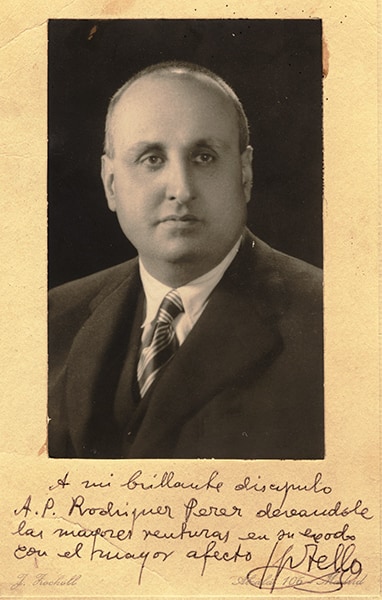
Photo: Purificación Rodríguez. Archive of Antonio Pedro Rodríguez Pérez
| Disciple | Relationship / Area of Specialization / Fernando de Castro |
|---|---|
| Ramón Martínez Pérez | Disciple, son-in-law, successor in the chair at Zaragoza — Pathological Anatomy, Histology |
| Juan Miguel Herrera | Disciple, professor — Histology and Pathological Anatomy |
| Jorge Ramón Fañanás | Son of Cajal, collaborator of Tello — Bacteriology, Histology |
| Luis Rodríguez Illera | Disciple, co-founder of THIRF — Histology |
| Antonio Ruiz Falcó | Disciple, co-founder of THIRF, Director of IBYS — Histology, Pathological Anatomy |
| Julio Rodríguez Puchol | Disciple — Histology |
7.2. The Scientific and Material Legacy
Tello’s scientific output was notable, comprising 54 research articles and a crucial role as editor of Cajal’s manuals. His findings on neurotropism guided the early work of Rita Levi-Montalcini, the future Nobel laureate. However, his most singular legacy is material. In addition to his contributions to the Cajal Legacy (notebooks and 8,000 micrographic preparations), the collection he initiated at the Hospital del Rey stands out: 500 anatomical specimens and 721 photographs of pathologies, meticulously documented. In the twenty-first century, this archive has become a first-rate resource for comparative genetic studies, demonstrating that science well done can outlast its persecutors.
7.3. The Industrial and Moral Legacy
Tello’s legacy would be incomplete without acknowledging his role as an industrial pioneer and his moral integrity. He championed Spain’s pharmaceutical self-sufficiency from 1918, a labor that culminated in the national production of antibiotics. Perhaps his most admirable contribution was using his position in private industry to protect his persecuted colleagues, turning IBYS into an ark that saved a fundamental part of Spanish science from shipwreck.
Jorge Francisco Tello y Muñoz is, therefore, not merely a tragic figure; he is an indispensable hero in the history of Spanish science. A resilient leader who, when the doors of the university were closed to him, threw open those of industry to ensure that the flame of science, decency, and loyalty would never be extinguished. His legacy, rescued from oblivion, continues to illuminate the present.
In the tribute to Santiago Ramón y Cajal published by the Revista IBYS in a special issue of May–June 1952, one can read:
From this group of men trained in the days of the “Alfonso XIII” came the technicians who took part in the founding of the two entities that in time would merge in the spring of 1929 to form the Instituto de Biología y Sueroterapia.
Through them, our Institute has thus been directly linked, from the very first moment of its founding, with the person and work of Cajal…
Initially they focused on biological production for human use. Within a year the main obstacle was the great growth achieved and the impossibility of meeting the demand; in a short time they overcame it and began their expansion into the Portuguese and Latin American markets.
Up to that point, the THIRF laboratory had registered eighteen sera and IBYS seventy-three.
los_laboratorios_ibys — Docs.Santiagoramonycajal
7.4. Donation of the IBYS Bibliographic Heritage
In 1993, the bibliographic heritage of IBYS was donated to the Library of the Faculty of Pharmacy of the UCM, enriching its holdings with monographs and periodical publications covering primarily the subjects of chemical engineering, toxicology, pharmacognosy, serotherapy, vaccines, insulin, tuberculosis, pharmaceutical formulation, and other fields, notably including a rich collection of World Health Organization standards.
These holdings were integrated into both the Repository Collection and the Periodicals Collection, although a specific listing can be consulted at the following links:
Books
IBYS bibliographic heritage donated to the Library of the Faculty of Pharmacy of the UCM — Docs.Santiagoramonycajal
Journals
IBYS bibliographic heritage donated to the Library of the Faculty of Pharmacy of the UCM — Docs.Santiagoramonycajal
Conference
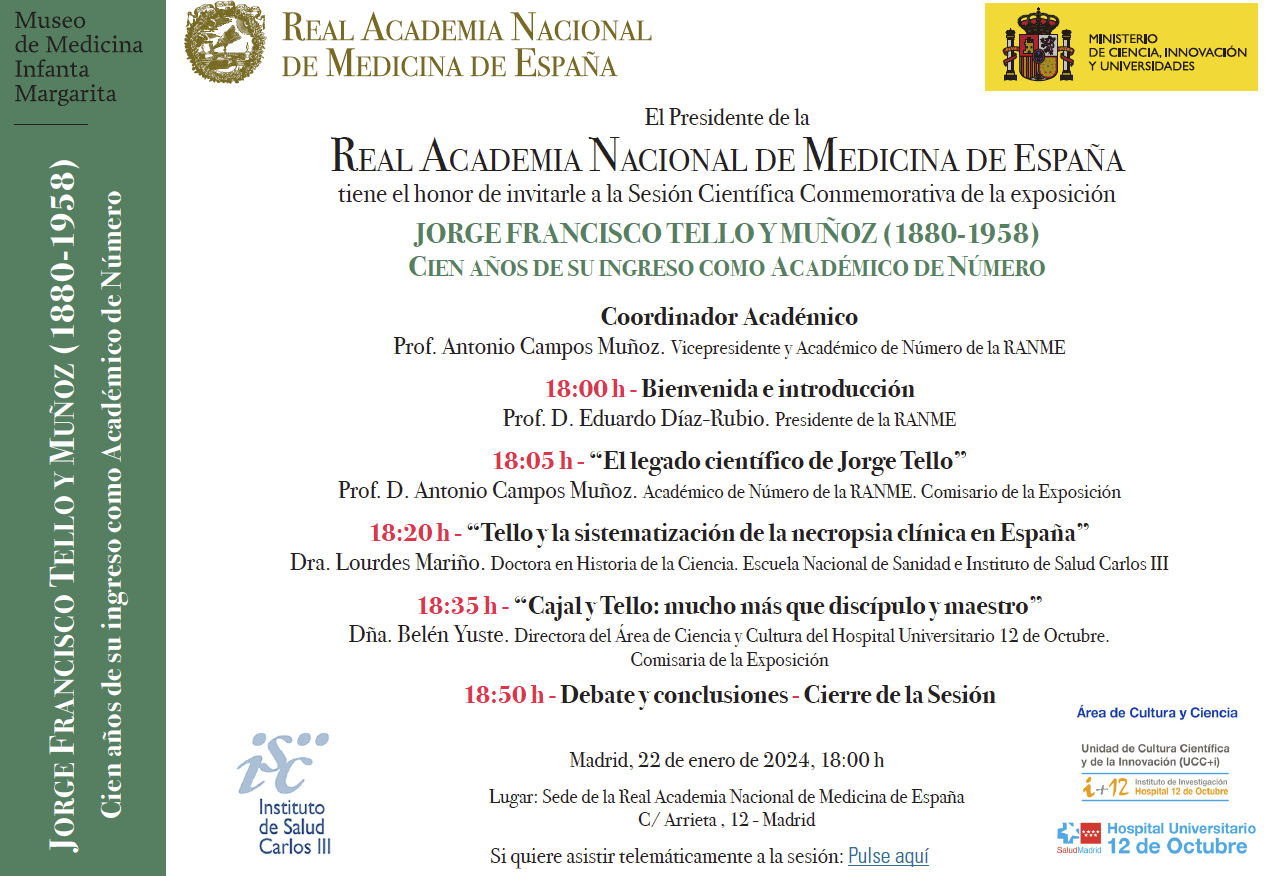
Exhibition “Jorge Francisco Tello y Muñoz (1880–1958) One Hundred Years Since His Admission as Full Member”
Bibliography
-
Puerto, J. (2012). Los laboratorios IBYS. Una excepción científica e industrial durante la Dictadura franquista. histórias da saúde, ESTUDOS DO SÉCULO XX, (12). Coimbra University Press.
-
Ros-Bernal, F., & de Castro, F. (2020). Jorge Francisco Tello Muñoz (1880-1958): First Pupil and the Man of Relay of Cajal. Anatomical Record, 303(5), 1203-1205.
-
Tello Valdivieso, F. (1959). Jorge Francisco Tello. Esquema biográfico. Revista Ibys, 17, 109-133.
-
Liébana Collado, P. (2021). Científicos en el exilio interior: Jorge Francisco Tello. Entreletras.
-
Otero Carvajal, L. E. (Dir.). (2006). La destrucción de la Ciencia en España. Depuración universitaria en el franquismo. Madrid: Editorial Complutense UCM.
-
Tello, J. F. (1903). Terminaciones nerviosas sensitivas en los pelos y otros órganos. (Doctoral thesis). Universidad Central, Madrid.
-
Ramón y Cajal, S. (1914). Estudios sobre la degeneración y regeneración del sistema nervioso. Madrid.
-
Tello, J. F. (1911). La influencia del neurotropismo en la regeneración de los centros nerviosos. Trabajos del Laboratorio de Investigaciones Biológicas, 9, 123-159.
-
Tello, J. F. (1923). Ideas actuales sobre el neurotropismo. (Admission Speech). Real Academia Nacional de Medicina, Madrid.
-
Puelles, L. (2009). Contributions to Neuroembryology of Santiago Ramon y Cajal (1852-1934) and Jorge F. Tello (1880-1958). International Journal of Developmental Biology, 53, 1145-1160.
-
Tello, J. F. (1923). Les différenciations neuronales dans l’embryon de poulet, pendant les premiers jours de l’incubation. Trabajos del Laboratorio de Investigaciones Biológicas, 21, 1-94.
-
Porras, M. I., & Báguena, M. J. (2009). El Instituto Nacional de Higiene de Alfonso XIII y la institucionalización de la virología en España. História, Ciências, Saúde – Manguinhos, 16(2), 487-510.
-
Nájera, R. (2009). La virología en España: pasado, presente y futuro. Virología, 12(1-3), 5-10.
-
Ramón y Cajal, S., & Tello, J. F. (1918). Manual técnico de Anatomía Patológica. Madrid: Nicolás Moya.
-
Biblioteca Histórica de la UCM. (n.d.). El Instituto de Biología y Sueroterapia (IBYS) en la Biblioteca Histórica.
-
Ramón y Cajal Agüeras, S. (2005). El «Legado Cajal». Revista Española de Patología, 38(4), 203-205.
-
Álvaro Dueñas, M. (2006). Por ministerio de la ley y voluntad del Caudillo: la jurisdicción especial de responsabilidades políticas (1939–1945). Madrid: Centro de Estudios Políticos y Constitucionales.
-
Gómez Santos, M. (1991). Francisco Grande Covián. Biblioteca Caja de Ahorros de Asturias.